Kidney Function
Creatinine, eGFR, and BUN: key kidney markers.
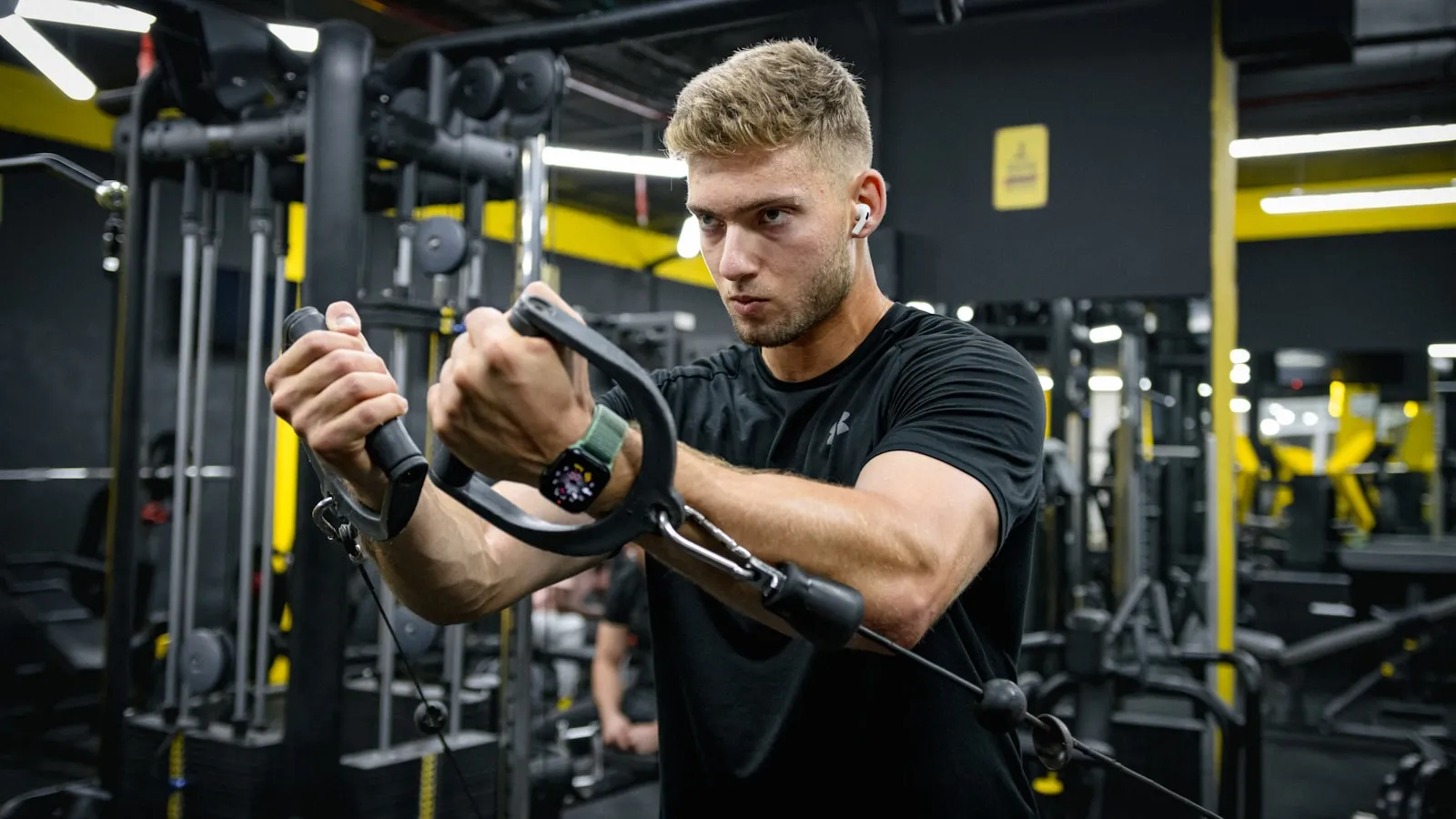
A muscular man can have a creatinine of 110 and an eGFR of 78. That is the most common false alarm in men's health. This page explains why muscle mass misleads the equation, and where that reassurance stops.
Doctor's Assessment Included
| Result | Value (ml/min/1,73m²) |
|---|---|
| G5 – kidney failure | < 15 |
| G4 – severely decreased | 15–30 |
| G3b – moderately to severely decreased | 30–45 |
| G3a – mildly to moderately decreased | 45–60 |
| G2 – mildly decreased | 60–90 |
| G1 – normal or high | ≥ 90 |
De eGFR wordt niet beoordeeld met één normaalwaarde, maar met de stadia G1 tot en met G5 uit de richtlijn Chronische nierschade (NHG/NIV, naar KDIGO). De waarde is een schatting: hij wordt met de CKD-EPI-formule berekend uit het kreatinine in uw bloed, uw leeftijd en uw geslacht. Het stadium alleen zegt nog niet of er nierschade is: daarvoor kijkt de arts ook naar de albumine-creatinineratio (ACR) in de urine, en of een afwijking ten minste 3 maanden aanhoudt. Ook bij stadium G1-G2 kan er nierschade zijn als de albuminurie verhoogd is; met een normale albuminurie geldt G1-G2 als geen chronische nierschade (samen circa 88% van de bevolking). Bij een eGFR onder de 60 die langer dan 3 maanden bestaat, spreekt men van chronische nierschade en past de huisarts zo nodig medicatiedoseringen aan. Bespreek uw uitslag met uw huisarts.
Source: NHG Reference population: Alle volwassenen (KDIGO/NHG-stadiëring, leeftijdsonafhankelijk)
Reference ranges may vary between laboratories. When you order a test, a BIG-registered doctor assesses your personal results in context. For treatment decisions, discuss your results with your GP.
The CKD-EPI equation assumes an average build. Your creatinine, age and sex go in. There is no field for muscle mass. That is exactly the problem in a trained body.
Creatinine is a waste product of muscle tissue. More muscle means more production per day. The equation does not know that and assumes a fixed rate. It therefore reads more creatinine as less filtration.
At 100 kilos with a low body fat percentage this adds up. A result of 75 to 80 is then not unusual. The newer EKFC equation does not solve this. It starts from the same creatinine.
Three habits stack up in strength athletes. Creatine supplementation raises creatinine measurably. A protein-rich diet with plenty of meat does the same. A heavy leg session adds extra muscle turnover. All three push the calculated value down without touching the kidney.
There is an honest limit to that. Anabolic steroid use is a different story. It genuinely can burden the kidney, partly through blood pressure. The reassurance that it is just my muscle mass no longer holds there.
A high value also deserves attention. Sustained hyperfiltration accompanies early diabetes and excess weight. That is a risk signal rather than an achievement.
Book the draw at least 48 to 72 hours after a heavy session. Arrive well hydrated and skip the big meat meal the night before. That way you measure your baseline and not your training week.
If you use creatine, consider a two-week pause before a kidney work-up. Discuss that with your doctor and never stop prescribed medication yourself.
If the value stays low under clean conditions, ask for cystatin C. It does not come from muscle tissue and settles the argument. Always have a persistently low result assessed by a doctor.
Fatigue out of proportion to your training load
Poorer recovery after heavy sessions
Thickened ankles or puffiness that does not settle
Blood pressure rising without a clear reason
Reduced appetite or nausea
Urine that foams and stays foamy
A high result rarely causes symptoms
Above 90 labs usually report no exact figure
Sustained high filtration is called hyperfiltration
It accompanies early diabetes and excess weight
With anabolic steroid use blood pressure deserves extra attention
Low eGFR indicates reduced kidney function. Consult a nephrologist for evaluation and management.
Normal to high eGFR indicates healthy kidney function. Maintain kidney-healthy habits.
Time your blood draw away from heavy training and consider a two-week creatine pause. Arrive hydrated and without a large meat meal the night before. That easily saves a few points on paper.
Blood pressure is the quietest risk factor for the kidney, and strength training makes it worth watching. Be cautious with NSAIDs around heavy loading. If you use anabolic agents, discuss that honestly with your doctor.
The threshold of 60 only counts once it persists for three months. Below it your doctor looks at the trend and at protein in the urine. Around 30 a nephrologist comes in for further assessment. Below 15 replacement therapy is discussed. Many men function well for years with a stable value in the thirties.
Yes, and it is the most common false alarm. More muscle means more creatinine each day. The equation has no field for muscle mass and reads that as less filtration. At 100 kilos with low body fat, 75 to 80 is not unusual. Cystatin C settles the argument.
They can, and this is where the muscle-mass reassurance stops. Anabolic steroids can burden the kidney, partly through raised blood pressure. A low value cannot then simply be attributed to your build. Discuss this honestly with your doctor.
This marker is included in the following test panels.
Creatinine, eGFR, and BUN: key kidney markers.
Our broadest panel: CBC, thyroid, vitamins, lipids, liver, kidney, and HbA1c.
Comprehensive metabolic panel: electrolytes, kidney, liver, glucose, HbA1c, and protein.
Medical reviewer
Dr. Naimi oversees the medical standards behind our content and assessments.
Medical policyDoctor's Assessment Included
Every result includes a professional assessment from a BIG-registered doctor. For treatment decisions, discuss your results with your GP.
eGFR (Estimated Glomerular Filtration Rate)
€7,-