Order a men's health blood test after 40
Age-appropriate screening including testosterone and PSA.
Add to Cart
No referral needed
Added to your cart
Click the button to view your cart
Biomarkers Included
15 biomarkersHbA1c (Glycated Hemoglobin), PSA (Prostate-Specific Antigen), ALT (Alanine Aminotransferase), TSH (Thyroid Stimulating Hormone), Triglycerides, Creatinine, Free T4 (Thyroxine), LDL Cholesterol, SHBG (Sex Hormone Binding Globulin), Total Cholesterol, Vitamin D (25-OH), Free Testosterone, Total Testosterone, hs-CRP (High Sensitivity CRP), HDL Cholesterol
After 40, all kinds of things change gradually. Your testosterone may decline, your metabolism shifts, and markers for heart, blood vessels and prostate become more relevant. This men over 40 blood test brings those systems together in one blood draw.
The panel measures 15 biomarkers, from testosterone and thyroid to cholesterol, blood sugar and PSA. That gives you a health check tailored to men later in life, without ordering separate tests. You order online, need no referral and have your blood drawn at a sample point near you.
Why this test?
After 40, several physiological shifts tend to occur at once. Testosterone may decline gradually, while SHBG can rise, and cardiovascular and prostate markers become increasingly relevant.
Rather than testing each system separately, this men over 40 blood test brings them together. A shift in one area, such as testosterone, may be connected to changes in another, such as your lipids or blood sugar. Seen side by side, such patterns become more visible.
Who is this test for?
This men's health check may suit men who:
- are over 40 and want a broad overview suited to their age
- notice changes in energy, recovery, body composition or mood
- want to combine PSA monitoring with hormonal and metabolic markers
- want to record a reference point to track trends over the coming years
What is tested?
This men over 40 blood test measures 15 biomarkers:
- Total testosterone and free testosterone: circulating and bioavailable testosterone.
- SHBG: a binding protein that influences testosterone availability.
- TSH and free T4: thyroid markers.
- Total cholesterol, HDL, LDL and triglycerides: your lipid profile for cardiovascular context.
- HbA1c: your average blood sugar regulation over the past 2 to 3 months.
- hs-CRP: a marker that may reflect low-grade inflammation.
- PSA: prostate-specific antigen, often monitored in men over 40.
- ALT: a liver enzyme.
- Creatinine: a marker of your kidney function.
- Vitamin D (25-OH): your vitamin D status.
If you want context on a single marker, see the page about total testosterone, or take a look at the standalone prostate health check for PSA.
What can this test tell you?
By covering multiple systems in one draw, this panel may reveal connections that separate tests would miss. Declining testosterone alongside rising SHBG is a common pattern in men over 40 and can affect energy, body composition and mood.
Metabolic markers like HbA1c and your lipids may shift over the years, and tracking them can show how they develop over time. PSA adds prostate context, while thyroid markers, vitamin D and hs-CRP round out the picture. The value lies in seeing how these markers relate to each other.
How is the sample collected?
Blood is drawn at a certified sample point. There are 700+ locations across the Netherlands. This blood test without a GP is something you arrange yourself: after ordering, you choose a location and time. The appointment typically takes around 10 to 15 minutes.
When is this test useful?
This panel may be useful when:
- you are over 40 and want a health check suited to your age
- you notice changes in energy, recovery or body composition and want to investigate
- you want a baseline that includes PSA alongside hormonal and metabolic data
- you are planning lifestyle changes and want a starting point for comparison
What do the results mean?
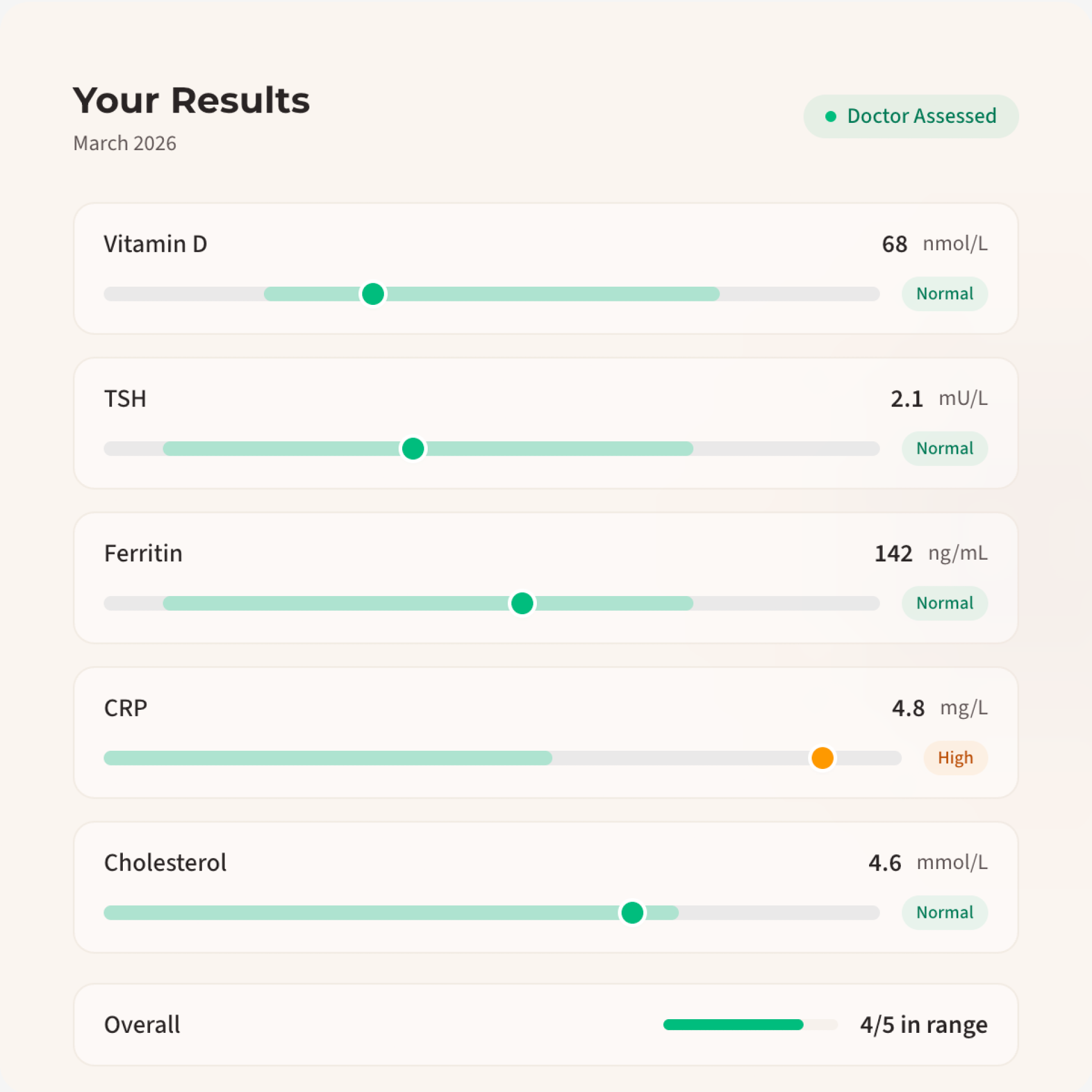
Results are shown with a reference range for each marker. Keep in mind that reference ranges are population-based and may not reflect what is optimal for you individually. Testosterone, for example, has a wide range.
PSA results call for nuance and are connected to factors like age. A doctor can review your results as a whole and determine whether anything warrants further discussion or follow-up.
What happens after the results?
Your results are usually available online within a few working days. Your report includes all your values alongside reference ranges. Given the breadth of this panel, discussing it with a doctor can help place the results in your personal context.
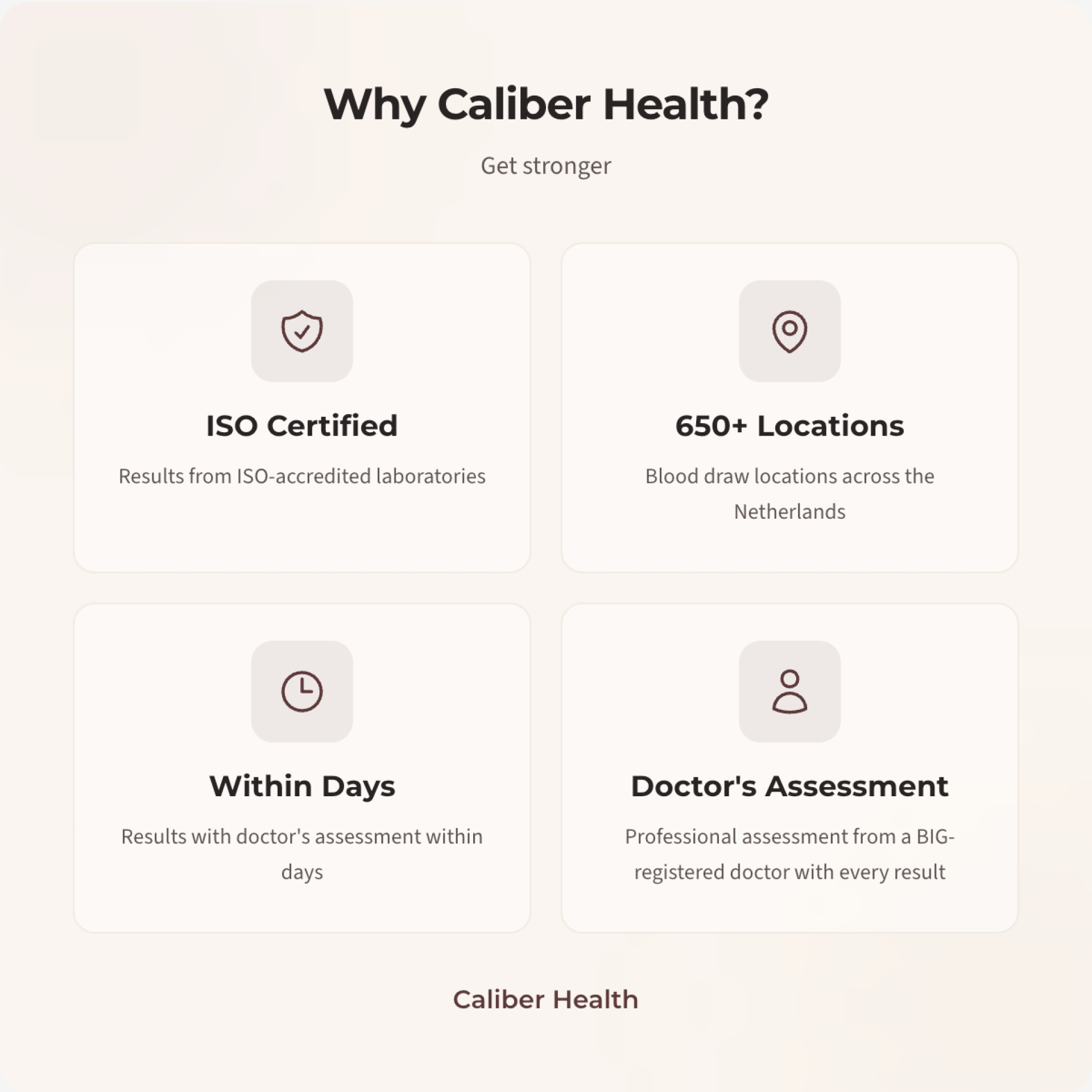
Every blood test result includes a professional assessment from a BIG-registered doctor. For treatment decisions, discuss your results with your GP.
Frequently Asked Questions
After 40, testosterone, metabolism and prostate markers shift gradually. This men over 40 blood test brings them together, including PSA.
Yes, this panel measures PSA (prostate-specific antigen) alongside hormonal and metabolic markers.
For accurate lipid and blood sugar values, fasting for 8 to 12 hours is advised. Testing in the morning is preferred.
This panel gives a broad overview of multiple systems, but no blood test covers every aspect of your health.
No, you order this blood test online without a referral and choose a sample point near you yourself.
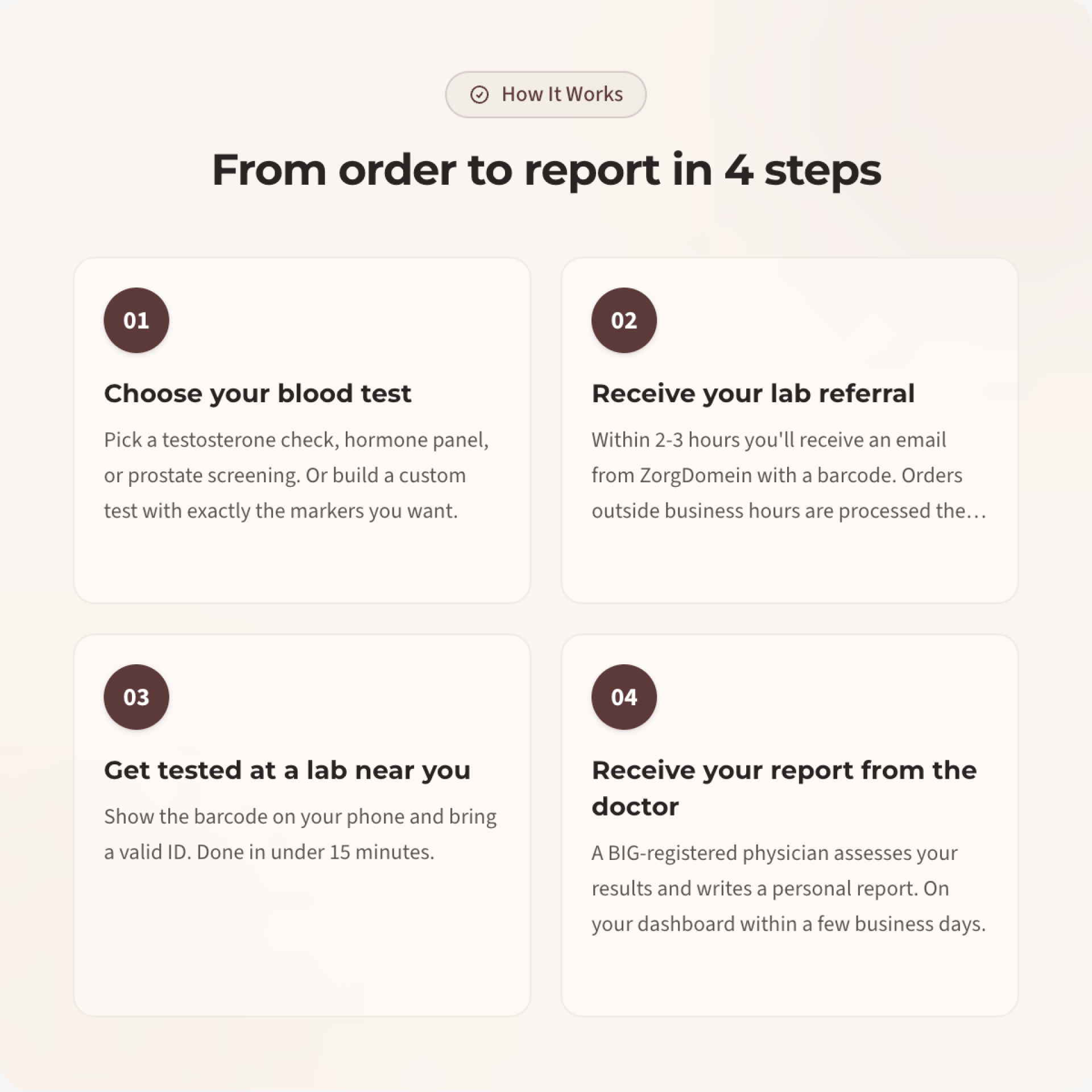
From order to report in 4 steps
No referral needed. No waiting list. Just order and go.
Choose your blood test
Pick a testosterone check, hormone panel, or prostate screening. Or build a custom test with exactly the markers you want.
Receive your lab referral
Within 1 business day you'll receive an email from ZorgDomein with a barcode. Orders outside business hours are processed from the next business day.
Get tested at a lab near you
Show the barcode on your phone and bring a valid ID. Done in under 15 minutes.
Receive your report from the doctor
A BIG-registered physician assesses your results and writes a personal report. On your dashboard within a few business days.
Choose your blood test
Pick a testosterone check, hormone panel, or prostate screening. Or build a custom test with exactly the markers you want.
Receive your lab referral
Within 1 business day you'll receive an email from ZorgDomein with a barcode. Orders outside business hours are processed from the next business day.
Get tested at a lab near you
Show the barcode on your phone and bring a valid ID. Done in under 15 minutes.
Receive your report from the doctor
A BIG-registered physician assesses your results and writes a personal report. On your dashboard within a few business days.
Always a location near you
With 700+ certified phlebotomy points across the Netherlands.
What We Test
This panel includes 15 biomarkers, each tested at a certified laboratory using medical-grade equipment.
| No. | Biomarker | Unit | Turnaround |
|---|---|---|---|
| 01 | HbA1c (Glycated Hemoglobin) HbA1c (glycated haemoglobin) reflects your average blood sugar levels over the past 2-3 months. It is the gold standard for long-term blood sugar monitoring and diabetes management. | mmol/mol | 2 days |
| 02 | PSA (Prostate-Specific Antigen) PSA (Prostate-Specific Antigen) is a protein produced by prostate gland cells. PSA is naturally present in men at low levels, and many factors — including benign prostate enlargement (BPH), prostatitis, vigorous exercise, and sexual activity — can raise PSA levels without any malignant cause. Results must always be interpreted by a qualified healthcare provider. | ug/l | 2 days |
| 03 | ALT (Alanine Aminotransferase) Your ALT value shows how much alanine aminotransferase is in your blood. This enzyme sits mainly in the liver. That makes ALT the most liver-specific of the routine enzymes. When it reaches the blood, liver cells have been damaged. In adult men the reference range runs to 45 u/l, and in women to 34 u/l. A mildly raised result is common and has several causes. Fatty liver leads that list, well ahead of alcohol and hepatitis. | u/l | 1 day |
| 04 | TSH (Thyroid Stimulating Hormone) TSH is thyroid-stimulating hormone. The pituitary gland makes it, and uses it to drive your thyroid. At the laboratory that runs the test the usual adult range runs from 0.27 to 4.20 mE/L. A high TSH usually fits an underactive thyroid. A low value usually fits an overactive one. That direction feels inverted, and it is. TSH is the pituitary signal, not the thyroid hormone itself. Laboratories use slightly different limits from one another. Always read the reference value printed on your own result. And a single measurement is never a diagnosis. | mu/l | 2 days |
| 05 | Triglycerides Triglycerides are the most common type of fat in the body, used for energy storage. Elevated levels may be associated with increased risk of cardiovascular disease, especially when combined with other lipid abnormalities. | mmol/l | 1 day |
| 06 | Creatinine Creatinine is a waste product that is continuously produced in your muscles. The kidneys filter it out of the blood and remove it in urine. The blood creatinine level is therefore a core number for kidney function. In Dutch it is written both as creatinine and as kreatinine. Because production depends on your muscle mass, the same figure reads differently per person. A raised creatinine does not automatically point to a kidney problem. This page explains what high and low values can mean. It also covers the everyday things that shift the result temporarily. | umol/l | 1 day |
| 07 | Free T4 (Thyroxine) Free T4 (thyroxine) is the main hormone produced by the thyroid gland. It may serve as a precursor that your body converts into the more active T3. Healthcare providers often consider Free T4 a primary indicator of thyroid gland output. | pmol/l | 4 days |
| 08 | LDL Cholesterol LDL cholesterol is the amount of cholesterol carried inside LDL particles, the particles that can build up in the artery wall. That is where its nickname comes from: the bad cholesterol. Two things rarely appear on a report. First, in a routine lipid panel LDL is usually not measured but calculated from your total cholesterol, your HDL and your triglycerides. Second, the 3.0 mmol/l upper limit is a population reference interval, not a target. What counts as a good LDL for you is decided by your overall cardiovascular risk, not by the line printed on the page. | mmol/l | 1 day |
| 09 | SHBG (Sex Hormone Binding Globulin) SHBG stands for sex hormone binding globulin. It is a protein made by the liver. SHBG binds testosterone tightly and oestradiol somewhat more loosely. Hormone bound to SHBG cannot act in the tissues. SHBG therefore determines how much of your total testosterone is genuinely available. SHBG is not itself a sex hormone but a transport protein. Results are reported in nmol/l. Normal values differ by sex and by age, and in men SHBG rises as they get older. An SHBG should therefore be assessed alongside total testosterone, never on its own. | nmol/l | 5 days |
| 10 | Total Cholesterol Total cholesterol measures the combined amount of HDL, LDL, and VLDL cholesterol in your blood. It provides an overview of your lipid status but should be interpreted alongside individual components for a complete cardiovascular risk picture. | mmol/l | 1 day |
| 11 | Vitamin D (25-OH) Vitamin D is a fat-soluble vitamin. Its main job is the absorption of calcium and phosphate from the gut. That makes it decisive for bone metabolism. The skin produces it under the influence of sunlight. Food and supplements supply a smaller share. | nmol/l | 3 days |
| 12 | Free Testosterone Free testosterone is the unbound, bioavailable form of testosterone that can directly enter cells and activate receptors. It may indicate your body's functional androgen activity. Your healthcare provider can help interpret what your levels mean. | pmol/L | 3 days |
| 13 | Total Testosterone Total testosterone measures the combined amount of bound and free testosterone in the blood. As the primary androgen, testosterone may influence muscle mass, bone density, libido, mood, and energy levels in both men and women. | nmol/l | 2 days |
| 14 | hs-CRP (High Sensitivity CRP) High-Sensitivity CRP (hs-CRP) measures very low levels of C-Reactive Protein in the blood. It is primarily used to assess cardiovascular risk by detecting low-grade chronic inflammation. | mg/l | 3 days |
| 15 | HDL Cholesterol HDL cholesterol is the amount of cholesterol carried inside the HDL particles in your blood. Those particles pick cholesterol up from your tissues and from the artery wall and take it back to the liver. That transport is what earned HDL the nickname good cholesterol. The nickname is misleading. HDL is above all a mirror of your metabolism: the value drops with excess weight, insulin resistance, smoking and inactivity, and it is those factors that carry the risk. Drugs that raise HDL substantially do not reduce the number of cardiovascular events. And more is not always better: at very high values, mortality in large population studies turns back upwards. So never read your HDL on its own. It only takes on meaning alongside your triglycerides, your LDL and your overall risk profile. | mmol/l | 1 day |
| Your result arrives once the slowest test is finished: 5 days. This is indicative; turnaround varies per laboratory. | |||
Preparation
-
Been ill? Wait a little
RequiredHad a fever, an infection or a vaccination in the past 2 weeks? Wait with the draw until you are fully recovered. These values react to inflammation and would give a distorted picture.
-
Pause biotin
RequiredDo you take a supplement with biotin (vitamin B8, common in hair, skin and nail supplements)? Stop it 72 hours before the draw. Biotin interferes with the measurement of these values.
-
No hard training beforehand
RequiredNo heavy training, long endurance sessions or anything that leaves you out of breath in the 48 hours before the draw. Normal walking is fine.
-
No alcohol beforehand
RequiredDrink no alcohol in the 24 hours before the draw.
-
No ejaculation and no cycling beforehand
RequiredNo ejaculation, no sex and no cycling in the 48 hours before the draw. Have the blood taken before any prostate exam, at least 6 weeks after a biopsy and 4 weeks after a urinary infection.
-
Preferably fasting
RecommendedComing fasting gives a slightly cleaner value, but it is not required. If it suits you, eat nothing from 22:00 the evening before and drink only water.
-
Have the draw in the morning
RequiredThese values vary over the day and peak in the morning. Have your blood drawn before 10:00, ideally between 07:00 and 09:00.
-
On levothyroxine? Worth knowing
Good to knowTell the staff at the draw when you took your tablet; for most values the timing makes no difference.
- Water is always fine. Drink as usual beforehand, it makes the draw easier.
- Take your usual medication, unless your own doctor told you otherwise.
Extend this panel
Tests from the same field, run on the same sample. Same draw, no second appointment.
Related Tests
Explore more tests that might interest you.
PSA Test
Measure your PSA, a marker for the health of your prostate. No referral needed, results within a few working days.
Thyroid Function
TSH, Free T4, and Free T3 for thyroid assessment.
Complete Men's Health Panel
A broad men's health panel: hormones, heart, metabolic, and organ function in one blood draw.
This test not quite right?
Build your own blood test from 139+ individual biomarkers — choose exactly what you need.
Have a question?
Our team is happy to help. Ask your question and we'll respond as soon as possible.