Order a celiac disease test and check for gluten antibodies
Anti-TTG and Endomysium IgA: a commonly used celiac disease screening.
Add to Cart
No referral needed
Added to your cart
Click the button to view your cart
Biomarkers Included
2 biomarkersAnti-TTG (Tissue Transglutaminase), Endomysium IgA
In celiac disease, your immune system reacts to gluten, the protein in wheat, barley and rye. Symptoms can range from abdominal pain and bloating to fatigue and nutrient deficiencies.
If you want to order a celiac disease test, this panel measures two antibodies: anti-TTG and endomysium IgA. The sample is taken at a certified sample point, you order online, need no referral and receive your results with a doctor's assessment.
Why this test?
In celiac disease, your immune system may produce specific antibodies in response to gluten. Anti-TTG (tissue transglutaminase antibodies) and endomysium IgA are often used together, because they can complement each other in mapping that immune reaction.
This combination is often used as a first step when celiac disease is suspected, or as a gluten intolerance test when symptoms might be related to gluten.
Who is this test for?
This celiac disease test may be relevant for men who:
- have digestive complaints such as bloating, diarrhea or abdominal pain after eating gluten-containing foods
- have celiac disease in the family and want to check their antibody levels
- experience unexplained fatigue, nutrient deficiencies or skin issues that could be associated with gluten sensitivity
What is tested?
- Anti-TTG (tissue transglutaminase) (u/ml): antibodies directed against the enzyme tissue transglutaminase. Elevated levels may be associated with celiac disease.
- Endomysium IgA: antibodies targeting the endomysium, a layer of connective tissue. Their presence can support an anti-TTG finding.
What can this test tell you?
Elevated anti-TTG levels, particularly when combined with a positive endomysium IgA, may suggest an autoimmune response to gluten. Antibody levels alone, however, are not enough to confirm celiac disease.
A doctor can determine whether additional evaluation, such as further testing or a specialist referral, is appropriate based on your results. So see your result as a starting point, not a final verdict.
How is the sample collected?
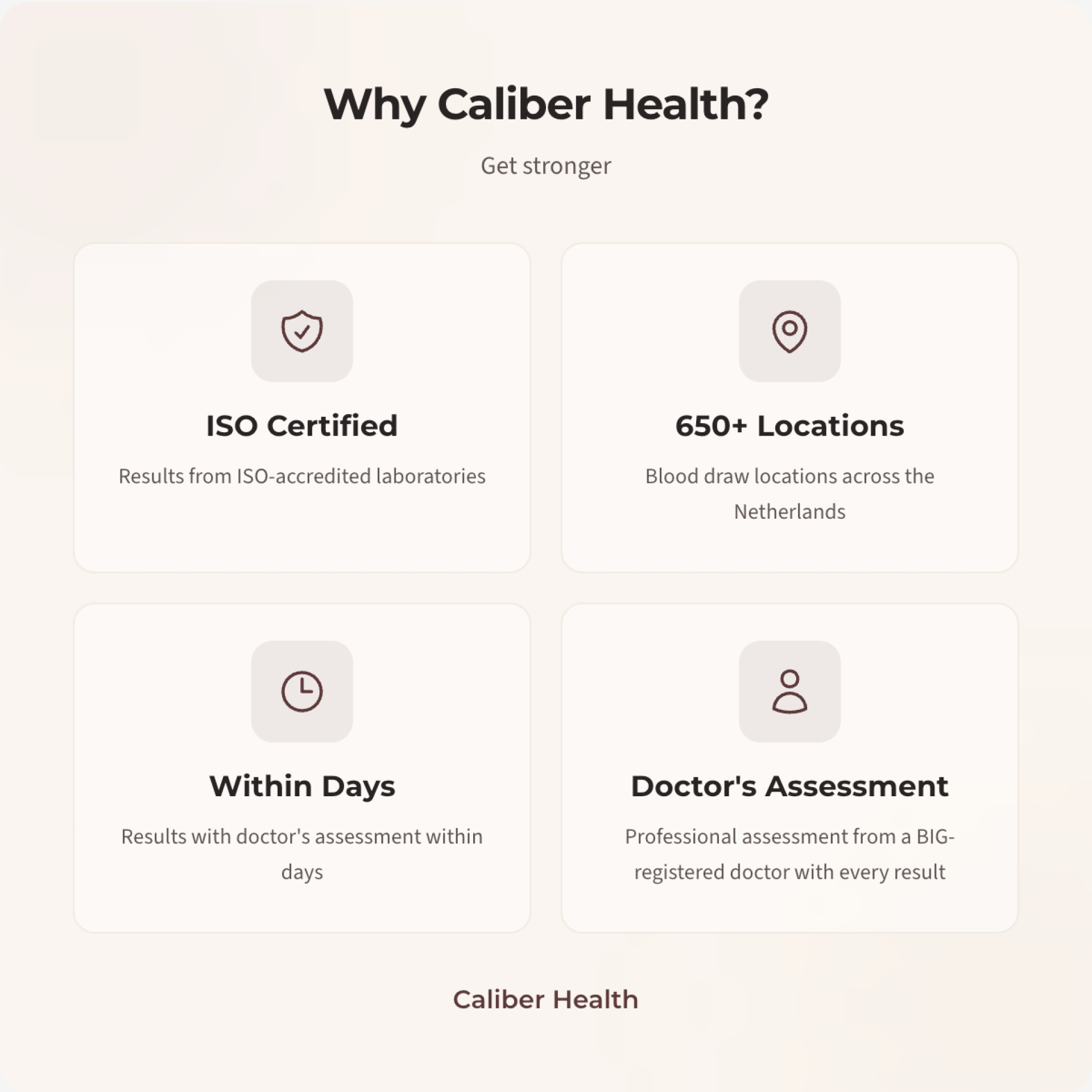
Blood is drawn at a certified sample point. There are 700+ locations across the Netherlands, which you choose yourself after ordering. The appointment usually takes 10 to 15 minutes.
You arrange this without your GP: no referral, just choose a location and time that suit you. The draw is done by trained staff.
When is this test useful?
This panel may be useful with persistent digestive complaints, unexplained weight loss, chronic fatigue or nutrient deficiencies that could have an autoimmune component. It can also be relevant if a family member has celiac disease.
Because it is a blood test without a referral, you can decide yourself when to begin.
What do the results mean?
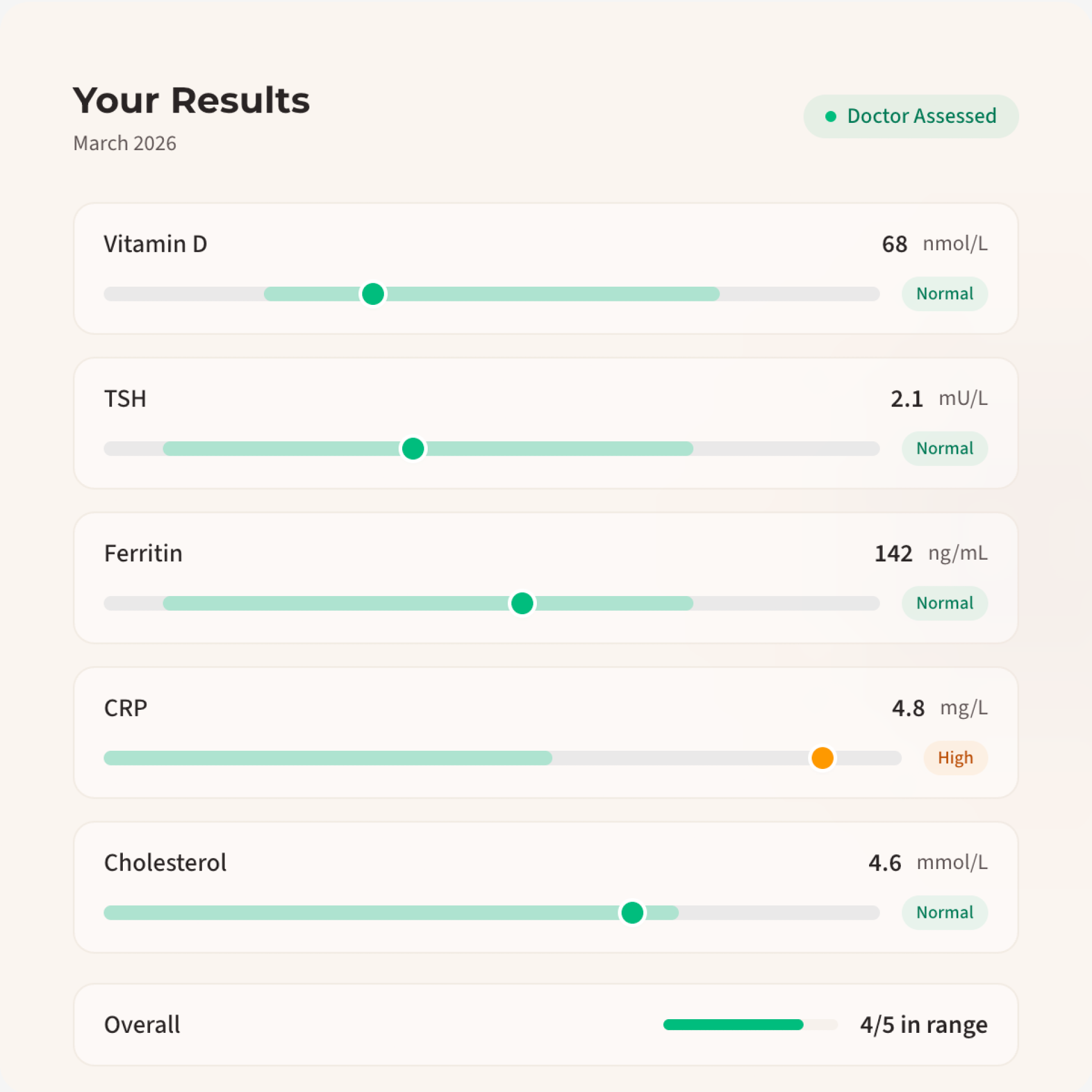
Your result shows each marker alongside a reference range. Positive or elevated values may indicate an immune response to gluten, but do not constitute a diagnosis on their own.
Important: negative values may not be reliable if you have already stopped eating gluten. A doctor can place your result in context and advise on any next steps.
What happens after the results?
Your results are available within a few working days in your personal dashboard, with a reference range and an explanation for each marker. Because celiac disease calls for professional confirmation, it is wise to discuss your result with a doctor, whether it is positive or negative. If you want a broader look at possible nutrient gaps, the vegetarian nutrient panel can be a useful addition.
Every blood test result includes a professional assessment from a BIG-registered doctor. For treatment decisions, discuss your results with your GP.
Frequently Asked Questions
No. This is not a self-test you do at home. Your blood is drawn at a certified sample point and analyzed in a lab, with a doctor's assessment. You only arrange it yourself online, without a referral.
Yes. Keep eating gluten-containing foods for at least 6 weeks before the test. Stopping too early can lower antibody levels and cause a falsely negative result.
No. Antibody levels alone do not confirm celiac disease. A doctor can determine whether additional evaluation is needed to reach a diagnosis.
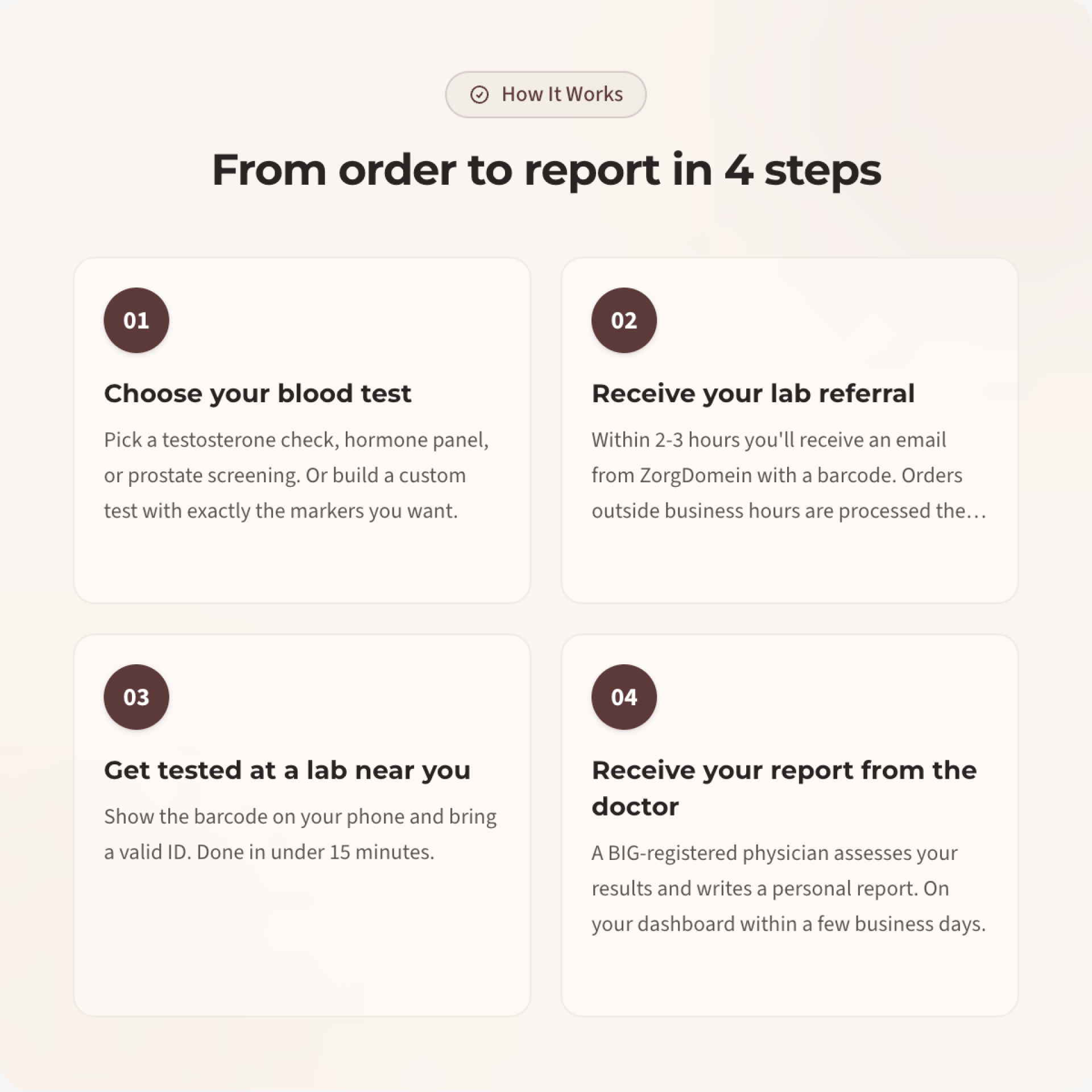
From order to report in 4 steps
No referral needed. No waiting list. Just order and go.
Choose your blood test
Pick a testosterone check, hormone panel, or prostate screening. Or build a custom test with exactly the markers you want.
Receive your lab referral
Within 1 business day you'll receive an email from ZorgDomein with a barcode. Orders outside business hours are processed from the next business day.
Get tested at a lab near you
Show the barcode on your phone and bring a valid ID. Done in under 15 minutes.
Receive your report from the doctor
A BIG-registered physician assesses your results and writes a personal report. On your dashboard within a few business days.
Choose your blood test
Pick a testosterone check, hormone panel, or prostate screening. Or build a custom test with exactly the markers you want.
Receive your lab referral
Within 1 business day you'll receive an email from ZorgDomein with a barcode. Orders outside business hours are processed from the next business day.
Get tested at a lab near you
Show the barcode on your phone and bring a valid ID. Done in under 15 minutes.
Receive your report from the doctor
A BIG-registered physician assesses your results and writes a personal report. On your dashboard within a few business days.
Always a location near you
With 700+ certified phlebotomy points across the Netherlands.
What We Test
This panel includes 2 biomarkers, each tested at a certified laboratory using medical-grade equipment.
| No. | Biomarker | Unit | Turnaround |
|---|---|---|---|
| 01 | Anti-TTG (Tissue Transglutaminase) Anti-TTG (Anti-Tissue Transglutaminase) is an IgA antibody test used as a first-line screening tool for coeliac disease. Tissue transglutaminase is an enzyme involved in tissue repair, and the immune system of individuals with coeliac disease may produce antibodies against it when exposed to gluten. An elevated result may suggest coeliac disease but does not confirm it on its own — further evaluation by a healthcare provider is always required. | u/ml | 4 days |
| 02 | Endomysium IgA Endomysium IgA is a highly specific antibody test for coeliac disease. The endomysium is a connective tissue layer surrounding muscle fibres, and in coeliac disease the immune system produces IgA antibodies against this tissue when exposed to gluten. A positive result is strongly suggestive of coeliac disease, though confirmation by a healthcare provider is always required. | — | 3 days |
| Your result arrives once the slowest test is finished: 4 days. This is indicative; turnaround varies per laboratory. | |||
Preparation
-
Keep eating gluten
RequiredEat gluten every day, in more than one meal, for at least 6 weeks before the draw. If you already eat gluten-free, the test can come back falsely negative.
- Water is always fine. Drink as usual beforehand, it makes the draw easier.
- Take your usual medication, unless your own doctor told you otherwise.
Related Tests
Explore more tests that might interest you.
Iron Studies
Iron panel: Iron, Ferritin, Transferrin, and Transferrin Saturation.
Tiredness
Investigate some common causes of fatigue: CBC, thyroid, iron, vitamins, glucose, and HbA1c.
Anemia
Anemia workup: hemoglobin, iron, transferrin, CBC, and B12.
This test not quite right?
Build your own blood test from 139+ individual biomarkers — choose exactly what you need.
Have a question?
Our team is happy to help. Ask your question and we'll respond as soon as possible.