Order an anemia blood test and check your levels
Anemia workup: hemoglobin, iron, transferrin, CBC, and B12.
Add to Cart
No referral needed
Added to your cart
Click the button to view your cart
Biomarkers Included
7 biomarkersIron (Serum), Hemoglobin, Transferrin Saturation, Vitamin B12, Ferritin, Transferrin, Basic Blood Count
Anemia often develops slowly, and early changes in your blood values can go unnoticed for a long time. This anemia blood test measures a focused set of markers around red blood cell production and your iron metabolism.
You measure hemoglobin, iron, ferritin, transferrin, transferrin saturation, a complete blood count and vitamin B12 in a single blood draw. You order online, need no referral and receive your results with an assessment from a BIG-registered doctor.
Why this test?
Symptoms like persistent tiredness, shortness of breath or pale skin can be linked to anemia, but on their own they say little. An anemia blood test gives you concrete measured values to put those symptoms into context.
By looking at hemoglobin, your iron values and vitamin B12 together, you get a broader view of your red blood cells than a single hemoglobin test provides. It remains a snapshot rather than a diagnosis, but it is a solid first step towards seeing where you stand.
Who is this test for?
This anemia blood test may be relevant for men who:
- experience persistent fatigue or reduced exercise performance
- follow a diet that may be low in iron or B12
- want to record a baseline of their iron stores and blood cell values
- notice unexplained shortness of breath or pale skin and want to check what is going on
What is tested?
This test measures seven biomarkers in your blood:
- Complete blood count (CBC): a broad overview of your red and white blood cells and platelets.
- Hemoglobin (mmol/l): the oxygen-carrying protein in your red blood cells.
- Iron (umol/l): the amount of iron circulating in your blood.
- Ferritin (ug/l): reflects your iron storage in the body.
- Transferrin (g/L): the protein that transports iron through your bloodstream.
- Transferrin saturation (%): the percentage of transferrin that is loaded with iron.
- Vitamin B12 (pmol/l, ref: 145-569): involved in the production of red blood cells.
You can read more about individual markers on the pages about hemoglobin and ferritin.
What can this test tell you?
Individually, each marker tells part of the story; together they give more context. Low ferritin with low hemoglobin could, for example, be associated with iron-deficiency anemia, while normal iron with low B12 might point in a different direction.
Transferrin saturation can help distinguish between different forms of iron imbalance. By looking at these markers as a group, you get context that a single test cannot provide. It is about patterns, not a ready-made conclusion.
How is the sample collected?
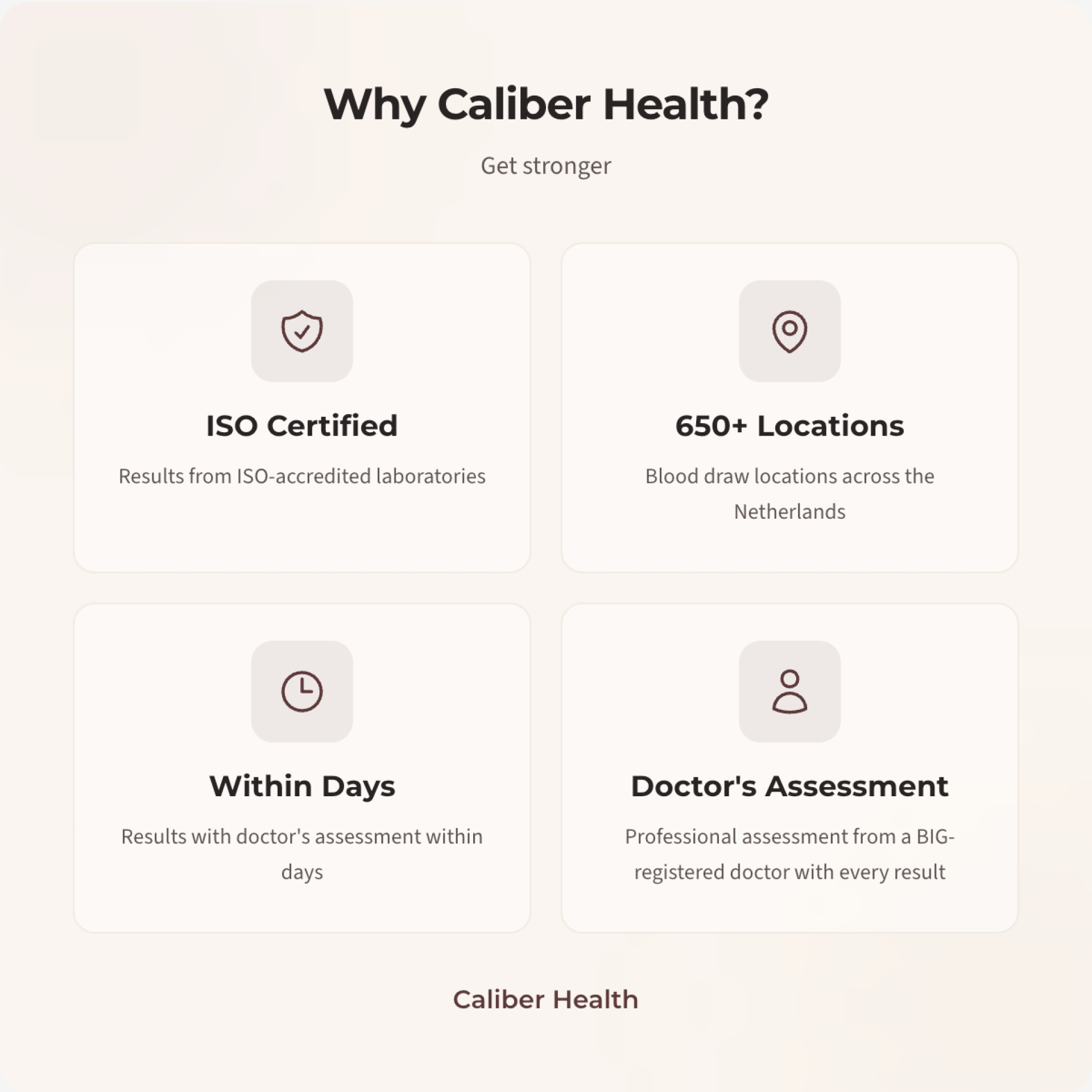
Blood is drawn at a certified sample point. There are 700+ locations across the Netherlands, which you choose yourself after ordering.
This is a blood test without a referral: you do not need to see your GP first. You pick a location and time yourself, and the draw usually takes around 10 to 15 minutes and is done by trained staff.
When is this test useful?
This test can be useful when you notice ongoing tiredness, difficulty concentrating or reduced stamina during workouts, or when you simply want to rule anemia out as a factor.
It can also be relevant after changes to your diet or periods of intense training. If you only want to look at your iron, the smaller iron studies panel may be enough. This anemia blood test adds your hemoglobin, blood count and B12 on top of that.
What do the results mean?
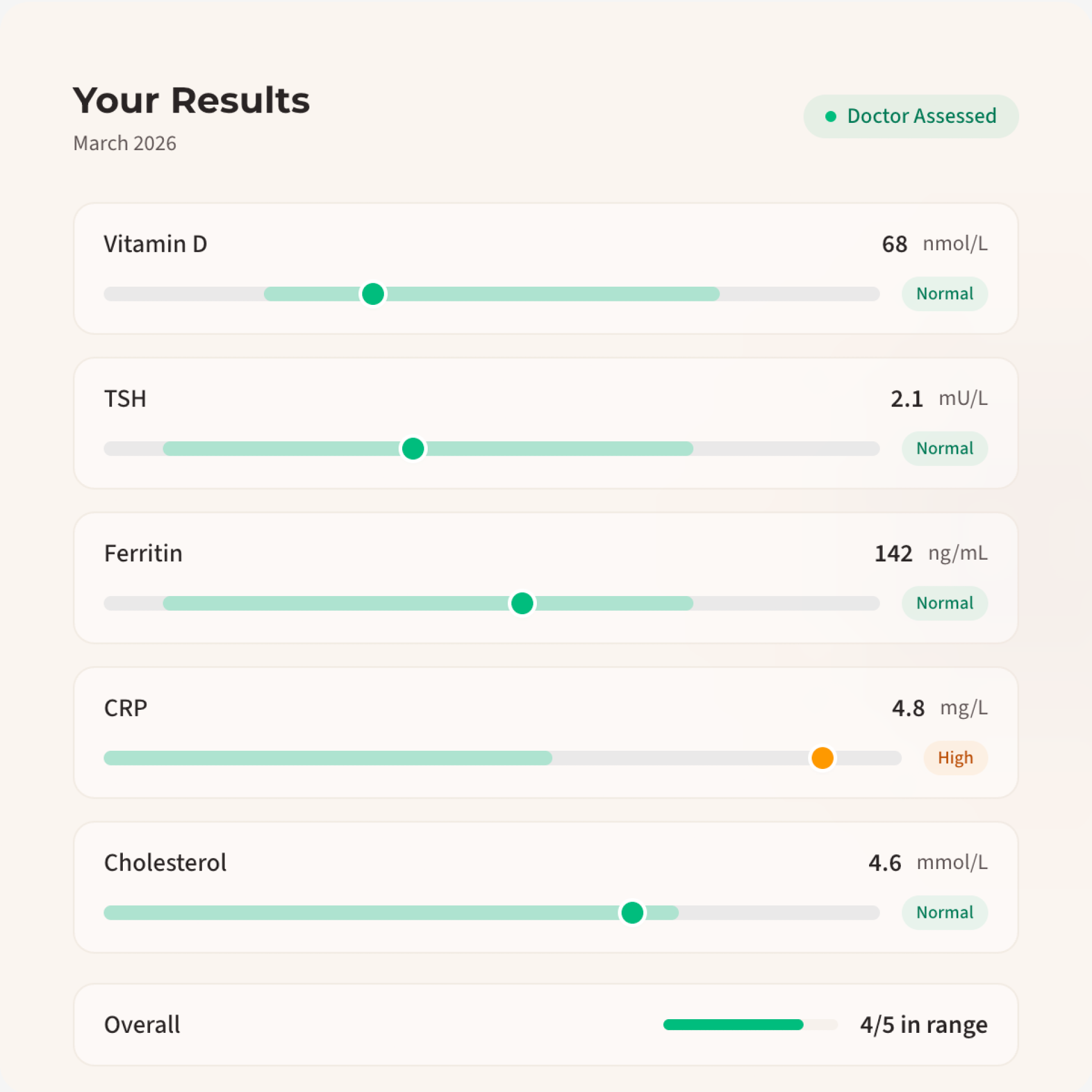
Your results show, for each marker, whether it falls within, above or below the reference range. A value outside the expected range may point to an imbalance worth exploring further.
For instance, low hemoglobin together with low iron and ferritin could be associated with iron-deficiency anemia. What counts as a healthy value varies by lab and person, so numbers alone say little. A doctor can review your result in the context of your full situation.
What happens after the results?
Your results are available online within a few working days in your personal dashboard. You receive a clear report showing each marker alongside its reference range.
Every blood test result includes a professional assessment from a BIG-registered doctor. For treatment decisions, discuss your results with your GP.
Frequently Asked Questions
A single hemoglobin test measures only your hemoglobin. This anemia blood test adds iron, ferritin, transferrin, transferrin saturation, a complete blood count and vitamin B12.
You are asked to come fasted. In addition, avoid iron supplements for at least 24 hours before the draw, as they can temporarily affect your values.
No. You order online yourself and choose a sample point near you, no referral required.
The iron studies panel looks only at your iron. This test looks more broadly at your red blood cells by also including hemoglobin, a complete blood count and B12.
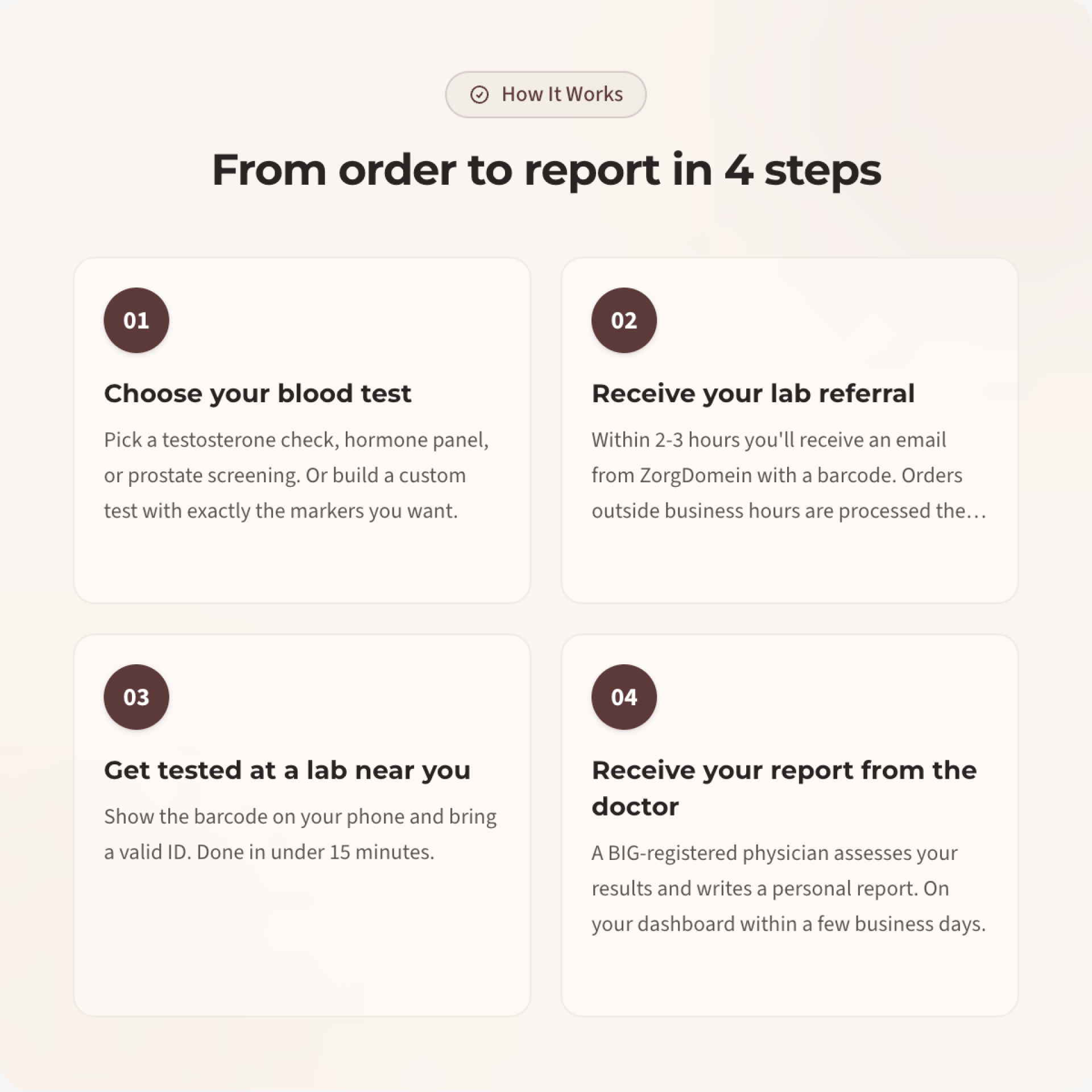
From order to report in 4 steps
No referral needed. No waiting list. Just order and go.
Choose your blood test
Pick a testosterone check, hormone panel, or prostate screening. Or build a custom test with exactly the markers you want.
Receive your lab referral
Within 1 business day you'll receive an email from ZorgDomein with a barcode. Orders outside business hours are processed from the next business day.
Get tested at a lab near you
Show the barcode on your phone and bring a valid ID. Done in under 15 minutes.
Receive your report from the doctor
A BIG-registered physician assesses your results and writes a personal report. On your dashboard within a few business days.
Choose your blood test
Pick a testosterone check, hormone panel, or prostate screening. Or build a custom test with exactly the markers you want.
Receive your lab referral
Within 1 business day you'll receive an email from ZorgDomein with a barcode. Orders outside business hours are processed from the next business day.
Get tested at a lab near you
Show the barcode on your phone and bring a valid ID. Done in under 15 minutes.
Receive your report from the doctor
A BIG-registered physician assesses your results and writes a personal report. On your dashboard within a few business days.
Always a location near you
With 700+ certified phlebotomy points across the Netherlands.
What We Test
This panel includes 7 biomarkers, each tested at a certified laboratory using medical-grade equipment.
| No. | Biomarker | Unit | Turnaround |
|---|---|---|---|
| 01 | Iron (Serum) Serum iron measures the amount of circulating iron in your blood. Iron is essential for haemoglobin production, oxygen transport, and energy metabolism throughout the body. | umol/l | 5 days |
| 02 | Hemoglobin A hemoglobin test measures the amount of hemoglobin protein in your blood. Hemoglobin is found inside red blood cells and is responsible for binding oxygen in the lungs and delivering it throughout your body. | mmol/l | 1 day |
| 03 | Transferrin Saturation Transferrin saturation measures the percentage of the iron-transport protein transferrin that is occupied by iron. It is a key indicator of your body's iron status and helps distinguish between different causes of iron-related disorders. | % | — |
| 04 | Vitamin B12 Vitamin B12 is considered essential for red blood cell formation, neurological function, and DNA synthesis. Deficiency may develop gradually and is sometimes associated with dietary patterns. Healthcare providers can help interpret your results. | pmol/l | 3 days |
| 05 | Ferritin Ferritin is a protein that stores iron, so your ferritin level shows how large your iron reserve is. Serum iron only measures how much iron is circulating in your blood at that moment; ferritin describes the reserve behind it. That reserve empties before your haemoglobin falls, so a low ferritin can already cause symptoms while your blood count still looks normal. Ferritin also rises with inflammation, infection and liver strain, which is why it can only be read properly alongside a CRP. Commonly used reference values are 30 to 400 µg/l for men and 15 to 150 µg/l for women, but your own laboratory report is what counts. | ug/l | 2 days |
| 06 | Transferrin Transferrin is the main protein responsible for transporting iron in the blood. It carries iron from the gut and storage sites to cells that need it, including bone marrow for red blood cell production. | g/l | 2 days |
| 07 | Basic Blood Count A basic blood count measures three core values in your blood: hemoglobin, white blood cells and platelets. Together they say something about oxygen transport, immune defence and clotting. It is a simple baseline check, without the red-cell indices and white-cell differential of a complete blood count. | — | 2 days |
| Your result arrives once the slowest test is finished: 5 days. This is indicative; turnaround varies per laboratory. | |||
Preparation
-
Been ill? Wait a little
RequiredHad a fever, an infection or a vaccination in the past 2 weeks? Wait with the draw until you are fully recovered. These values react to inflammation and would give a distorted picture.
-
Preferably fasting
RecommendedComing fasting gives a slightly cleaner value, but it is not required. If it suits you, eat nothing from 22:00 the evening before and drink only water.
-
Preferably in the morning
RecommendedA morning draw makes this value easiest to compare with its reference range. Plan the draw before 10:00 if you can.
- Water is always fine. Drink as usual beforehand, it makes the draw easier.
- Take your usual medication, unless your own doctor told you otherwise.
Extend this panel
Tests from the same field, run on the same sample. Same draw, no second appointment.
Related Tests
Explore more tests that might interest you.
Iron Studies
Iron panel: Iron, Ferritin, Transferrin, and Transferrin Saturation.
Tiredness
Investigate some common causes of fatigue: CBC, thyroid, iron, vitamins, glucose, and HbA1c.
Vegetarian
Key nutrients at risk on a plant-based diet: Ferritin, CBC, B12, Vitamin D, Zinc, Magnesium.
This test not quite right?
Build your own blood test from 139+ individual biomarkers — choose exactly what you need.
Have a question?
Our team is happy to help. Ask your question and we'll respond as soon as possible.