Order an iron deficiency test and check your iron
Iron panel: Iron, Ferritin, Transferrin, and Transferrin Saturation.
Add to Cart
No referral needed
Added to your cart
Click the button to view your cart
Biomarkers Included
4 biomarkersIron (Serum), Transferrin Saturation, Ferritin, Transferrin
An iron deficiency test can help explain why you feel tired or lacking in energy. This iron panel measures four markers together: iron, ferritin, transferrin and transferrin saturation.
That combination gives a more detailed view of your iron metabolism than a single iron value. You order online, need no referral and receive your results with an assessment from a BIG-registered doctor.
Why this test?
Iron is involved in oxygen transport, energy production and your immune defence. A single iron value fluctuates during the day and does not always tell the whole story, which is why this iron deficiency test also adds your storage and transport.
Ferritin shows your iron stores, transferrin is the transport protein and transferrin saturation indicates how much of that transport capacity is being used. Together they give a broader view than a single iron blood test. It is a snapshot, not a diagnosis.
Who is this test for?
This test may suit men who:
- experience persistent fatigue, reduced endurance or unexplained weakness that could relate to iron
- follow a diet that is lower in iron, for example plant-based
- want to track their iron stores, especially if earlier values were borderline
- train intensively, which can influence iron turnover
What is tested?
- Iron serum (umol/l): the amount of iron circulating in your blood. This value can vary over the day and after meals.
- Ferritin (ug/l): reflects your iron stores. Low ferritin may point to depleted reserves, while elevated ferritin can be associated with inflammation or iron overload.
- Transferrin (g/L): the protein that transports iron through your bloodstream. Your body may produce more transferrin when stores are low.
- Transferrin saturation (%): the percentage of transferrin that is carrying iron. This calculated value helps indicate whether there is enough iron available for what your body needs.
If you want to know more about an individual marker, see the page about ferritin.
What can this test tell you?
Taken together, these markers may help distinguish between different states of your iron balance. Low ferritin with elevated transferrin could, for example, suggest your body is compensating for depleted stores.
Normal iron with low transferrin saturation might mean iron is present but not being used effectively. Elevated ferritin without other signs of deficiency may be associated with inflammation rather than a true iron excess. The combination of four values gives more nuance than a single marker.
How is the sample collected?
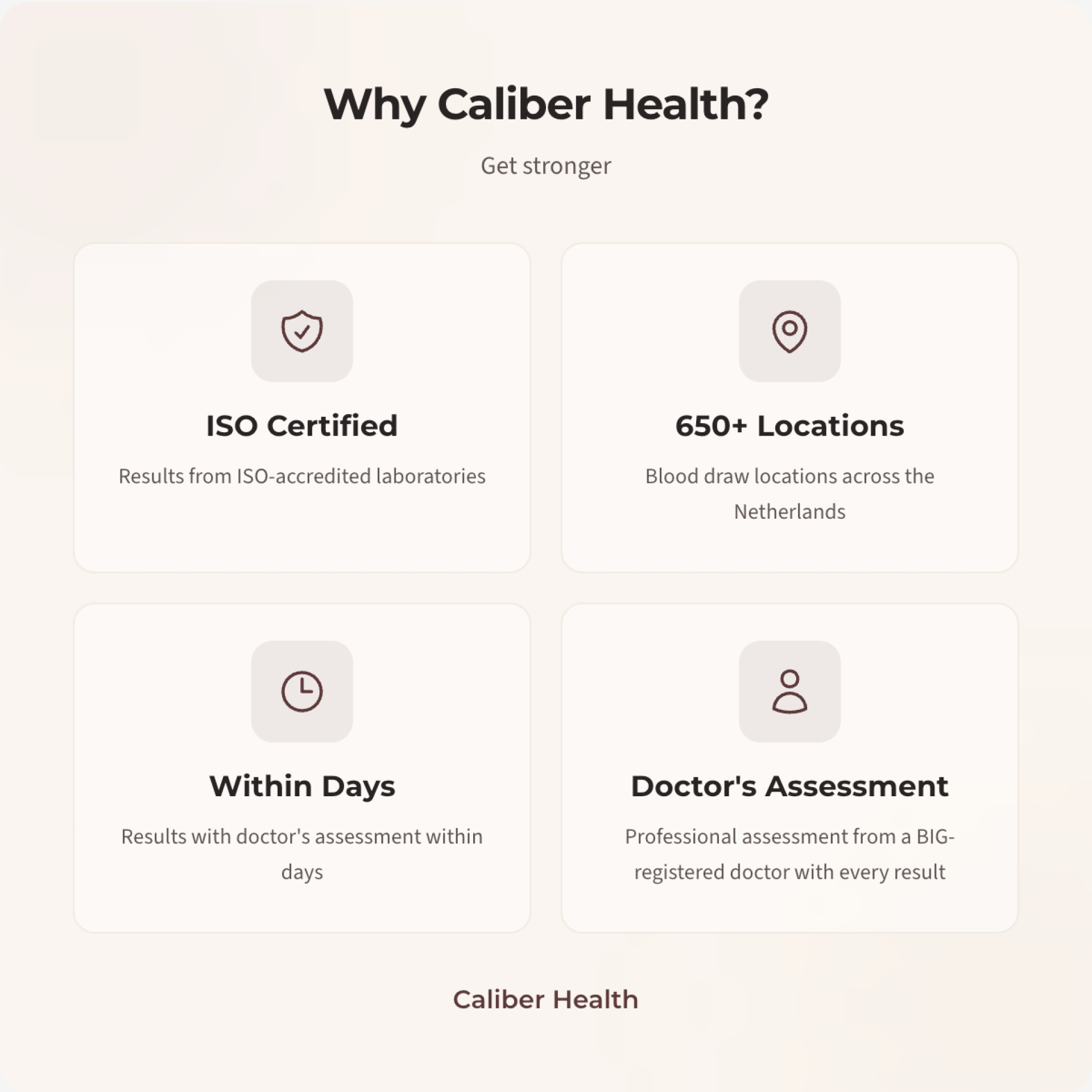
Blood is drawn at a certified sample point. There are 700+ locations across the Netherlands, which you choose yourself after ordering.
This is a blood test without a referral: you do not need to see your GP first. You pick a location and time yourself, and the draw usually takes around 10 to 15 minutes and is done by trained staff.
When is this test useful?
This iron deficiency test can be useful for symptoms that may relate to an iron imbalance, such as persistent tiredness, reduced physical performance or difficulty recovering from exercise.
It can also be handy if you want to have your iron values measured to record a baseline or to track changes over time. If you want to look at your red blood cells and B12 alongside your iron, the broader anaemia workup may fit better.
What do the results mean?
Your results appear with a reference range for each marker. Your iron metabolism consists of several interacting components, so the values are best interpreted together rather than in isolation.
A doctor can help determine whether the overall picture points to a healthy iron status or whether further investigation could be worthwhile. What counts as a healthy value varies by lab and person.
What happens after the results?
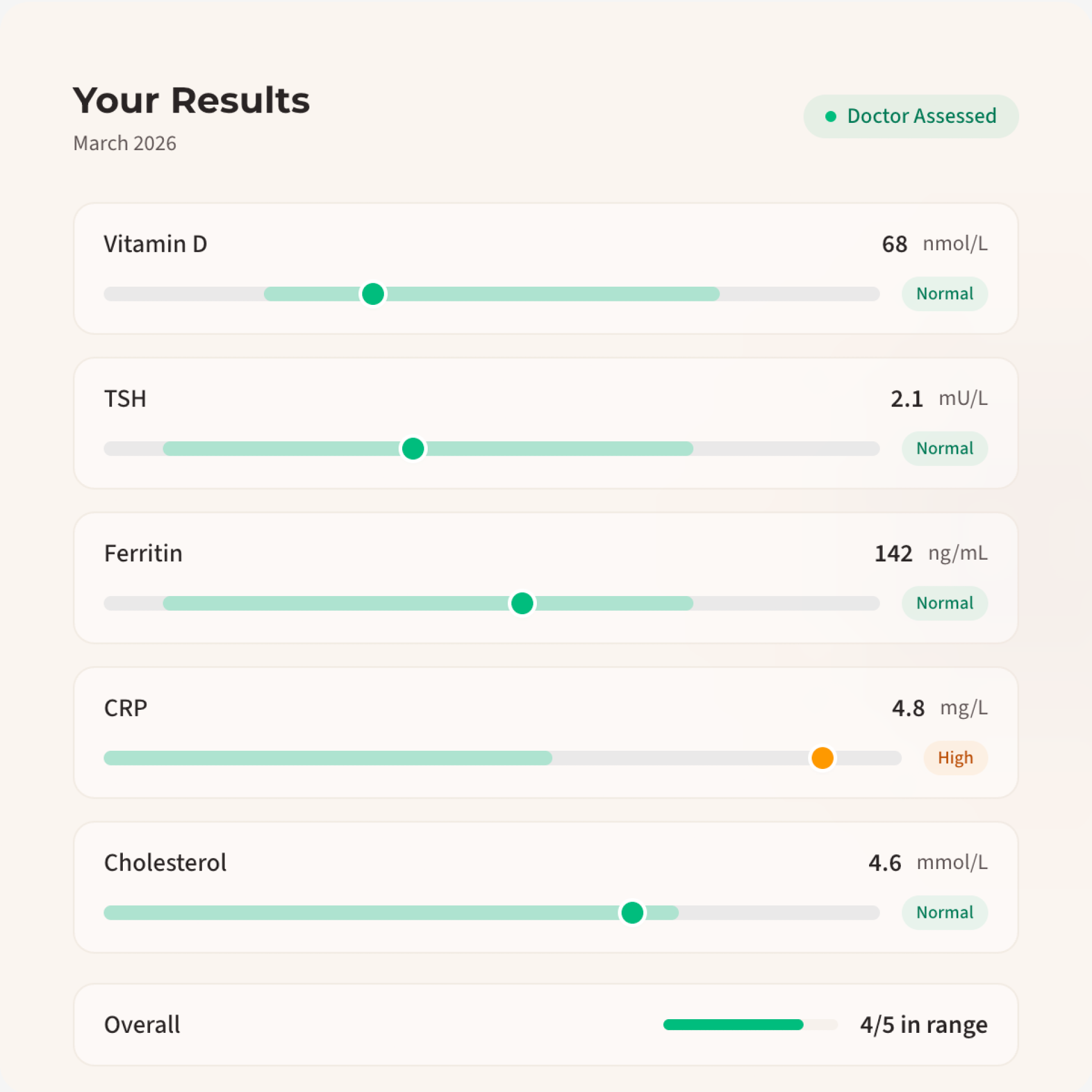
Your results are available online within a few working days in your personal dashboard. The report shows your measured values alongside their reference ranges.
Every blood test result includes a professional assessment from a BIG-registered doctor. For treatment decisions, discuss your results with your GP.
Frequently Asked Questions
A single iron blood test measures only the iron circulating at that moment. This test adds ferritin, transferrin and transferrin saturation, so your storage and transport are included too.
Coming fasted is advised for more consistent results. In addition, avoid iron supplements for 24 hours before the draw.
No. You order online yourself and choose a sample point near you, no referral required.
This test focuses on your iron status with four markers. The anaemia workup looks more broadly by also including hemoglobin, a complete blood count and vitamin B12.
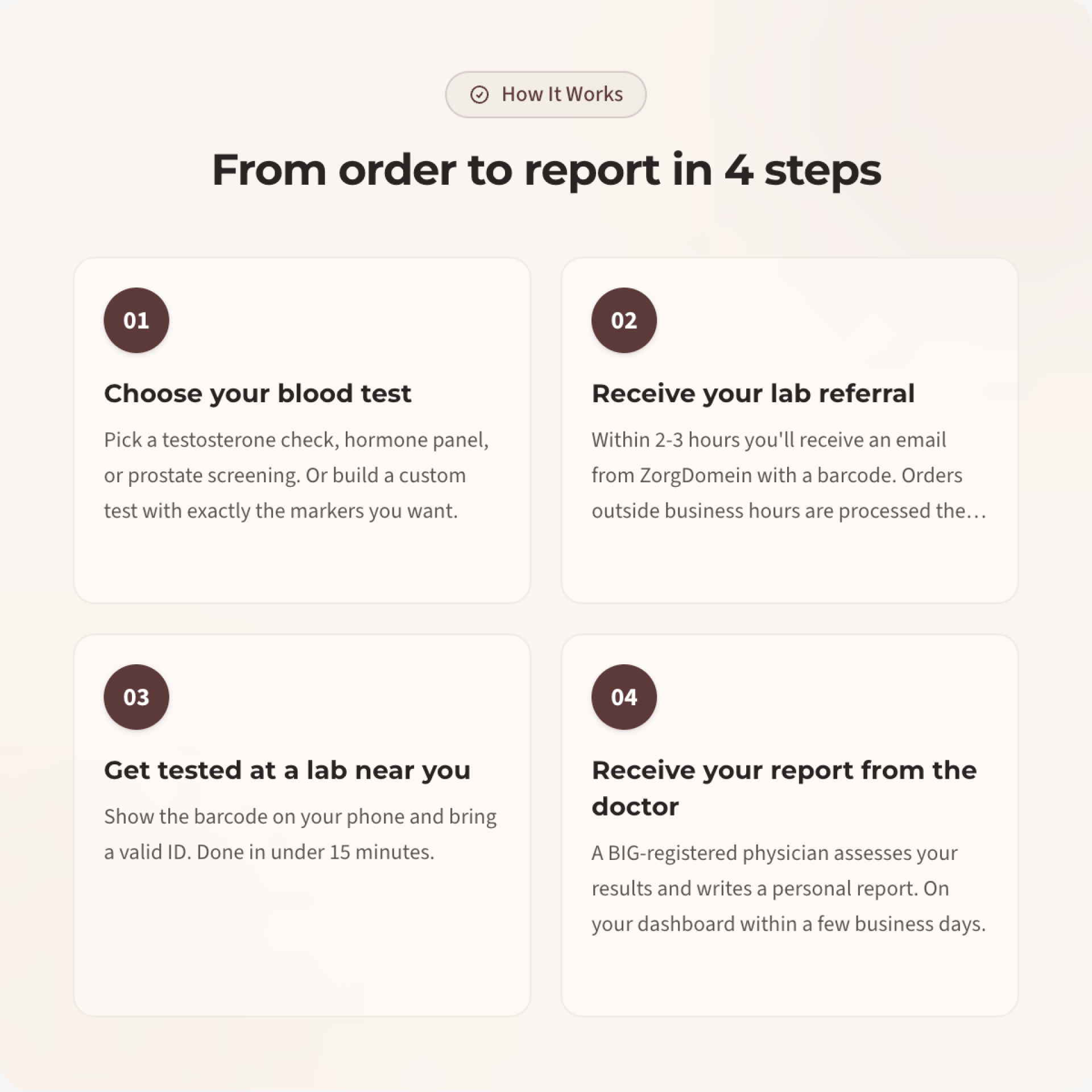
From order to report in 4 steps
No referral needed. No waiting list. Just order and go.
Choose your blood test
Pick a testosterone check, hormone panel, or prostate screening. Or build a custom test with exactly the markers you want.
Receive your lab referral
Within 1 business day you'll receive an email from ZorgDomein with a barcode. Orders outside business hours are processed from the next business day.
Get tested at a lab near you
Show the barcode on your phone and bring a valid ID. Done in under 15 minutes.
Receive your report from the doctor
A BIG-registered physician assesses your results and writes a personal report. On your dashboard within a few business days.
Choose your blood test
Pick a testosterone check, hormone panel, or prostate screening. Or build a custom test with exactly the markers you want.
Receive your lab referral
Within 1 business day you'll receive an email from ZorgDomein with a barcode. Orders outside business hours are processed from the next business day.
Get tested at a lab near you
Show the barcode on your phone and bring a valid ID. Done in under 15 minutes.
Receive your report from the doctor
A BIG-registered physician assesses your results and writes a personal report. On your dashboard within a few business days.
Always a location near you
With 700+ certified phlebotomy points across the Netherlands.
What We Test
This panel includes 4 biomarkers, each tested at a certified laboratory using medical-grade equipment.
| No. | Biomarker | Unit | Turnaround |
|---|---|---|---|
| 01 | Iron (Serum) Serum iron measures the amount of circulating iron in your blood. Iron is essential for haemoglobin production, oxygen transport, and energy metabolism throughout the body. | umol/l | 5 days |
| 02 | Transferrin Saturation Transferrin saturation measures the percentage of the iron-transport protein transferrin that is occupied by iron. It is a key indicator of your body's iron status and helps distinguish between different causes of iron-related disorders. | % | — |
| 03 | Ferritin Ferritin is a protein that stores iron, so your ferritin level shows how large your iron reserve is. Serum iron only measures how much iron is circulating in your blood at that moment; ferritin describes the reserve behind it. That reserve empties before your haemoglobin falls, so a low ferritin can already cause symptoms while your blood count still looks normal. Ferritin also rises with inflammation, infection and liver strain, which is why it can only be read properly alongside a CRP. Commonly used reference values are 30 to 400 µg/l for men and 15 to 150 µg/l for women, but your own laboratory report is what counts. | ug/l | 2 days |
| 04 | Transferrin Transferrin is the main protein responsible for transporting iron in the blood. It carries iron from the gut and storage sites to cells that need it, including bone marrow for red blood cell production. | g/l | 2 days |
| Your result arrives once the slowest test is finished: 5 days. This is indicative; turnaround varies per laboratory. | |||
Preparation
-
Been ill? Wait a little
RequiredHad a fever, an infection or a vaccination in the past 2 weeks? Wait with the draw until you are fully recovered. These values react to inflammation and would give a distorted picture.
-
Preferably fasting
RecommendedComing fasting gives a slightly cleaner value, but it is not required. If it suits you, eat nothing from 22:00 the evening before and drink only water.
-
Preferably in the morning
RecommendedA morning draw makes this value easiest to compare with its reference range. Plan the draw before 10:00 if you can.
- Water is always fine. Drink as usual beforehand, it makes the draw easier.
- Take your usual medication, unless your own doctor told you otherwise.
Extend this panel
Tests from the same field, run on the same sample. Same draw, no second appointment.
Related Tests
Explore more tests that might interest you.
Tiredness
Investigate some common causes of fatigue: CBC, thyroid, iron, vitamins, glucose, and HbA1c.
Anemia
Anemia workup: hemoglobin, iron, transferrin, CBC, and B12.
Vegetarian
Key nutrients at risk on a plant-based diet: Ferritin, CBC, B12, Vitamin D, Zinc, Magnesium.
This test not quite right?
Build your own blood test from 139+ individual biomarkers — choose exactly what you need.
Have a question?
Our team is happy to help. Ask your question and we'll respond as soon as possible.