
Order a complete metabolic panel with 16 markers
Comprehensive metabolic panel: electrolytes, kidney, liver, glucose, HbA1c, and protein.
Add to Cart
No referral needed
Added to your cart
Click the button to view your cart
Biomarkers Included
16 biomarkersYour metabolism underpins nearly every process in your body. This complete metabolic panel measures sixteen metabolic markers in one go: your electrolyte balance, your kidney filtration, your liver enzymes, your blood sugar regulation and your protein status.
You order online, need no referral and get your blood drawn at a sample point near you. It is a blood test without a referral, with results within a few working days including an assessment by a doctor.
Why this test?
Some metabolic shifts are not immediately noticeable from symptoms. This complete metabolic panel measures your electrolytes, your kidney values, your liver enzymes, your glucose and HbA1c and your protein levels, so you get a broad metabolic overview in one go.
Together, these markers can help reveal patterns you would not notice from symptoms alone. That is not a diagnosis, but a structured set of data you can discuss with a doctor.
Who is this test for?
This test may suit men who:
- want a broad metabolic overview beyond a standard lipid panel
- are monitoring their kidney or liver function over time
- are curious about their blood sugar regulation, especially with metabolic conditions in the family
- want a structured set of metabolic data to discuss with a doctor
If you are looking for a general blood test that covers several systems at once, this panel fits that well.
What is tested?
This complete metabolic panel measures sixteen biomarkers, across five groups:
- Electrolytes: sodium, potassium, chloride, calcium and bicarbonate (mmol/l), which play a role in your fluid balance, nerve function and muscle contraction.
- Kidney markers: creatinine (umol/l), eGFR (ml/min) and urea (mmol/l), which give insight into how your kidneys filter waste.
- Liver enzymes: ALT, AST and ALP (u/l) and total bilirubin (umol/l), which can be linked to liver stress.
- Glucose metabolism: fasting glucose (mmol/l) and HbA1c (mmol/mol), which together give an immediate and a longer view of your blood sugar.
- Protein: albumin and total protein (g/l), related to your nutritional status and liver function.
You can read more about your blood sugar on the page about fasting glucose. If you want to look at your kidney or liver values separately, the kidney function test and liver function test are specifically aimed at those.
What can this test tell you?
The interplay between these markers can be informative. Altered electrolytes alongside kidney markers may, for example, point to a change in your kidney function. Elevated liver enzymes combined with altered protein levels could point towards liver-related factors.
Fasting glucose and HbA1c together give both an immediate and a longer-term view of your blood sugar regulation, which can be more informative than either value alone. Reviewing these markers together with a doctor can give you a broader view.
How is the sample collected?
For this test, blood is drawn at a certified sample point. There are 700+ locations across the Netherlands, which you choose yourself after ordering. You do not need to see your GP first: it is a blood test without a GP, where you pick a time that suits you.
The draw is done by trained staff and usually takes 10 to 15 minutes. After that, your blood goes to the lab, where your sixteen values are determined.
When is this test useful?
This panel can be useful when you want a broad metabolic overview, when monitoring known kidney or liver values, or when symptoms such as fatigue, changes in urination or unexplained nausea prompt a closer look at your underlying metabolic function.
Note: this is a metabolic panel and not a complete blood count. It does not measure blood cells such as hemoglobin or white blood cells. If you instead want to look at your blood sugar, insulin and lipids together, the metabolic health check fits that better.
What do the results mean?
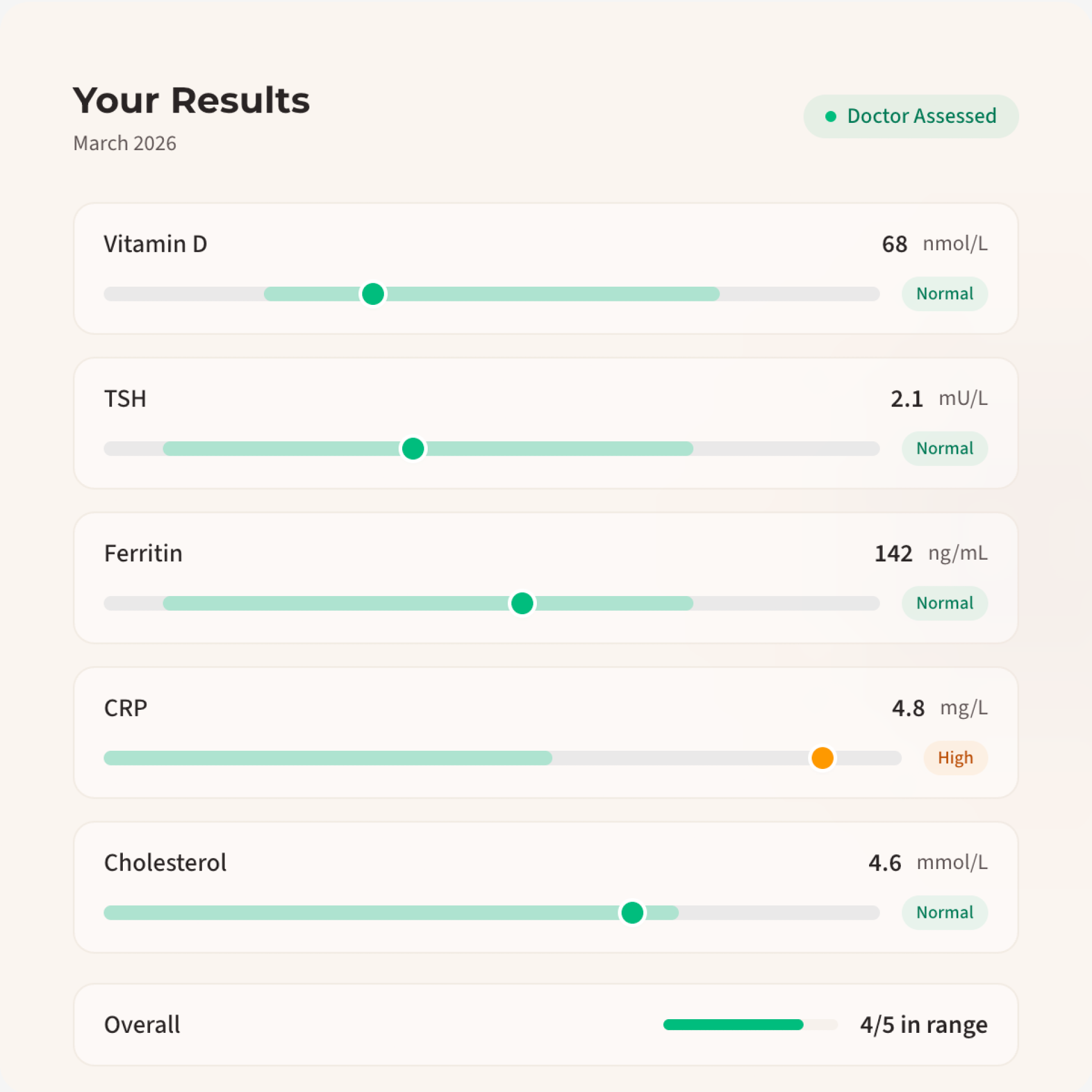
Each marker is shown with its reference range. Metabolic panels often contain values that interact with each other, so individual results are most meaningful when you view them together.
A single measurement provides a data point, not a definitive answer. A doctor can help determine whether any patterns or combinations of values warrant further evaluation.
Preparation
Fasting for 8 to 12 hours is needed for reliable fasting glucose values. Drinking water is fine during the fasting period. Ideally, book your appointment in the morning.
If you use medication or supplements, ask your doctor whether you should take them as usual on the day of the draw.
What happens after the results?
Your results are available in your personal dashboard within a few working days, with the measured value alongside the reference range for each marker. Given the interconnected nature of metabolic markers, it helps to review your results together with a doctor.
Every blood test result includes a professional assessment from a BIG-registered doctor. For treatment decisions, discuss your results with your GP.
Frequently Asked Questions
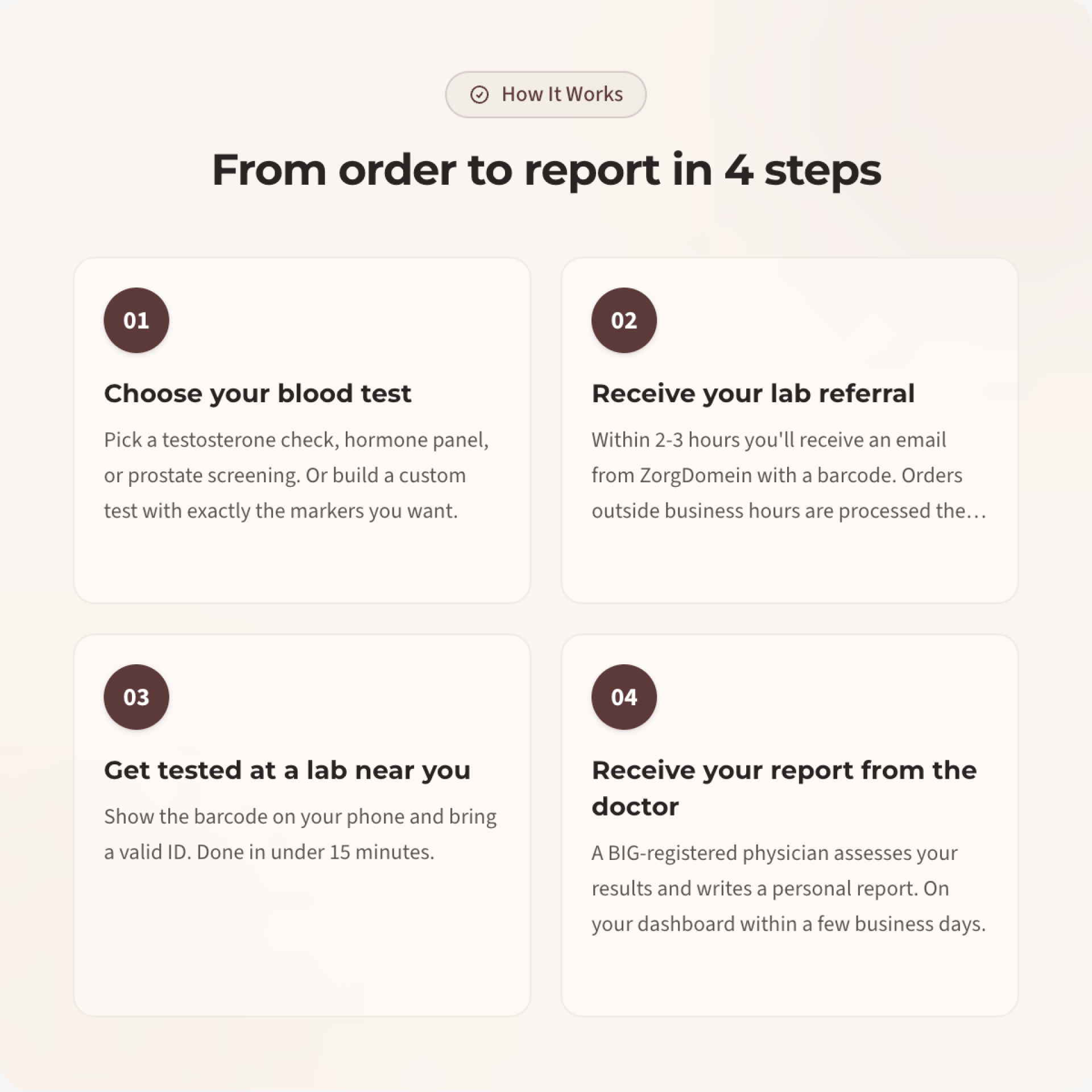
From order to report in 4 steps
No referral needed. No waiting list. Just order and go.
Choose your blood test
Pick a testosterone check, hormone panel, or prostate screening. Or build a custom test with exactly the markers you want.
Receive your lab referral
On the same business day you'll receive an email from ZorgDomein with a barcode. Orders outside business hours are processed the next business day.
Get tested at a lab near you
Show the barcode on your phone and bring a valid ID. Done in under 15 minutes.
Receive your report from the doctor
A BIG-registered physician assesses your results and writes a personal report. On your dashboard within a few business days.
Choose your blood test
Pick a testosterone check, hormone panel, or prostate screening. Or build a custom test with exactly the markers you want.
Receive your lab referral
On the same business day you'll receive an email from ZorgDomein with a barcode. Orders outside business hours are processed the next business day.
Get tested at a lab near you
Show the barcode on your phone and bring a valid ID. Done in under 15 minutes.
Receive your report from the doctor
A BIG-registered physician assesses your results and writes a personal report. On your dashboard within a few business days.
Always a location near you
With 700+ certified phlebotomy points across the Netherlands.
What We Test
This panel includes 16 biomarkers, each tested at a certified laboratory using medical-grade equipment.
HbA1c (glycated haemoglobin) reflects your average blood sugar levels over the past 2-3 months. It is the gold standard for long-term blood sugar monitoring and diabetes management.
Learn moreALT (alanine aminotransferase) is a liver enzyme that serves as a key indicator of liver health. Elevated levels may suggest liver cell damage and can be associated with various liver conditions.
Learn moreCalcium is the most abundant mineral in the body, essential for strong bones and teeth, muscle contraction, nerve signalling, and blood clotting. Most calcium is stored in bones and teeth, with a small amount circulating in the blood.
Learn moreAlkaline Phosphatase (ALP) is an enzyme found in the liver, bones, kidneys, and digestive system. ALP levels can help evaluate liver health, bone disorders, and bile duct function.
Learn moreAST (aspartate aminotransferase) is an enzyme found in the liver, heart, and muscle cells. Elevated levels may indicate liver damage, but because AST is present in multiple tissues, results are best interpreted alongside other liver markers such as ALT.
Learn moreTotal bilirubin measures the combined amount of direct and indirect bilirubin in your blood. Bilirubin is a waste product formed during the normal breakdown of red blood cells, and elevated levels may indicate liver disease, bile duct problems, or increased red blood cell destruction.
Learn moreBUN (blood urea nitrogen) measures the amount of urea nitrogen in your blood, a waste product formed when the body breaks down protein. It is primarily used to evaluate kidney function and can be influenced by diet, hydration status, and liver health.
Learn moreCreatinine is a waste product generated by normal muscle metabolism that is filtered out of the blood by the kidneys. It is widely regarded as the gold standard marker for evaluating kidney function, as consistent production makes it a reliable indicator of filtration efficiency.
Learn moreeGFR (estimated glomerular filtration rate) is a calculated measure of how effectively your kidneys filter waste from the blood. It is the gold standard for diagnosing and staging chronic kidney disease and is derived from blood creatinine or cystatin C levels along with demographic factors.
Learn moreFasting glucose measures the level of sugar (glucose) in your blood after an overnight fast. It is one of the primary tests used to screen for and monitor diabetes and pre-diabetes.
Learn moreBicarbonate is an electrolyte that helps maintain the body's acid-base balance. It acts as a buffer in the blood, neutralising excess acids and helping to keep your pH within a healthy range.
Learn moreChloride is an essential electrolyte that helps maintain fluid balance, blood pressure, and the body's acid-base equilibrium. It works closely with sodium and potassium to regulate these vital functions.
Learn moreSodium is a vital electrolyte that regulates fluid balance, blood pressure, and nerve and muscle function. It is the primary cation in extracellular fluid and is closely regulated by the kidneys.
Learn morePotassium is an essential electrolyte and mineral that helps regulate heartbeat, muscle contractions, nerve signals, and fluid balance. It is one of the most important minerals for cardiovascular health.
Learn moreAlbumin is the most abundant protein in the blood, produced by the liver. It maintains fluid balance, transports hormones and nutrients, and serves as an indicator of liver and kidney function.
Learn moreTotal protein measures the combined amount of albumin and globulins in your blood. These proteins play essential roles in maintaining fluid balance, fighting infections, transporting substances, and supporting tissue repair.
HbA1c (Glycated Hemoglobin)
MetabolicHbA1c (glycated haemoglobin) reflects your average blood sugar levels over the past 2-3 months. It is the gold standard for long-term blood sugar monitoring and diabetes management.
HbA1c provides a long-term view of blood sugar control, unlike fasting glucose which reflects a single point in time. It is essential for diabetes diagnosis and management. Consult your healthcare provider.
ALT (Alanine Aminotransferase)
LiverALT (alanine aminotransferase) is a liver enzyme that serves as a key indicator of liver health. Elevated levels may suggest liver cell damage and can be associated with various liver conditions.
ALT levels provide important insight into liver function. Elevated levels may indicate conditions such as hepatitis, fatty liver disease, or medication-related liver damage. Early detection of elevated ALT can help identify liver problems before symptoms develop, allowing for timely intervention and lifestyle modifications.
Calcium
MineralsCalcium is the most abundant mineral in the body, essential for strong bones and teeth, muscle contraction, nerve signalling, and blood clotting. Most calcium is stored in bones and teeth, with a small amount circulating in the blood.
Calcium balance is critical for bone health, heart function, and muscle contraction. Abnormal levels may be associated with bone disorders, parathyroid conditions, or kidney problems. Consult your healthcare provider for personalised advice.
ALP (Alkaline Phosphatase)
LiverAlkaline Phosphatase (ALP) is an enzyme found in the liver, bones, kidneys, and digestive system. ALP levels can help evaluate liver health, bone disorders, and bile duct function.
ALP is a useful screening marker for liver and bone conditions. Elevated levels may indicate bile duct obstruction, liver disease, or bone disorders. Consult your healthcare provider for interpretation.
AST (Aspartate Aminotransferase)
LiverAST (aspartate aminotransferase) is an enzyme found in the liver, heart, and muscle cells. Elevated levels may indicate liver damage, but because AST is present in multiple tissues, results are best interpreted alongside other liver markers such as ALT.
AST levels provide important information about the health of your liver, heart, and muscles. Elevated levels may be associated with conditions such as hepatitis, cirrhosis, heart attack, or muscle injury. When evaluated alongside ALT, the AST:ALT ratio can help your healthcare provider identify the underlying cause of liver enzyme elevation. An AST:ALT ratio greater than 2:1, for instance, may suggest alcohol-related liver damage.
Bilirubin (Total)
LiverTotal bilirubin measures the combined amount of direct and indirect bilirubin in your blood. Bilirubin is a waste product formed during the normal breakdown of red blood cells, and elevated levels may indicate liver disease, bile duct problems, or increased red blood cell destruction.
Total bilirubin is a fundamental marker for assessing liver function and diagnosing the cause of jaundice. By comparing total bilirubin with direct bilirubin, healthcare providers can determine whether elevation is due to liver disease, bile duct obstruction, or haemolysis. Mild elevations may occur in common and generally harmless conditions such as Gilbert syndrome, which affects approximately 5-10% of the population. However, significant elevations warrant further investigation to rule out serious underlying conditions.
Urea (BUN)
KidneyBUN (blood urea nitrogen) measures the amount of urea nitrogen in your blood, a waste product formed when the body breaks down protein. It is primarily used to evaluate kidney function and can be influenced by diet, hydration status, and liver health.
BUN is a valuable marker for assessing how effectively your kidneys are filtering waste from your blood. Elevated levels may indicate that the kidneys are not functioning optimally, which can be associated with dehydration, kidney disease, or other underlying conditions. Monitoring BUN alongside other kidney markers such as creatinine and eGFR provides a more comprehensive picture of renal health and helps detect potential problems early.
Creatinine
KidneyCreatinine is a waste product generated by normal muscle metabolism that is filtered out of the blood by the kidneys. It is widely regarded as the gold standard marker for evaluating kidney function, as consistent production makes it a reliable indicator of filtration efficiency.
Creatinine is central to assessing kidney health. It is used to calculate the estimated glomerular filtration rate (eGFR), which is the primary measure for staging chronic kidney disease. Early detection of rising creatinine levels can prompt timely intervention, helping to slow the progression of kidney damage. Monitoring creatinine is also important for adjusting medication dosages, as many drugs are cleared by the kidneys.
eGFR (Estimated Glomerular Filtration Rate)
KidneyeGFR (estimated glomerular filtration rate) is a calculated measure of how effectively your kidneys filter waste from the blood. It is the gold standard for diagnosing and staging chronic kidney disease and is derived from blood creatinine or cystatin C levels along with demographic factors.
eGFR is the most important single measure for assessing overall kidney function. It is used internationally to diagnose chronic kidney disease, determine its stage, and guide treatment decisions. Regular eGFR monitoring allows early detection of kidney function decline, often before symptoms appear. This is critical because early intervention can significantly slow the progression of kidney disease and reduce the risk of complications such as cardiovascular disease.
Glucose (Fasting)
MetabolicFasting glucose measures the level of sugar (glucose) in your blood after an overnight fast. It is one of the primary tests used to screen for and monitor diabetes and pre-diabetes.
Fasting glucose is a cornerstone of metabolic health assessment. Elevated levels may indicate pre-diabetes or diabetes, while very low levels can also be clinically significant. Consult your healthcare provider for interpretation.
Bicarbonate
MineralsBicarbonate is an electrolyte that helps maintain the body's acid-base balance. It acts as a buffer in the blood, neutralising excess acids and helping to keep your pH within a healthy range.
Proper bicarbonate levels are essential for maintaining blood pH. Imbalances may indicate respiratory or metabolic conditions and can affect organ function. Consult your healthcare provider for interpretation of your results.
Chloride
MineralsChloride is an essential electrolyte that helps maintain fluid balance, blood pressure, and the body's acid-base equilibrium. It works closely with sodium and potassium to regulate these vital functions.
Chloride imbalances can indicate dehydration, kidney disease, or acid-base disturbances. Maintaining proper chloride levels is important for overall metabolic health. Consult your healthcare provider for result interpretation.
Sodium
MineralsSodium is a vital electrolyte that regulates fluid balance, blood pressure, and nerve and muscle function. It is the primary cation in extracellular fluid and is closely regulated by the kidneys.
Sodium balance is essential for proper nerve transmission, muscle contraction, and blood pressure regulation. Significant imbalances can affect brain function and require medical attention. Consult your healthcare provider for guidance.
Potassium
MineralsPotassium is an essential electrolyte and mineral that helps regulate heartbeat, muscle contractions, nerve signals, and fluid balance. It is one of the most important minerals for cardiovascular health.
Potassium is critical for maintaining heart rhythm, blood pressure regulation, and proper muscle function. Both low and high levels can be dangerous and may require medical attention. Consult your healthcare provider for interpretation.
Albumin
LiverAlbumin is the most abundant protein in the blood, produced by the liver. It maintains fluid balance, transports hormones and nutrients, and serves as an indicator of liver and kidney function.
Albumin is important for maintaining blood volume, transporting substances, and reflecting overall health status. Low levels may indicate liver disease, kidney disease, or malnutrition. Consult your healthcare provider.
Total Protein
OtherTotal protein measures the combined amount of albumin and globulins in your blood. These proteins play essential roles in maintaining fluid balance, fighting infections, transporting substances, and supporting tissue repair.
Total protein gives a broad first impression of your nutrition, liver function, kidney function and immune activity, because all of these influence how much protein circulates in your blood. A low total protein can fit with a diet low in protein, a liver that makes less albumin, a kidney that loses protein into the urine, or a gut that absorbs less. A high total protein is less common and can accompany dehydration or long-standing inflammation, where the body produces extra globulins. Because the value is a sum, it rarely gives a diagnosis on its own. It mainly tells your doctor whether the individual protein fractions are worth investigating further.
Related biomarkers
Biomarkers often explored alongside this test for a fuller picture.
Amylase
Amylase is a pancreatic enzyme important for men's digestive health. Men have higher rates of alcohol-related pancreatitis, making regular monitoring valuable.
Bilirubin (Direct)
Direct bilirubin is a liver marker particularly relevant for men who consume alcohol regularly or use supplements that may affect liver function. Monitoring this marker helps assess bile duct health and liver processing capacity.
C-Peptide
C-Peptide reveals how effectively your pancreas produces insulin. Optimal insulin function supports energy, body composition, and metabolic performance.
Ceruloplasmin
Ceruloplasmin reflects copper metabolism and liver health. Keeping these in balance supports energy production and overall metabolic function.
Citrate
Urinary citrate is a key stone-prevention marker particularly relevant for men, who are more likely to develop kidney stones. Dietary factors common in men's nutrition, such as high protein and sodium intake, can lower citrate levels and increase stone risk.
Copper
Copper supports energy production, connective tissue strength, and iron utilisation. Balanced levels are important for maintaining physical performance and vitality.
Related Tests
Explore more tests that might interest you.
Insulin Resistance (HOMA-IR)
A focused men's metabolic test for insulin resistance from fasting glucose and insulin, with your HOMA-IR score.
Thyroid Function
TSH, Free T4, and Free T3 for thyroid assessment.
Metabolic Health Check
Blood sugar, insulin resistance, lipids, and liver markers.
This test not quite right?
Build your own blood test from 139+ individual biomarkers — choose exactly what you need.
Have a question?
Our team is happy to help. Ask your question and we'll respond as soon as possible.