Order an insulin resistance test with HOMA-IR
A focused men's metabolic test for insulin resistance from fasting glucose and insulin, with your HOMA-IR score.
Add to Cart
No referral needed
Added to your cart
Click the button to view your cart
Biomarkers Included
3 biomarkersGlucose (Fasting), HOMA-IR, Insulin (Fasting)
Insulin resistance often develops quietly. Your body then produces more and more insulin to keep your blood sugar normal, sometimes long before your glucose itself changes. With this insulin resistance test you map that interplay through your fasting glucose, your fasting insulin and your HOMA-IR score.
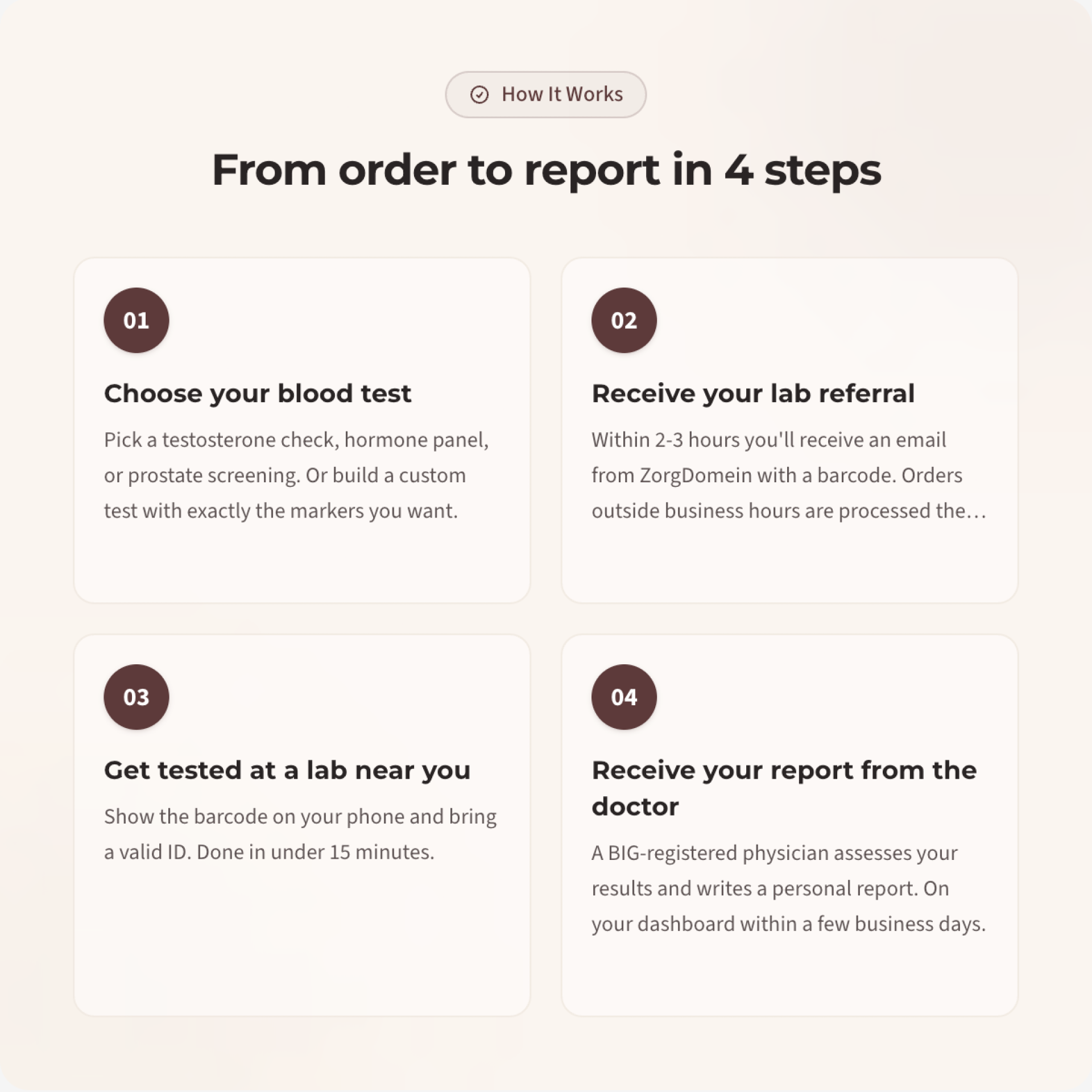
You order online, need no referral and get your blood drawn at a sample point near you. It is a blood test without a referral, with your results usually within 2 working days of the blood draw, including an assessment by a doctor.
Why this test?
Your fasting insulin can rise to keep your blood sugar steady, long before your fasting glucose itself moves. As a result, an insulin resistance test can surface a metabolic shift earlier than a glucose test alone.
HOMA-IR (Homeostatic Model Assessment of Insulin Resistance) estimates your insulin resistance from a fasting blood sample. It is a simple way to get a view of your metabolic health, your insulin sensitivity and factors around your diabetes risk.
Who is this test for?
This test may suit men who:
- carry some extra weight around the midsection, which can be linked to metabolic changes
- have diabetes or a metabolic condition in the family
- have normal glucose values but are still curious about their insulin sensitivity
- are adjusting their lifestyle and want to track how their metabolism responds
Even without clear symptoms, some men choose to record a baseline.
What is tested?
This panel measures and reports three things:
- Glucose (fasting) (mmol/l): your fasting blood sugar.
- Insulin (fasting) (pmol/l): the hormone that moves glucose into your cells.
- HOMA-IR: the calculated insulin-resistance score from your fasting glucose and insulin, using the formula (glucose × insulin) / 22.5.
HOMA-IR is therefore a calculated score, not a separate measurement. If you mainly want to see your average blood sugar over a longer period, the diabetes test with HbA1c fits better. You can read more about your blood sugar on the page about fasting glucose.
What can this test tell you?
A higher HOMA-IR score points towards more insulin resistance, a lower score towards better insulin sensitivity. Because your fasting insulin often responds earlier than your glucose, this insulin test can give an early signal of changes in your metabolism.
On its own, the score is not a diagnosis. It only gains meaning in the context of your symptoms, your lifestyle and possibly other values, which is best discussed with a doctor.
How is the sample collected?
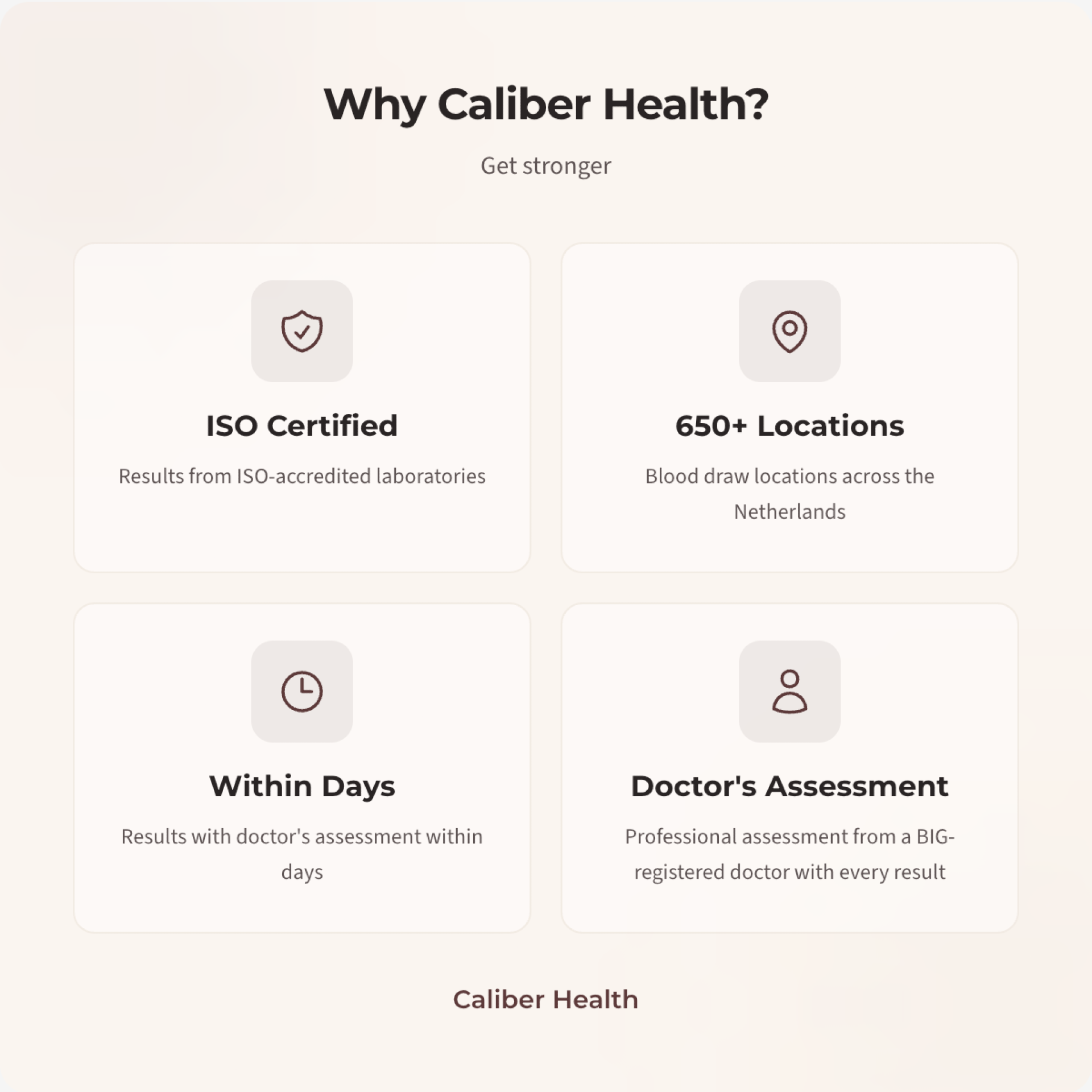
For this test, blood is drawn at a certified sample point. There are 650+ locations across the Netherlands, which you choose yourself after ordering. You do not need to see your GP first: it is a blood test without a GP, where you pick a time that suits you.
The draw is done by trained staff and usually takes only a few minutes. After that, your blood goes to the lab, where your glucose and insulin are determined and your HOMA-IR is calculated.
When is this test useful?
An insulin resistance test can be useful if you have normal glucose values but are still curious about your insulin sensitivity, for example with extra belly fat, little exercise or diabetes in the family.
It can also help if you are adjusting your lifestyle and want to track how your metabolism responds; a HOMA-IR test can give you a concrete reference point. You arrange it as a blood test without a referral and get drawn whenever it suits you.
What do the results mean?
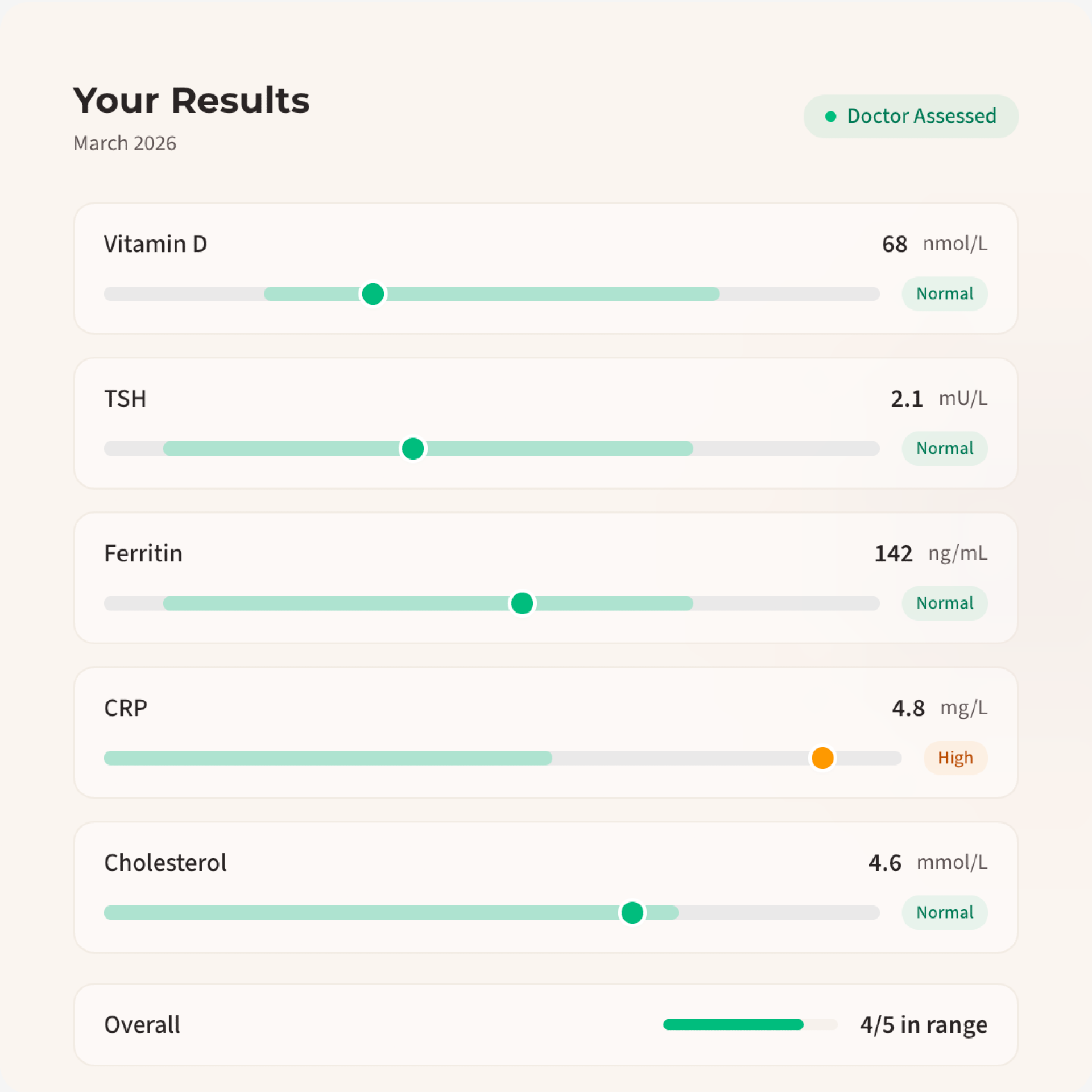
Your result shows your fasting glucose and insulin with their reference ranges, and your HOMA-IR with an accompanying interpretation. A value outside the expected range can be associated with reduced insulin sensitivity, but on its own it does not tell the whole story.
What counts as a healthy value varies by lab and by person. A doctor can interpret your result together with your situation and help you decide whether follow-up steps could be worthwhile.
What happens after the results?
Your results are usually in your Caliberhealth account within 2 working days of the blood draw, often the next day. Some markers take longer. You log in to your account and view your results whenever it suits you, with the measured value and reference range for each marker and your calculated HOMA-IR score.
Every blood test result includes a professional assessment from a BIG-registered doctor. For treatment decisions, discuss your results with your GP.
Frequently Asked Questions
Yes. Both fasting glucose and fasting insulin require an empty stomach, so fast for 8 to 12 hours (water is fine) before the draw. A non-fasting sample makes your HOMA-IR score unreliable.
No. The lab measures your fasting glucose and fasting insulin; HOMA-IR is calculated from those two values. That is why the test reports all three.
This test looks at your insulin sensitivity through glucose, insulin and HOMA-IR. A diabetes test with HbA1c focuses on your average blood sugar over the past two to three months.
No, you order this blood test without a referral and can share the results with your GP afterwards.
The test costs €99,-, including the blood draw. You pay it yourself and no draw fee comes on top.
No. What you request yourself falls outside the basic Dutch insurance. You pay yourself, and your deductible (eigen risico) is not touched.
Count on one business day, or a day more if you order after 17:00 or at the weekend. That is how long the referral email takes, and without a referral you are not drawn. Then you can simply walk in at some draw sites; at the rest you book an appointment. Every location states it.
Two things: the barcode from the ZorgDomein email and a valid ID. You show the barcode on your phone. If you have no BSN, the email has no barcode; print the referral form from the link then.
Take medication as usual unless your own doctor said otherwise. Some markers ask for no heavy training for 48 hours or no alcohol for 24 hours. The test and the instructions after your order tell you what applies to you.
You show your barcode and a valid ID, and the draw site takes blood. About a quarter of an hour in total.
Yes. Every result is assessed by a BIG-registered doctor, who explains your values in your account. Treatment you talk over with your GP.
At an independent, certified laboratory from the Caliberhealth network, spread across the Netherlands. That network also runs the draw sites; they are not owned by Caliberhealth. Reference values can differ a little per laboratory.
No. Your test does not pass your GP and does not go into your medical record. A healthcare provider gets your data only with your written consent, and it is never sold. Testing anonymously is not possible: a valid result needs your name, date of birth and a valid ID.
What We Test
| No. | Biomarker | Unit |
|---|---|---|
| 01 | Glucose (Fasting) | mmol/l |
| 02 | HOMA-IR | Index |
| 03 | Insulin (Fasting) | pmol/L |
| Your results are usually in your Caliberhealth account within 2 working days of the blood draw. The laboratory states a longer turnaround for Insulin (Fasting). | ||
Preparation
-
Pause biotin
RequiredDo you take a supplement with biotin (vitamin B8, common in hair, skin and nail supplements)? Stop it 72 hours before the draw. Biotin interferes with the measurement of these values.
-
Come fasting
RequiredFrom 22:00 the evening before, eat and drink nothing except water. That is at least 8 hours. Skip coffee, tea, chewing gum and smoking that morning. Plan the draw before 10:00.
- Water is always fine. Drink as usual beforehand, it makes the draw easier.
- Take your usual medication, unless your own doctor told you otherwise.
Extend this panel
Same draw, no second appointment.
Related Tests
Metabolic Health Check
Blood sugar, insulin resistance, lipids, and liver markers.
Cardiovascular Health
Advanced heart health panel with hs-CRP and homocysteine.
Complete Metabolic Panel
Comprehensive metabolic panel: electrolytes, kidney, liver, glucose, HbA1c, and protein.