Order a male fertility screening for your IVF journey
Infectious-disease screening plus male reproductive hormones for the IVF partner.
Add to Cart
No referral needed
Added to your cart
Click the button to view your cart
Biomarkers Included
13 biomarkersSHBG (Sex Hormone Binding Globulin), Prolactin, Estradiol (E2), Free Testosterone, FSH (Follicle Stimulating Hormone), LH (Luteinizing Hormone), Total Testosterone, Chlamydia IgG, HIV 1/2 Antibody + p24 Antigen, Syphilis Screening, Hepatitis B Core Antibody, Hepatitis B Surface Antigen, Hepatitis C Antibody
IVF and ICSI are a journey for the two of you. Before treatment, the male partner is screened for infectious diseases, and his reproductive hormones can add useful context.
This male fertility screening brings those blood tests together in a single draw. You arrange it online without a referral and share the results with the clinic afterwards.
Why this test?
Fertility clinics usually screen both partners for infectious diseases before an IVF or ICSI treatment starts. For the man, reproductive hormones such as FSH, LH and testosterone can add context, especially when a semen analysis is abnormal.
This male fertility screening is meant to complement the care of your fertility clinic, not to replace it. It can take part of the partner workup off your hands in advance.
Who is this test for?
This male fertility test may suit men who:
- are the partner in an IVF or ICSI journey
- want the infectious-disease screening ready before the clinic appointment
- would like a baseline of their reproductive hormones
- prefer to test without a referral
You arrange it as a blood test without a referral, at a time that works for you both. Think of it as a practical male fertility test that covers the blood side of the workup.
What is tested?
This panel measures thirteen biomarkers across two groups:
- Infectious-disease screening: HIV 1/2, hepatitis B (HBsAg and core antibody), hepatitis C, syphilis and Chlamydia IgG.
- Reproductive hormones: FSH, LH, total testosterone, free testosterone, estradiol (E2), prolactin and SHBG. You can read more about testosterone on the page about total testosterone.
A semen analysis is also part of the male workup, but it is a laboratory analysis of a semen sample rather than a blood test. You arrange it directly through your fertility clinic; it is not part of this panel.
What can this test tell you?
The infectious-disease screening shows whether there are indications of a number of infections that clinics often check before treatment. The hormone values can give context about your reproductive hormones, for example alongside the outcome of a semen analysis.
The results are data points, not a diagnosis. The fertility clinic or your doctor can best interpret them within your treatment plan.
How is the sample collected?
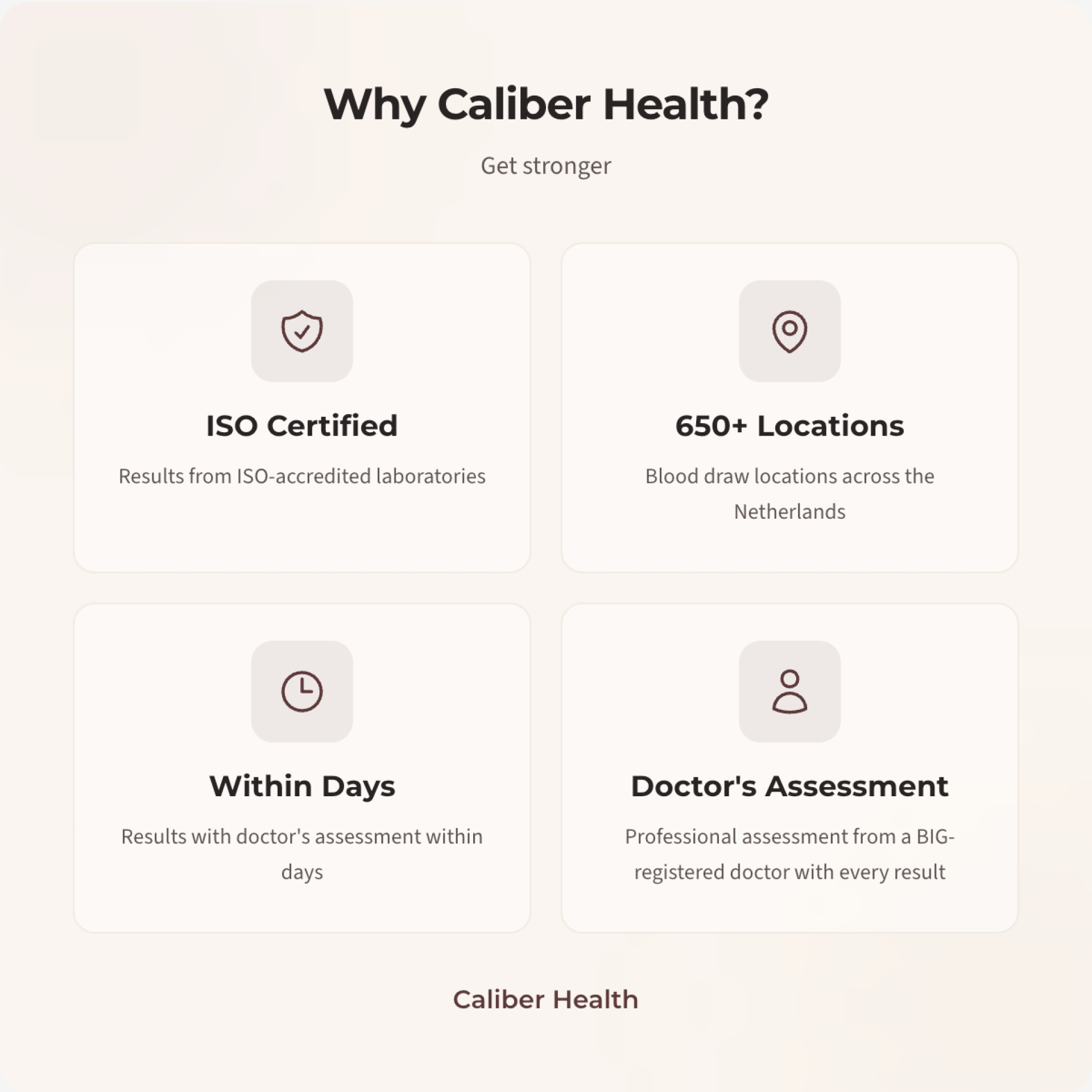
Blood is drawn once at a certified sample point, with 700+ locations across the Netherlands. After ordering, you choose a location and plan your visit yourself.
This is blood testing without a GP: no referral is needed and fasting is usually not required. The draw takes only a few minutes.
When is this test useful?
This male fertility screening can be useful when the two of you are entering an IVF or ICSI journey and you want to arrange the partner screening in advance. It can also help if you want to record a baseline of your reproductive hormones.
Check with your clinic which tests it expects, so your results align with what they need. If you mainly want to map your hormones more broadly, take a look at hormones for men as well.
What do the results mean?
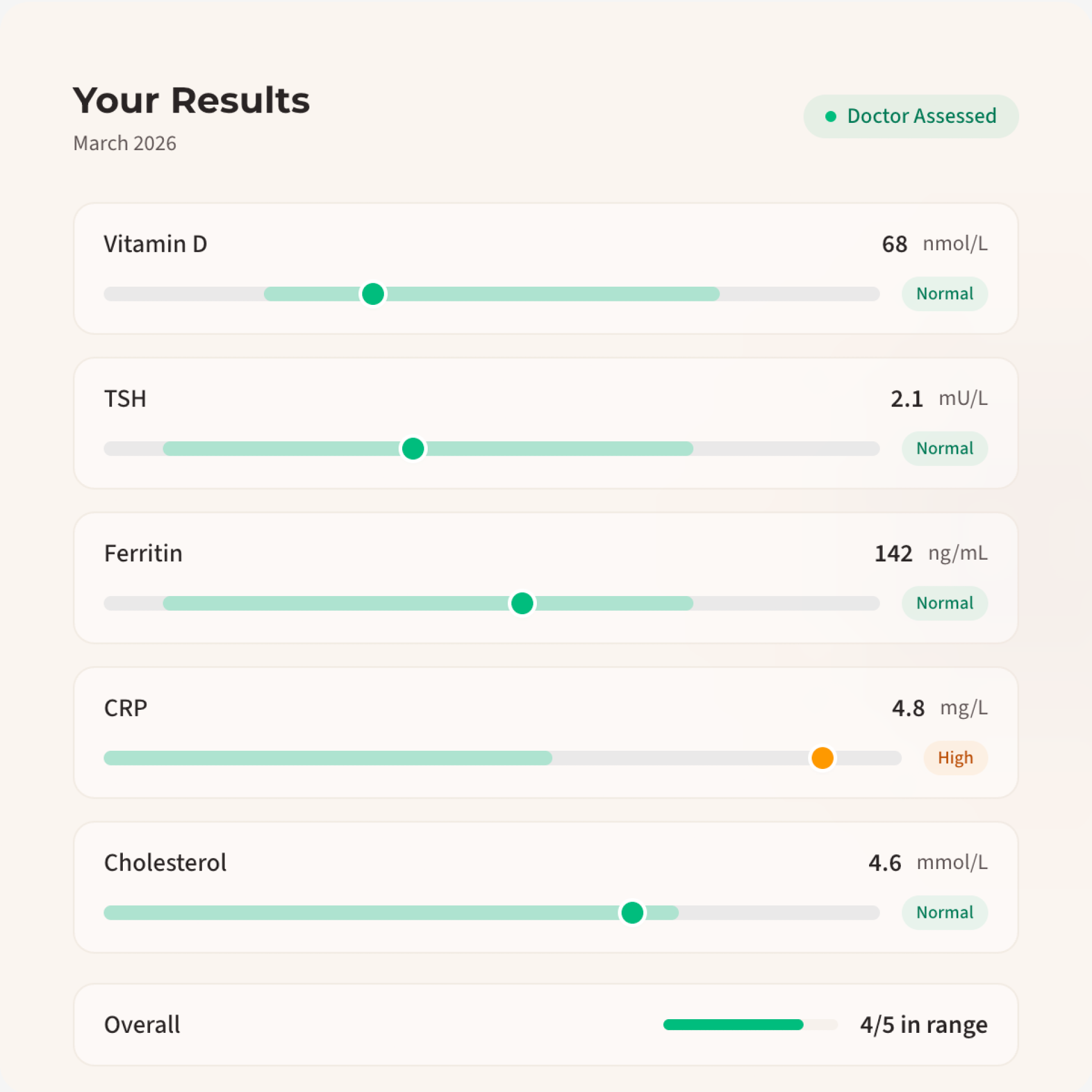
Each marker appears with its measured value and a reference range. The infectious-disease screening usually gives a reactive or non-reactive result; the hormones give a number with a corresponding range.
What a result means for your situation depends on the whole picture. The clinic decides which results it accepts and may repeat or add tests.
What happens after the results?
Your results are usually available online within a few working days, each marker with its value and reference range. You then share them with the fertility clinic or your doctor for interpretation within the treatment plan.
Every blood test result includes a professional assessment from a BIG-registered doctor. For treatment decisions, discuss your results with your GP.
Did your clinic send its own list?
Upload it on scan your test list and you will see, line by line, what we can run. This panel was assembled for a common intake and need not match what your clinic asks for.
Frequently Asked Questions
No. A semen analysis is a laboratory test on a semen sample, not a blood test, and you arrange it through your fertility clinic. This panel covers the blood-based partner screening and reproductive hormones.
No. It aligns with common screening requirements and gives you a head start, but the clinic decides which results it accepts and may repeat or add tests.
No, you arrange this partner screening without a referral. You can share the results with the fertility clinic or your GP afterwards.
For this panel you usually do not need to fast. A morning draw is often preferred for the hormone values.
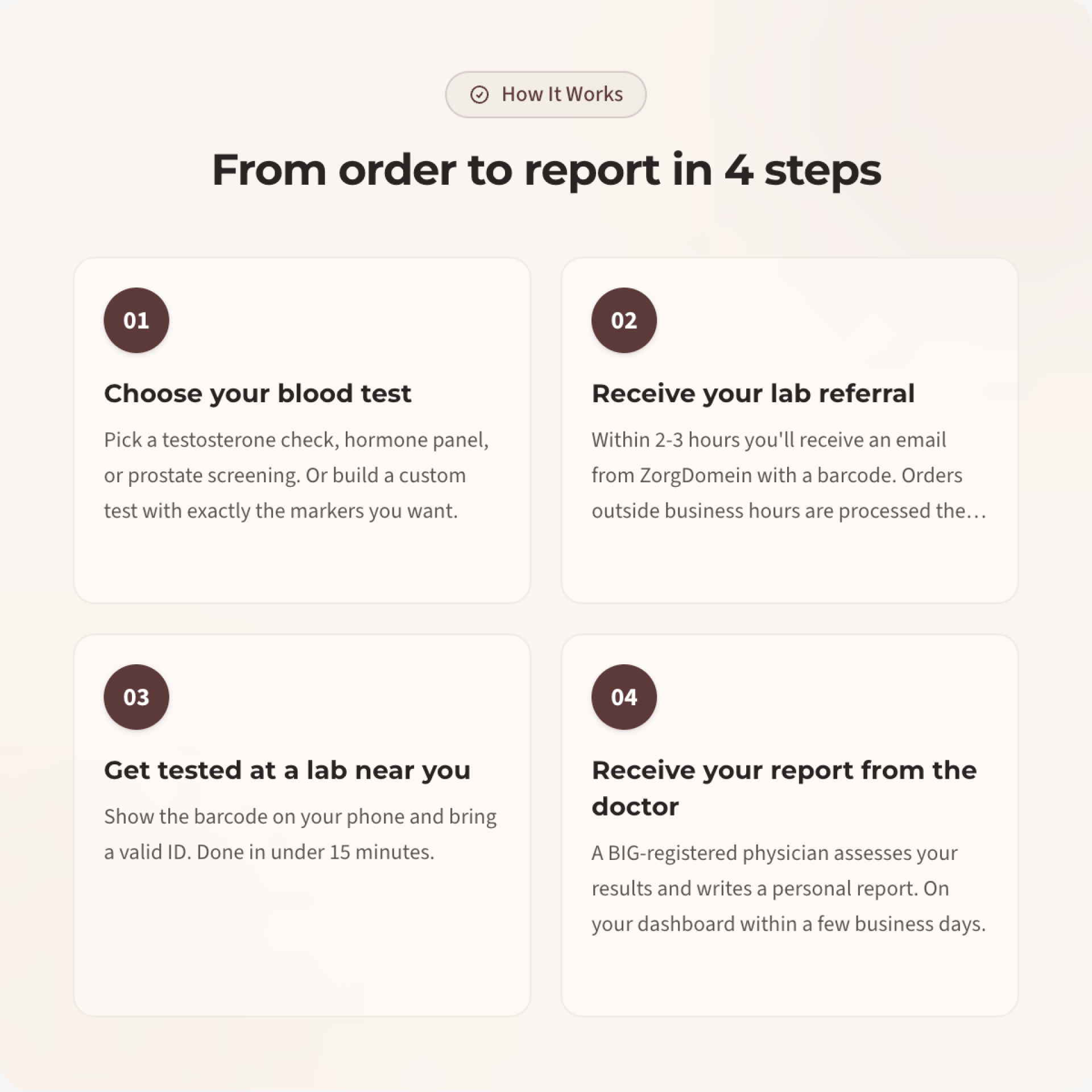
From order to report in 4 steps
No referral needed. No waiting list. Just order and go.
Choose your blood test
Pick a testosterone check, hormone panel, or prostate screening. Or build a custom test with exactly the markers you want.
Receive your lab referral
Within 1 business day you'll receive an email from ZorgDomein with a barcode. Orders outside business hours are processed from the next business day.
Get tested at a lab near you
Show the barcode on your phone and bring a valid ID. Done in under 15 minutes.
Receive your report from the doctor
A BIG-registered physician assesses your results and writes a personal report. On your dashboard within a few business days.
Choose your blood test
Pick a testosterone check, hormone panel, or prostate screening. Or build a custom test with exactly the markers you want.
Receive your lab referral
Within 1 business day you'll receive an email from ZorgDomein with a barcode. Orders outside business hours are processed from the next business day.
Get tested at a lab near you
Show the barcode on your phone and bring a valid ID. Done in under 15 minutes.
Receive your report from the doctor
A BIG-registered physician assesses your results and writes a personal report. On your dashboard within a few business days.
Always a location near you
With 700+ certified phlebotomy points across the Netherlands.
What We Test
This panel includes 13 biomarkers, each tested at a certified laboratory using medical-grade equipment.
| No. | Biomarker | Unit | Turnaround |
|---|---|---|---|
| 01 | SHBG (Sex Hormone Binding Globulin) SHBG stands for sex hormone binding globulin. It is a protein made by the liver. SHBG binds testosterone tightly and oestradiol somewhat more loosely. Hormone bound to SHBG cannot act in the tissues. SHBG therefore determines how much of your total testosterone is genuinely available. SHBG is not itself a sex hormone but a transport protein. Results are reported in nmol/l. Normal values differ by sex and by age, and in men SHBG rises as they get older. An SHBG should therefore be assessed alongside total testosterone, never on its own. | nmol/l | 5 days |
| 02 | Prolactin A prolactin blood test measures the level of prolactin, a pituitary hormone primarily known for its role in lactation. Prolactin also influences reproductive function, immune regulation, and metabolic processes in both men and women. | ug/l | 2 days |
| 03 | Estradiol (E2) Estradiol (E2) is the most potent form of estrogen, playing a key role in reproductive health, bone density, and cardiovascular function. Abnormal levels may indicate hormonal imbalances that your healthcare provider can help evaluate. | pmol/l | 2 days |
| 04 | Free Testosterone Free testosterone is the unbound, bioavailable form of testosterone that can directly enter cells and activate receptors. It may indicate your body's functional androgen activity. Your healthcare provider can help interpret what your levels mean. | pmol/L | 3 days |
| 05 | FSH (Follicle Stimulating Hormone) Follicle-stimulating hormone (FSH) is produced by the pituitary gland and plays an essential role in reproductive function. It regulates egg development in women and sperm production in men. Abnormal levels may indicate changes in fertility or hormonal health. | U/L | 2 days |
| 06 | LH (Luteinizing Hormone) An LH blood test measures luteinizing hormone, a pituitary hormone essential for reproductive function. LH plays a key role in triggering ovulation in women and stimulating testosterone production in men. | U/L | 3 days |
| 07 | Total Testosterone Total testosterone measures the combined amount of bound and free testosterone in the blood. As the primary androgen, testosterone may influence muscle mass, bone density, libido, mood, and energy levels in both men and women. | nmol/l | 2 days |
| 08 | Chlamydia IgG The Chlamydia IgG antibody test detects antibodies produced in response to a past Chlamydia trachomatis infection. A positive result indicates prior exposure but cannot distinguish between an active and a previously cleared infection. | — | 2 days |
| 09 | HIV 1/2 Antibody + p24 Antigen The HIV Combo test is a fourth-generation test that detects both HIV p24 antigen and HIV antibodies simultaneously. This dual approach enables earlier detection compared to antibody-only tests, typically within two to six weeks after exposure. | — | 5 days |
| 10 | Syphilis Screening The Syphilis Screening test is a treponemal-based test that detects antibodies specifically directed against Treponema pallidum, the bacterium that causes syphilis. Once positive, this test typically remains positive for life, regardless of treatment. | — | 2 days |
| 11 | Hepatitis B Core Antibody A Hepatitis B Core Antibody (anti-HBc) test detects antibodies produced in response to the core antigen of the hepatitis B virus. A positive result may indicate a current, past, or resolved hepatitis B infection and should be interpreted alongside other hepatitis B markers. | — | 4 days |
| 12 | Hepatitis B Surface Antigen A Hepatitis B Surface Antigen (HBsAg) test detects the presence of HBsAg in your blood, which is one of the earliest indicators of a hepatitis B infection. A positive result may indicate an active hepatitis B infection and should be evaluated by a healthcare professional. | — | 3 days |
| 13 | Hepatitis C Antibody A Hepatitis C Antibody (anti-HCV) test detects antibodies produced by the immune system in response to the hepatitis C virus. A positive result indicates exposure to the virus but does not distinguish between a current or past infection. Further testing is needed for confirmation. | — | 4 days |
| Your result arrives once the slowest test is finished: 5 days. This is indicative; turnaround varies per laboratory. | |||
Preparation
-
Respect the window period
RequiredThis test is only reliable from 4 weeks after the exposure. Full certainty takes 90 days and a second test. If you have symptoms, test straight away.
-
Pause biotin
RequiredDo you take a supplement with biotin (vitamin B8, common in hair, skin and nail supplements)? Stop it 72 hours before the draw. Biotin interferes with the measurement of these values.
-
Have the draw in the morning
RequiredThese values vary over the day and peak in the morning. Have your blood drawn before 10:00, ideally between 07:00 and 09:00.
-
Arrive early and sit quietly first
RequiredThis value rises with stress and exertion. Arrive 30 minutes early and sit quietly before your blood is drawn.
-
Do you have a cycle? Pick the right day
RequiredIf you have a menstrual cycle, count the first day of your period as day 1 and have the draw on day 2 to 5. On hormonal contraception, or without a cycle, any day works.
- Water is always fine. Drink as usual beforehand, it makes the draw easier.
- Take your usual medication, unless your own doctor told you otherwise.
Extend this panel
Tests from the same field, run on the same sample. Same draw, no second appointment.
Related Tests
Explore more tests that might interest you.
Hormones Man
Total Testosterone, Free Testosterone, SHBG, and Albumin: key male hormone markers.
Cortisol Test
We advise against this test for stress, burnout or fatigue. Order it only if your doctor asked for it.
PSA Test
Measure your PSA, a marker for the health of your prostate. No referral needed, results within a few working days.
This test not quite right?
Build your own blood test from 139+ individual biomarkers — choose exactly what you need.
Have a question?
Our team is happy to help. Ask your question and we'll respond as soon as possible.