Order a fatigue blood test and check your energy
Investigate some common causes of fatigue: CBC, thyroid, iron, vitamins, glucose, and HbA1c.
Add to Cart
No referral needed
Added to your cart
Click the button to view your cart
Have you been tired for a while without being able to put your finger on why? Fatigue can come from many directions: your thyroid, your iron stores, your vitamins or your blood sugar.
This fatigue blood test measures nine markers in one go that are often linked to your energy. You order online, need no referral and receive your results within a few working days, including an assessment from a BIG-registered doctor.
Why this test?
Tiredness is hard to read from symptoms alone, because so many systems can play a part. This fatigue blood test therefore looks more broadly: at your thyroid function, your iron status, your blood count, two vitamins and your blood sugar.
By measuring these markers together, you can spot patterns that a single test might miss. It is not a diagnosis, but a snapshot you can discuss with a doctor alongside your symptoms. For many men, a measurement like this feels like a concrete first step towards understanding where their energy has gone.
Who is this test for?
This test may suit men who:
- have been tired for a long time, even after enough sleep and rest
- notice their physical or mental performance dropping without a clear reason
- want to check whether a nutritional deficiency or metabolic factor could be involved
- prefer a targeted panel over testing individual markers one by one
A test like this can also be handy if you simply want to know where you stand.
What is tested?
This test measures nine biomarkers in your blood, across five areas:
- Complete blood count (CBC): your red and white blood cells, haemoglobin, haematocrit and platelets. May reveal anaemia or other factors associated with fatigue.
- Thyroid: TSH, free T3 and free T4. Your thyroid can influence your energy, your metabolism and your mood.
- Iron: ferritin, which reflects your iron stores. These may be low before your blood count shows anything.
- Vitamins: vitamin B12 and vitamin D (25-OH). Low levels of either can be associated with fatigue.
- Blood sugar: fasting glucose and HbA1c. How your blood sugar is regulated may play a part in how stable your energy is through the day.
You can read more about individual markers on the pages about ferritin and vitamin B12.
What can this test tell you?
Your results may say something about which areas could be contributing to how tired you feel. Low ferritin alongside a normal blood count could, for example, point to early iron depletion, before anaemia is present.
Thyroid markers outside the expected range may suggest your thyroid is playing a part in low energy. Suboptimal vitamin D or B12 levels can also be associated with tiredness, as can swings in your blood sugar. By viewing the results as a whole, a doctor can recognise patterns that a single test would not show. It remains a snapshot, not a diagnosis.
How is the sample collected?
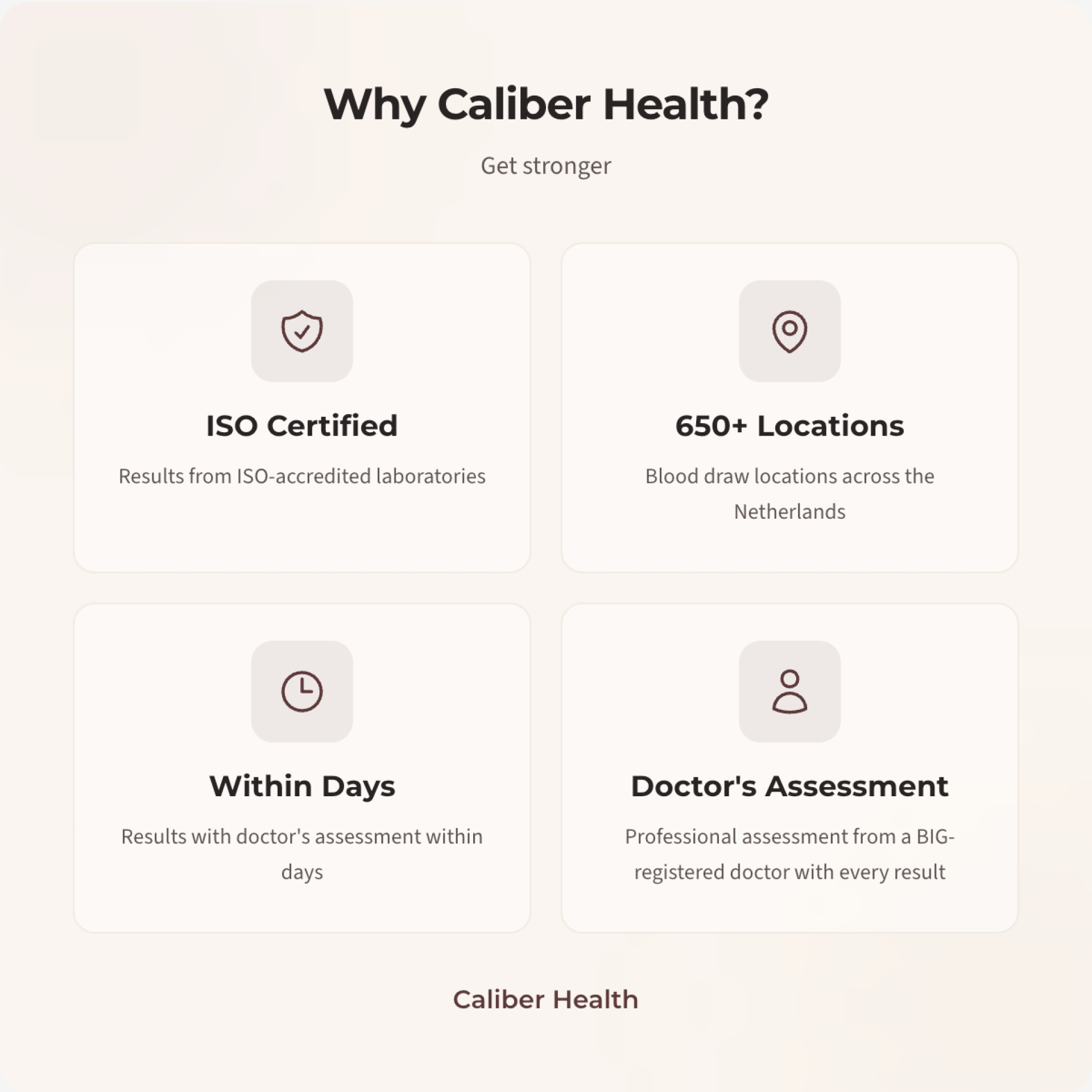
For this test, blood is drawn at a certified sample point. There are 700+ locations across the Netherlands, which you choose yourself after ordering.
You do not need to see your GP first: this is a blood test without a referral, and you pick a location and time that suit you. The draw is done by trained staff and usually takes only a few minutes. Your blood then goes to the lab, where your values are determined.
When is this test useful?
This fatigue blood test can be useful when your tiredness persists and is not easily explained by things like sleep deprivation or hard training. When fatigue comes with difficulty concentrating, muscle weakness or mood changes, a test like this can help you check whether measurable factors are involved.
If you specifically want to know whether anaemia is at play, the more focused anaemia workup may fit better. This test deliberately looks more broadly across several systems.
What do the results mean?
Each marker appears with its reference range. Because fatigue can involve several overlapping factors, the most useful insights often come from looking at the results as a whole.
A value outside the reference range does not automatically mean something is wrong. What counts as a healthy value varies by lab, age and time of sampling. A doctor can help interpret which findings may contribute to your symptoms and whether further investigation could be worthwhile.
Preparation
For a reliable fasting glucose, you need to fast for 8 to 12 hours before the draw. Drinking water is fine during the fasting period.
Book your appointment in the morning if you can. If you use medication or supplements that can affect your thyroid, iron or vitamins, ask your doctor whether they could influence your result.
What happens after the results?
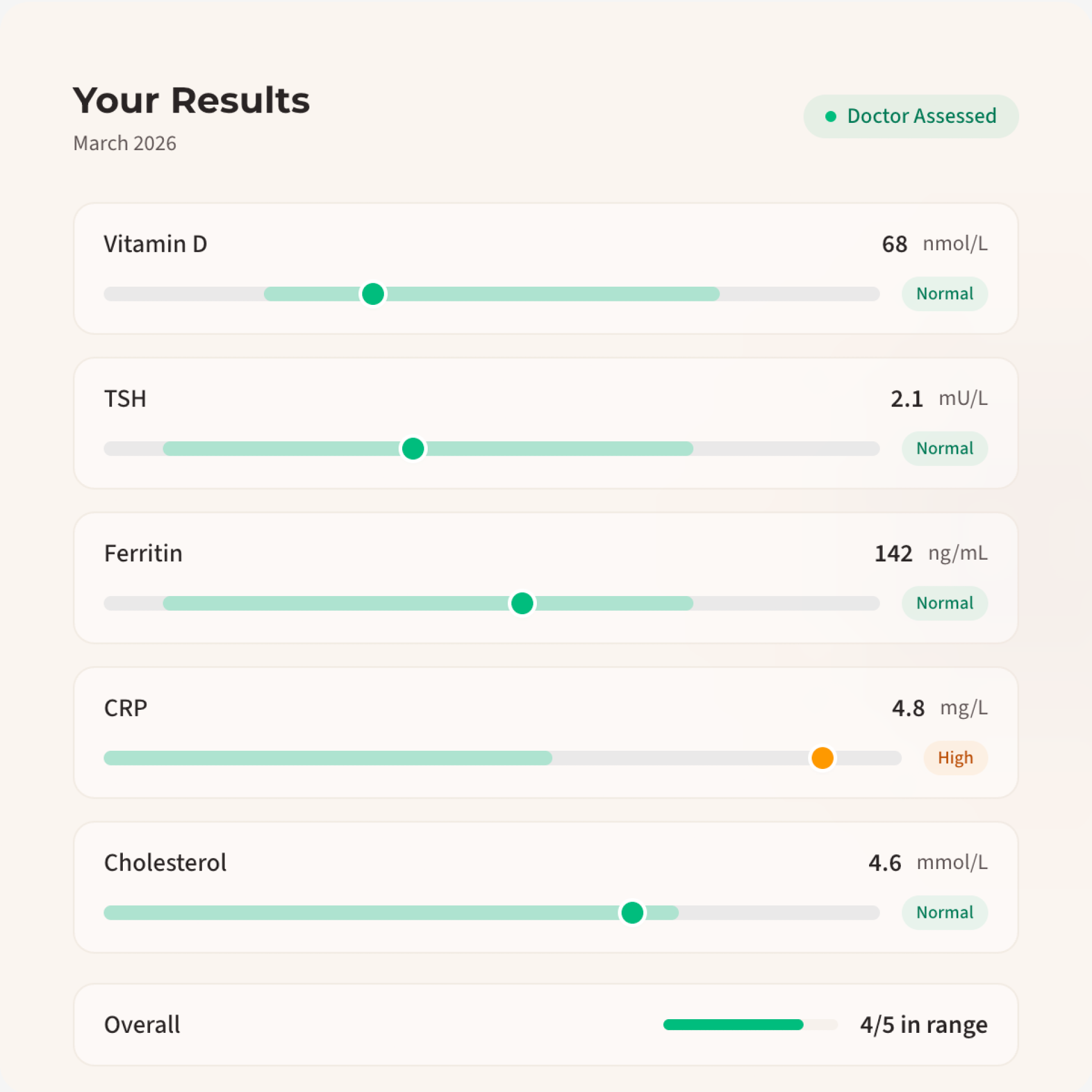
Your results are available online within a few working days in your personal dashboard. You log in whenever it suits you and see each value alongside its reference range, with a clear explanation.
Every blood test result includes a professional assessment from a BIG-registered doctor. For treatment decisions, discuss your results with your GP.
Frequently Asked Questions
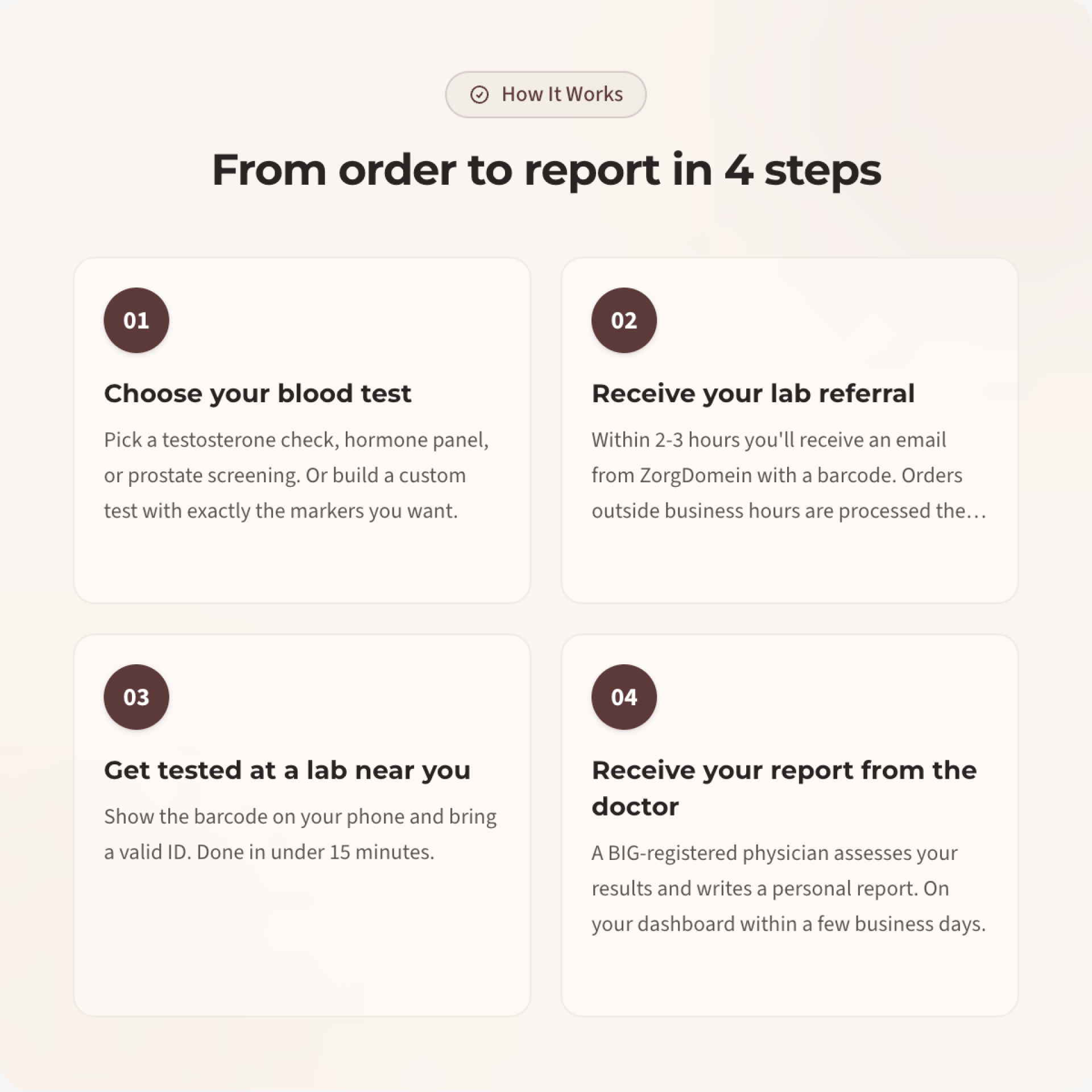
From order to report in 4 steps
No referral needed. No waiting list. Just order and go.
Choose your blood test
Pick a testosterone check, hormone panel, or prostate screening. Or build a custom test with exactly the markers you want.
Receive your lab referral
On the same business day you'll receive an email from ZorgDomein with a barcode. Orders outside business hours are processed the next business day.
Get tested at a lab near you
Show the barcode on your phone and bring a valid ID. Done in under 15 minutes.
Receive your report from the doctor
A BIG-registered physician assesses your results and writes a personal report. On your dashboard within a few business days.
Choose your blood test
Pick a testosterone check, hormone panel, or prostate screening. Or build a custom test with exactly the markers you want.
Receive your lab referral
On the same business day you'll receive an email from ZorgDomein with a barcode. Orders outside business hours are processed the next business day.
Get tested at a lab near you
Show the barcode on your phone and bring a valid ID. Done in under 15 minutes.
Receive your report from the doctor
A BIG-registered physician assesses your results and writes a personal report. On your dashboard within a few business days.
Always a location near you
With 700+ certified phlebotomy points across the Netherlands.
What We Test
This panel includes 9 biomarkers, each tested at a certified laboratory using medical-grade equipment.
HbA1c (glycated haemoglobin) reflects your average blood sugar levels over the past 2-3 months. It is the gold standard for long-term blood sugar monitoring and diabetes management.
Learn moreThyroid-stimulating hormone (TSH) is produced by the pituitary gland and serves as the master regulator of thyroid function. TSH levels may help indicate whether the thyroid is producing appropriate amounts of hormones. Your healthcare provider can interpret your TSH results.
Learn moreFasting glucose measures the level of sugar (glucose) in your blood after an overnight fast. It is one of the primary tests used to screen for and monitor diabetes and pre-diabetes.
Learn moreFree T4 (thyroxine) is the main hormone produced by the thyroid gland. It may serve as a precursor that your body converts into the more active T3. Healthcare providers often consider Free T4 a primary indicator of thyroid gland output.
Learn moreVitamin B12 is considered essential for red blood cell formation, neurological function, and DNA synthesis. Deficiency may develop gradually and is sometimes associated with dietary patterns. Healthcare providers can help interpret your results.
Learn moreVitamin D is a fat-soluble vitamin that plays a key role in calcium absorption, bone health, and immune function. It is primarily produced in the skin through sunlight exposure and can also be obtained from certain foods and supplements.
Learn moreFree T3 (triiodothronine) is considered the most active thyroid hormone. It may play a key role in regulating metabolism, energy production, and body temperature. Healthcare providers often assess Free T3 alongside other thyroid markers for a comprehensive picture.
Learn moreFerritin is a protein that stores iron in your cells and releases it when your body needs it. Blood ferritin levels reflect your body's total iron stores and are the most sensitive indicator for iron deficiency.
Learn moreA basic blood count measures three core values in your blood: hemoglobin, white blood cells and platelets. Together they say something about oxygen transport, immune defence and clotting. It is a simple baseline check, without the red-cell indices and white-cell differential of a complete blood count.
Learn moreHbA1c (Glycated Hemoglobin)
MetabolicHbA1c (glycated haemoglobin) reflects your average blood sugar levels over the past 2-3 months. It is the gold standard for long-term blood sugar monitoring and diabetes management.
HbA1c provides a long-term view of blood sugar control, unlike fasting glucose which reflects a single point in time. It is essential for diabetes diagnosis and management. Consult your healthcare provider.
TSH (Thyroid Stimulating Hormone)
ThyroidThyroid-stimulating hormone (TSH) is produced by the pituitary gland and serves as the master regulator of thyroid function. TSH levels may help indicate whether the thyroid is producing appropriate amounts of hormones. Your healthcare provider can interpret your TSH results.
TSH is widely considered the most sensitive initial screening test for thyroid disorders. Even subtle changes in thyroid function may be reflected in TSH levels before other thyroid markers become abnormal. Your healthcare provider may use TSH as a starting point for comprehensive thyroid evaluation.
Glucose (Fasting)
MetabolicFasting glucose measures the level of sugar (glucose) in your blood after an overnight fast. It is one of the primary tests used to screen for and monitor diabetes and pre-diabetes.
Fasting glucose is a cornerstone of metabolic health assessment. Elevated levels may indicate pre-diabetes or diabetes, while very low levels can also be clinically significant. Consult your healthcare provider for interpretation.
Free T4 (Thyroxine)
ThyroidFree T4 (thyroxine) is the main hormone produced by the thyroid gland. It may serve as a precursor that your body converts into the more active T3. Healthcare providers often consider Free T4 a primary indicator of thyroid gland output.
Free T4 may help your healthcare provider determine whether your thyroid gland is producing adequate hormone levels. Some experts consider it one of the most informative markers for detecting both overactive and underactive thyroid conditions early.
Vitamin B12
VitaminsVitamin B12 is considered essential for red blood cell formation, neurological function, and DNA synthesis. Deficiency may develop gradually and is sometimes associated with dietary patterns. Healthcare providers can help interpret your results.
Vitamin B12 is believed to be vital for healthy nerve cells, red blood cell formation, and DNA synthesis. Low levels may be associated with anaemia, fatigue, and neurological symptoms. Early detection through testing may help prevent long-term complications.
Vitamin D (25-OH)
VitaminsVitamin D is a fat-soluble vitamin that plays a key role in calcium absorption, bone health, and immune function. It is primarily produced in the skin through sunlight exposure and can also be obtained from certain foods and supplements.
Adequate vitamin D levels are essential for strong bones, a well-functioning immune system, and overall well-being. Low levels may be associated with an increased risk of bone disorders, mood changes, and weakened immunity. Consult your healthcare provider for personalised advice.
Free T3 (Triiodothyronine)
ThyroidFree T3 (triiodothronine) is considered the most active thyroid hormone. It may play a key role in regulating metabolism, energy production, and body temperature. Healthcare providers often assess Free T3 alongside other thyroid markers for a comprehensive picture.
Free T3 may help your healthcare provider evaluate how well your thyroid is functioning at a cellular level. Some experts suggest it can reveal conversion issues that other thyroid tests might miss, potentially offering a more complete understanding of thyroid health.
Ferritin
MineralsFerritin is a protein that stores iron in your cells and releases it when your body needs it. Blood ferritin levels reflect your body's total iron stores and are the most sensitive indicator for iron deficiency.
Iron is essential for oxygen transport, energy production, and immune function. Ferritin testing helps detect iron deficiency before anaemia develops, or iron overload which can damage organs. Consult your healthcare provider for personalised advice.
Basic Blood Count
HematologyA basic blood count measures three core values in your blood: hemoglobin, white blood cells and platelets. Together they say something about oxygen transport, immune defence and clotting. It is a simple baseline check, without the red-cell indices and white-cell differential of a complete blood count.
Related biomarkers
Biomarkers often explored alongside this test for a fuller picture.
Active Vitamin B12
Active Vitamin B12 measures the bioavailable B12 your body can directly use. For men, adequate B12 may support energy levels, muscle function, and nervous system health. This test could offer a clearer picture than total B12 alone.
Basophils
Basophils are the least common white blood cells and play a role in allergic and inflammatory responses, partly by releasing histamine. As part of your complete blood count, they are normally present in small numbers. A raised count is uncommon and is reviewed together with your other values.
Bicarbonate
Bicarbonate is key to maintaining acid-base balance, which supports muscle function and metabolic efficiency. Keeping your pH in check helps maintain peak physical performance.
Blood Type + Rh
A blood type test determines your ABO blood group and Rh factor. Knowing your blood type is essential for safe blood transfusions, organ transplants, and pregnancy planning.
C-Peptide
C-Peptide reveals how effectively your pancreas produces insulin. Optimal insulin function supports energy, body composition, and metabolic performance.
Calcium
Calcium supports strong bones, powerful muscle contractions, and nerve function. Maintaining optimal levels is essential for men who lead an active lifestyle.
Related Tests
Explore more tests that might interest you.
Thyroid Function
TSH, Free T4, and Free T3 for thyroid assessment.
Complete Men's Health Panel
A broad men's health panel: hormones, heart, metabolic, and organ function in one blood draw.
Men Over 40 Panel
Age-appropriate screening including testosterone and PSA.
This test not quite right?
Build your own blood test from 139+ individual biomarkers — choose exactly what you need.
Have a question?
Our team is happy to help. Ask your question and we'll respond as soon as possible.