
Order a kidney function test and check your kidneys
Creatinine, eGFR, and BUN: key kidney markers.
Add to Cart
No referral needed
Added to your cart
Click the button to view your cart
Biomarkers Included
3 biomarkersYour kidneys filter waste from your blood all day, regulate your fluid balance and help keep your blood pressure in check. Changes in kidney function often develop quietly, without clear symptoms.
With this kidney function test you have creatinine, urea and eGFR measured: three markers that together can say something about how your kidneys filter. It is a blood test without a referral: you order online, need no GP appointment and receive your results within a few working days, including a doctor's assessment.
Why this test?
Because the kidneys quietly do their work, you often notice little of a changing kidney function at first. A kidney function test can give you concrete data where you would otherwise only be guessing.
This panel measures creatinine, eGFR and urea, so you can map your kidney values and have a baseline to compare against later.
Who is this test for?
This test may suit men who:
- follow a high-protein diet and want to check their kidney markers
- have kidney-related conditions in the family
- use supplements such as creatine and want to track their kidneys
- simply want a baseline of their kidney health
What is tested?
This kidney function test measures three markers in your blood:
- Creatinine (umol/l): a waste product of your muscle metabolism that your kidneys normally filter out efficiently.
- eGFR (ml/min): the estimated glomerular filtration rate, which indicates how well your kidneys filter blood.
- Urea (BUN) (mmol/l): a byproduct of protein metabolism; elevated levels may suggest your kidneys are clearing waste less readily.
What can this test tell you?
Creatinine and eGFR are connected: an elevated creatinine with a lower eGFR may point to reduced filtration capacity. Urea adds another layer, as it reflects both your kidney function and your protein intake.
By looking at the three markers together you get a more reliable picture than any single value. Deviations can have various causes and do not automatically indicate a problem.
How is the sample collected?
For this test, blood is drawn at a certified sample point. There are 700+ locations across the Netherlands, which you choose yourself after ordering.
It is a blood test without a referral: you pick a location and a time yourself. The draw usually takes only a few minutes.
When is this test useful?
This test may be useful if you follow a high-protein diet, use creatine supplements, have kidney issues in your family, or simply want a baseline. Many men choose to have their kidneys tested after a period of creatine use or a strict protein diet.
It can also be relevant with symptoms such as a changed urination pattern, unexplained swelling or persistent fatigue.
What do the results mean?
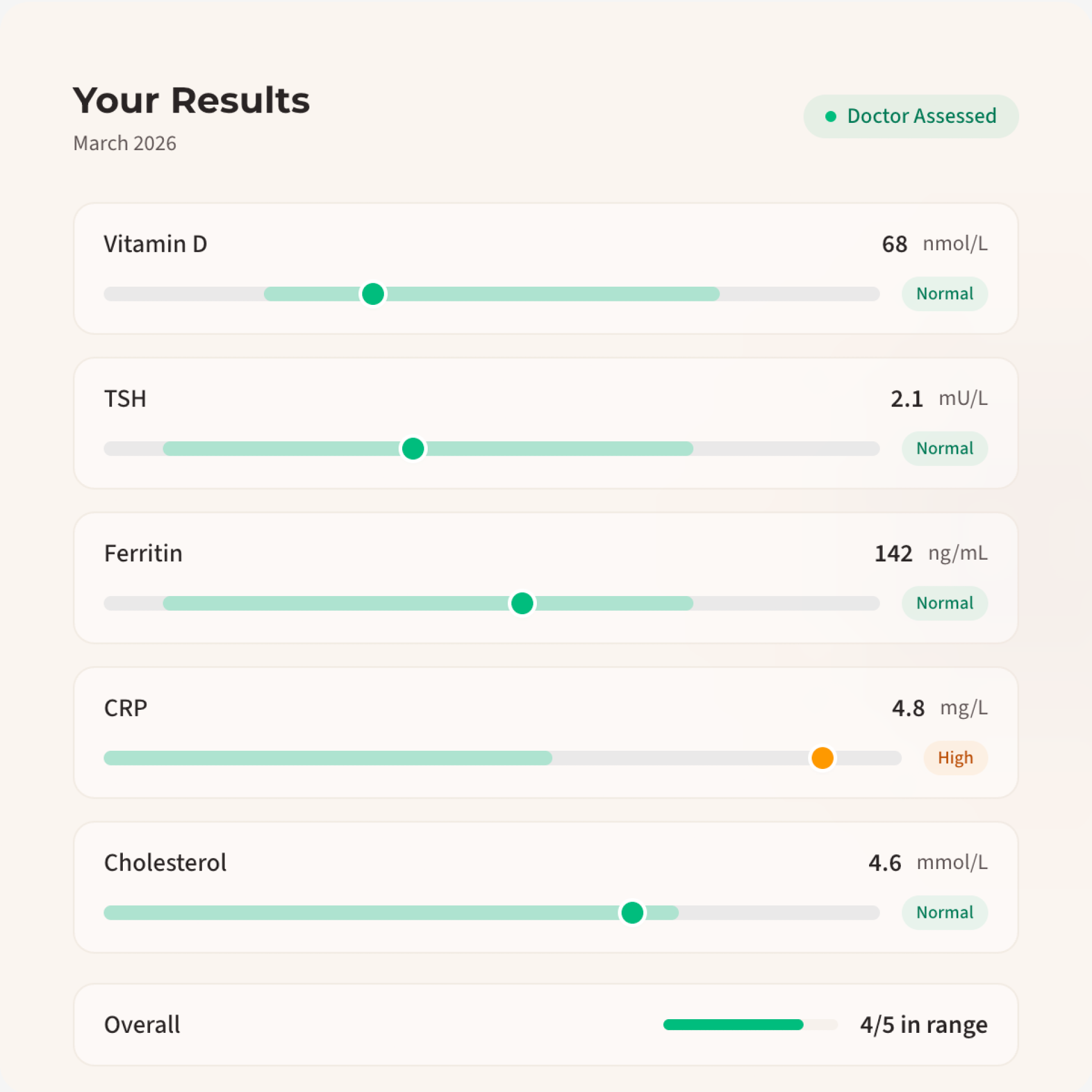
Your result shows whether each marker falls within the reference range. An elevated creatinine or urea, or a lower-than-expected eGFR, may be a reason to look further.
Factors such as your muscle mass, hydration and diet can influence these kidney values. A doctor can interpret your result within your personal health profile.
Preparation
You usually do not need to fast for this test. It can help to drink normally on the day of the draw, as strong dehydration can temporarily affect your kidney values. If in doubt about medication or supplements, check with your doctor.
What happens after the results?
Your results are available online within a few working days. You log in to your account and view each marker with its reference range and a clear explanation. If you want to view your kidneys alongside wider markers, look at the broader complete metabolic panel.
Every blood test result includes a professional assessment from a BIG-registered doctor. For treatment decisions, discuss your results with your GP.
Frequently Asked Questions
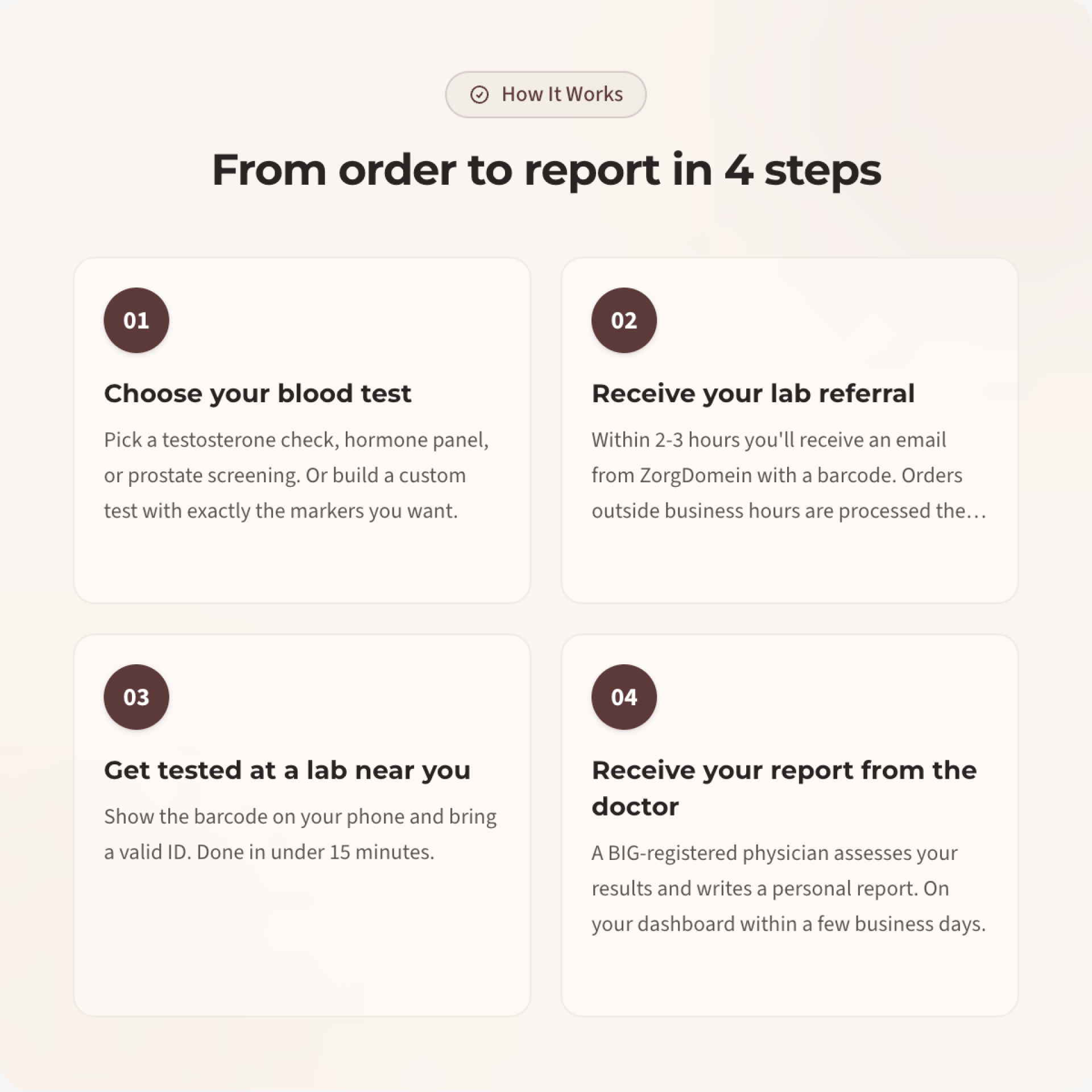
From order to report in 4 steps
No referral needed. No waiting list. Just order and go.
Choose your blood test
Pick a testosterone check, hormone panel, or prostate screening. Or build a custom test with exactly the markers you want.
Receive your lab referral
On the same business day you'll receive an email from ZorgDomein with a barcode. Orders outside business hours are processed the next business day.
Get tested at a lab near you
Show the barcode on your phone and bring a valid ID. Done in under 15 minutes.
Receive your report from the doctor
A BIG-registered physician assesses your results and writes a personal report. On your dashboard within a few business days.
Choose your blood test
Pick a testosterone check, hormone panel, or prostate screening. Or build a custom test with exactly the markers you want.
Receive your lab referral
On the same business day you'll receive an email from ZorgDomein with a barcode. Orders outside business hours are processed the next business day.
Get tested at a lab near you
Show the barcode on your phone and bring a valid ID. Done in under 15 minutes.
Receive your report from the doctor
A BIG-registered physician assesses your results and writes a personal report. On your dashboard within a few business days.
Always a location near you
With 700+ certified phlebotomy points across the Netherlands.
What We Test
This panel includes 3 biomarkers, each tested at a certified laboratory using medical-grade equipment.
BUN (blood urea nitrogen) measures the amount of urea nitrogen in your blood, a waste product formed when the body breaks down protein. It is primarily used to evaluate kidney function and can be influenced by diet, hydration status, and liver health.
Learn moreCreatinine is a waste product generated by normal muscle metabolism that is filtered out of the blood by the kidneys. It is widely regarded as the gold standard marker for evaluating kidney function, as consistent production makes it a reliable indicator of filtration efficiency.
Learn moreeGFR (estimated glomerular filtration rate) is a calculated measure of how effectively your kidneys filter waste from the blood. It is the gold standard for diagnosing and staging chronic kidney disease and is derived from blood creatinine or cystatin C levels along with demographic factors.
Learn moreUrea (BUN)
KidneyBUN (blood urea nitrogen) measures the amount of urea nitrogen in your blood, a waste product formed when the body breaks down protein. It is primarily used to evaluate kidney function and can be influenced by diet, hydration status, and liver health.
BUN is a valuable marker for assessing how effectively your kidneys are filtering waste from your blood. Elevated levels may indicate that the kidneys are not functioning optimally, which can be associated with dehydration, kidney disease, or other underlying conditions. Monitoring BUN alongside other kidney markers such as creatinine and eGFR provides a more comprehensive picture of renal health and helps detect potential problems early.
Creatinine
KidneyCreatinine is a waste product generated by normal muscle metabolism that is filtered out of the blood by the kidneys. It is widely regarded as the gold standard marker for evaluating kidney function, as consistent production makes it a reliable indicator of filtration efficiency.
Creatinine is central to assessing kidney health. It is used to calculate the estimated glomerular filtration rate (eGFR), which is the primary measure for staging chronic kidney disease. Early detection of rising creatinine levels can prompt timely intervention, helping to slow the progression of kidney damage. Monitoring creatinine is also important for adjusting medication dosages, as many drugs are cleared by the kidneys.
eGFR (Estimated Glomerular Filtration Rate)
KidneyeGFR (estimated glomerular filtration rate) is a calculated measure of how effectively your kidneys filter waste from the blood. It is the gold standard for diagnosing and staging chronic kidney disease and is derived from blood creatinine or cystatin C levels along with demographic factors.
eGFR is the most important single measure for assessing overall kidney function. It is used internationally to diagnose chronic kidney disease, determine its stage, and guide treatment decisions. Regular eGFR monitoring allows early detection of kidney function decline, often before symptoms appear. This is critical because early intervention can significantly slow the progression of kidney disease and reduce the risk of complications such as cardiovascular disease.
Related biomarkers
Biomarkers often explored alongside this test for a fuller picture.
Citrate
Urinary citrate is a key stone-prevention marker particularly relevant for men, who are more likely to develop kidney stones. Dietary factors common in men's nutrition, such as high protein and sodium intake, can lower citrate levels and increase stone risk.
Creatinine (Urine)
Urinary creatinine is relevant for men's kidney health assessment. Men typically excrete more creatinine due to greater muscle mass, and factors such as high-protein diets and creatine supplementation can further influence urinary creatinine levels.
Cystatin C
Cystatin C offers men a more accurate kidney function assessment that is not influenced by muscle mass or high-protein diets. For men with significant muscle mass or those using creatine supplements, cystatin C provides a clearer picture of true kidney health.
Microalbumin (Urine)
Microalbumin testing is an important part of men's kidney health monitoring. Men with hypertension or diabetes are at increased risk of kidney damage, and conditions such as prostate enlargement can compound urinary health concerns, making early screening valuable.
Oxalate
Urinary oxalate testing is relevant for men's kidney health, as men are more likely to develop kidney stones than women. Dietary habits, protein intake, and hydration patterns common among men can influence oxalate levels and stone formation risk.
Protein (Urine)
Protein in urine testing is an important component of men's kidney health assessment. Men with hypertension, diabetes, or prostate conditions that affect urinary health should consider regular monitoring to detect kidney changes early.
Related Tests
Explore more tests that might interest you.
Thyroid Function
TSH, Free T4, and Free T3 for thyroid assessment.
Complete Men's Health Panel
A broad men's health panel: hormones, heart, metabolic, and organ function in one blood draw.
Men Over 40 Panel
Age-appropriate screening including testosterone and PSA.
This test not quite right?
Build your own blood test from 139+ individual biomarkers — choose exactly what you need.
Have a question?
Our team is happy to help. Ask your question and we'll respond as soon as possible.