Order a metabolic health check and measure your metabolism
Blood sugar, insulin resistance, lipids, and liver markers.
Add to Cart
No referral needed
Added to your cart
Click the button to view your cart
Your metabolic health says a lot about how your body handles energy: how you process sugar, store fat and convert nutrients. This metabolic health check combines nine markers for that: your blood sugar, your fasting insulin, a lipid profile and two liver enzymes.
You order online, need no referral and get your blood drawn at a sample point near you. It is a blood test without a referral, with results within a few working days including an assessment by a doctor.
Why this test?
Metabolic health involves more than just your blood sugar. Insulin resistance, for example, can develop long before your glucose or HbA1c moves outside the reference range. By including fasting insulin alongside glucose and HbA1c, this metabolic blood test may pick up early shifts in your insulin sensitivity.
Lipid markers and liver enzymes add context, as fatty liver and a disrupted lipid pattern are often linked to metabolic changes. Together, these values can give you a broader view of your metabolism.
Who is this test for?
This check may suit men who:
- want insight into their blood sugar regulation and insulin sensitivity
- carry some extra weight around the midsection, which can be linked to metabolic changes
- have type 2 diabetes in the family and want early data
- are adjusting their diet or lifestyle and want to track metabolic markers over time
Some men are looking for a so-called metabolic map: an overview of several values that together say something about their metabolism.
What is tested?
This metabolic health check measures nine biomarkers:
- Glucose (fasting) (mmol/l): your blood sugar after an overnight fast.
- HbA1c (mmol/mol): your average blood sugar over the past two to three months.
- Insulin (fasting) (pmol/l): an elevated fasting insulin can be an early sign of insulin resistance, sometimes before your glucose shifts.
- Total cholesterol, HDL cholesterol, LDL cholesterol and triglycerides (mmol/l): lipid markers that can be influenced by your metabolic status.
- ALT and GGT (u/l): liver enzymes that may be elevated when the liver is under metabolic stress, such as in fatty liver.
You can read more about individual markers on the pages about fasting glucose and LDL cholesterol. If you only want to measure your insulin resistance, the insulin resistance test with HOMA-IR fits better.
What can this test tell you?
The combination of fasting glucose, HbA1c and fasting insulin can give a more nuanced view of your blood sugar regulation than any of these markers alone. A normal glucose with elevated fasting insulin could suggest, for example, that your body is working harder to keep your blood sugar steady.
Elevated triglycerides with a low HDL is a pattern often seen alongside metabolic shifts. Liver enzymes such as ALT and GGT can add another layer. Reviewing these markers together with a doctor can give you a broader view.
How is the sample collected?
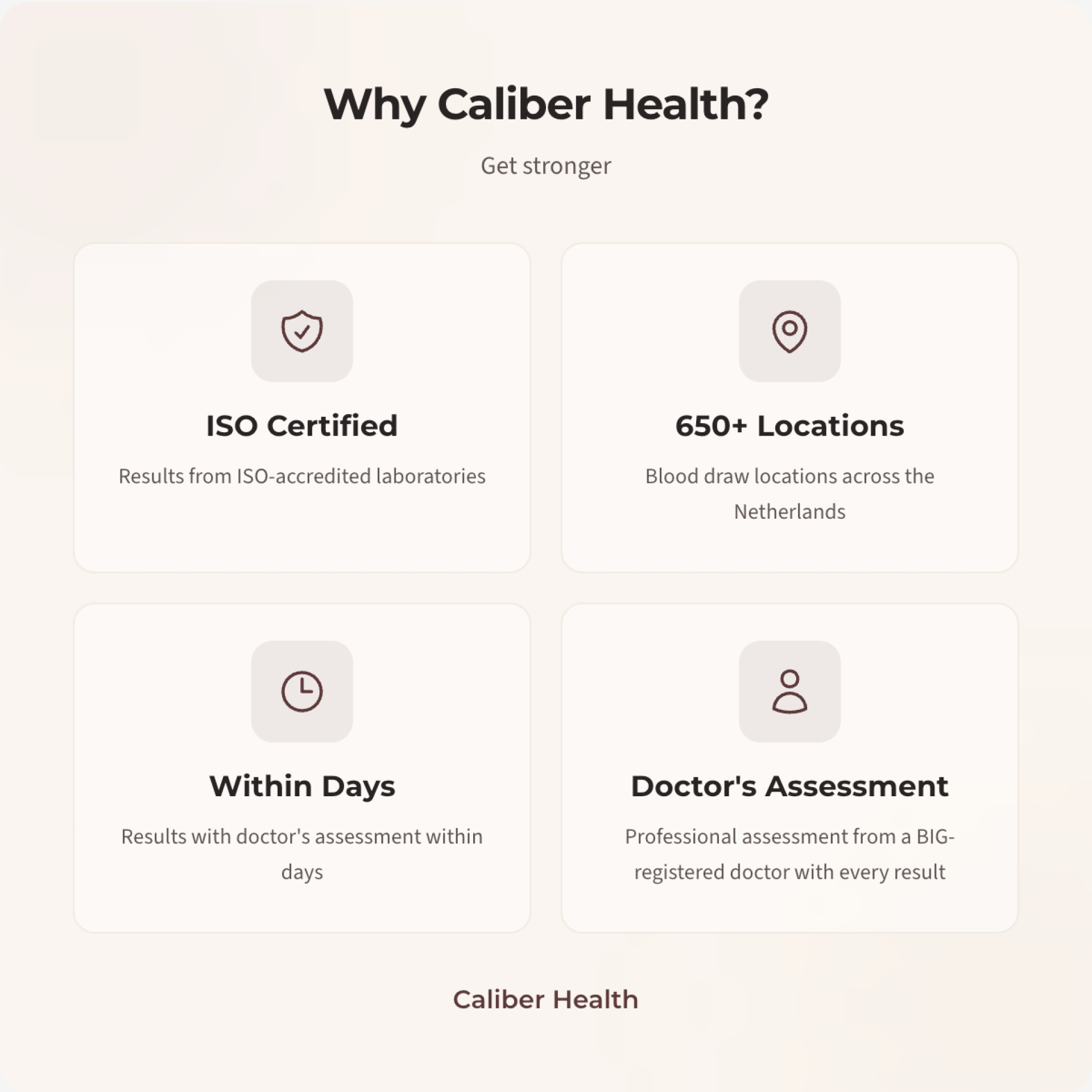
For this test, blood is drawn at a certified sample point. There are 700+ locations across the Netherlands, which you choose yourself after ordering. You do not need to see your GP first: it is a blood test without a GP, where you pick a time that suits you.
The draw is done by trained staff and usually takes 10 to 15 minutes. After that, your blood goes to the lab, where your values are determined.
When is this test useful?
This check can be useful when you want to look at your blood sugar regulation beyond glucose alone, or when you are curious whether insulin resistance may be developing before your glucose changes.
It can also help if you are adjusting your eating pattern, for example with less sugar or carbohydrates, and want to track your metabolic markers. If you instead want a broad chemistry overview with kidney, electrolyte and protein values, look at the complete metabolic panel.
What do the results mean?
Your results are shown with reference ranges. Glucose and HbA1c are often used to look at your blood sugar regulation, while fasting insulin adds context about how hard your body is working to maintain those levels. Lipid values are best read as a group.
Liver enzymes can be influenced by many factors, including alcohol, medication and exercise. A single measurement provides a data point, not a definitive answer. A doctor can interpret the overall picture for you and help decide whether follow-up steps could be worthwhile.
Preparation
Fasting for 8 to 12 hours is needed for reliable glucose, insulin and lipid values. Drinking water is fine during the fasting period. Preferably avoid alcohol in the 24 hours before the draw, as it can influence your liver enzyme and triglyceride values.
Ideally, book your appointment in the morning. If you use medication or supplements, ask your doctor whether you should take them as usual on the day of the draw.
What happens after the results?
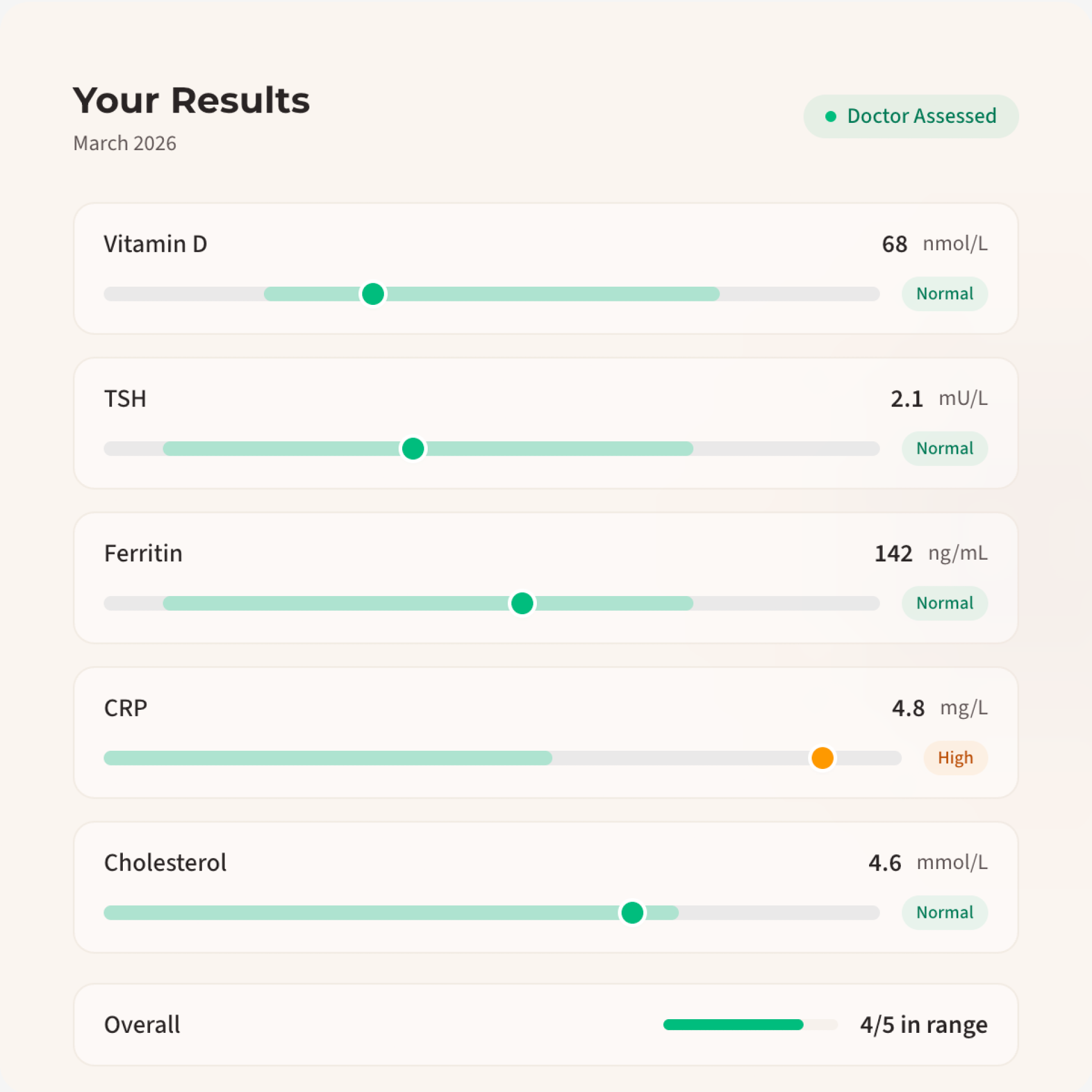
Your results are available online within a few working days. You log in to your account and view all values alongside their reference ranges, whenever it suits you. If certain markers fall outside the expected range or you notice shifts compared to previous results, discussing them helps.
Every blood test result includes a professional assessment from a BIG-registered doctor. For treatment decisions, discuss your results with your GP.
Frequently Asked Questions
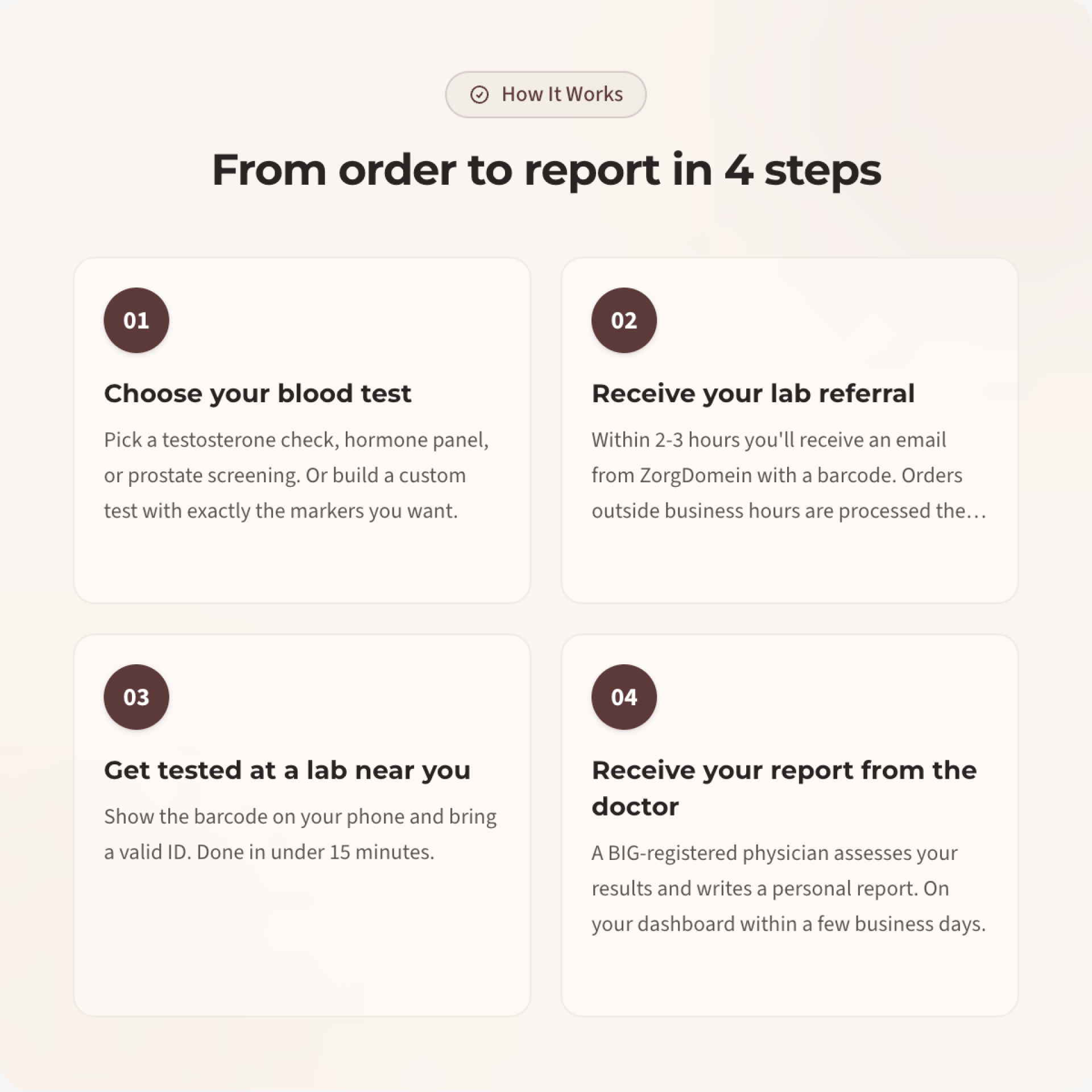
From order to report in 4 steps
No referral needed. No waiting list. Just order and go.
Choose your blood test
Pick a testosterone check, hormone panel, or prostate screening. Or build a custom test with exactly the markers you want.
Receive your lab referral
On the same business day you'll receive an email from ZorgDomein with a barcode. Orders outside business hours are processed the next business day.
Get tested at a lab near you
Show the barcode on your phone and bring a valid ID. Done in under 15 minutes.
Receive your report from the doctor
A BIG-registered physician assesses your results and writes a personal report. On your dashboard within a few business days.
Choose your blood test
Pick a testosterone check, hormone panel, or prostate screening. Or build a custom test with exactly the markers you want.
Receive your lab referral
On the same business day you'll receive an email from ZorgDomein with a barcode. Orders outside business hours are processed the next business day.
Get tested at a lab near you
Show the barcode on your phone and bring a valid ID. Done in under 15 minutes.
Receive your report from the doctor
A BIG-registered physician assesses your results and writes a personal report. On your dashboard within a few business days.
Always a location near you
With 700+ certified phlebotomy points across the Netherlands.
What We Test
This panel includes 9 biomarkers, each tested at a certified laboratory using medical-grade equipment.
HbA1c (glycated haemoglobin) reflects your average blood sugar levels over the past 2-3 months. It is the gold standard for long-term blood sugar monitoring and diabetes management.
Learn moreALT (alanine aminotransferase) is a liver enzyme that serves as a key indicator of liver health. Elevated levels may suggest liver cell damage and can be associated with various liver conditions.
Learn moreFasting insulin measures the amount of insulin in your blood after an overnight fast. It helps assess how efficiently your body manages blood sugar and can reveal insulin resistance before glucose levels become abnormal.
Learn moreTriglycerides are the most common type of fat in the body, used for energy storage. Elevated levels may be associated with increased risk of cardiovascular disease, especially when combined with other lipid abnormalities.
Learn moreGGT (gamma-glutamyl transferase) is a liver and bile duct enzyme that serves as one of the most sensitive markers for hepatobiliary disorders. It is particularly responsive to alcohol consumption and may be elevated in bile duct obstruction, liver disease, and with certain medications.
Learn moreFasting glucose measures the level of sugar (glucose) in your blood after an overnight fast. It is one of the primary tests used to screen for and monitor diabetes and pre-diabetes.
Learn moreLDL cholesterol is the amount of cholesterol carried inside LDL particles, the particles that can build up in the artery wall. That is where its nickname comes from: the bad cholesterol. Two things rarely appear on a report. First, in a routine lipid panel LDL is usually not measured but calculated from your total cholesterol, your HDL and your triglycerides. Second, the 3.0 mmol/l upper limit is a population reference interval, not a target. What counts as a good LDL for you is decided by your overall cardiovascular risk, not by the line printed on the page.
Learn moreTotal cholesterol measures the combined amount of HDL, LDL, and VLDL cholesterol in your blood. It provides an overview of your lipid status but should be interpreted alongside individual components for a complete cardiovascular risk picture.
Learn moreHDL cholesterol is the amount of cholesterol carried inside the HDL particles in your blood. Those particles pick cholesterol up from your tissues and from the artery wall and take it back to the liver. That transport is what earned HDL the nickname good cholesterol. The nickname is misleading. HDL is above all a mirror of your metabolism: the value drops with excess weight, insulin resistance, smoking and inactivity, and it is those factors that carry the risk. Drugs that raise HDL substantially do not reduce the number of cardiovascular events. And more is not always better: at very high values, mortality in large population studies turns back upwards. So never read your HDL on its own. It only takes on meaning alongside your triglycerides, your LDL and your overall risk profile.
Learn moreHbA1c (Glycated Hemoglobin)
MetabolicHbA1c (glycated haemoglobin) reflects your average blood sugar levels over the past 2-3 months. It is the gold standard for long-term blood sugar monitoring and diabetes management.
HbA1c provides a long-term view of blood sugar control, unlike fasting glucose which reflects a single point in time. It is essential for diabetes diagnosis and management. Consult your healthcare provider.
ALT (Alanine Aminotransferase)
LiverALT (alanine aminotransferase) is a liver enzyme that serves as a key indicator of liver health. Elevated levels may suggest liver cell damage and can be associated with various liver conditions.
ALT levels provide important insight into liver function. Elevated levels may indicate conditions such as hepatitis, fatty liver disease, or medication-related liver damage. Early detection of elevated ALT can help identify liver problems before symptoms develop, allowing for timely intervention and lifestyle modifications.
Insulin (Fasting)
MetabolicFasting insulin measures the amount of insulin in your blood after an overnight fast. It helps assess how efficiently your body manages blood sugar and can reveal insulin resistance before glucose levels become abnormal.
Fasting insulin can detect insulin resistance years before diabetes develops. Early detection allows for lifestyle interventions that may prevent progression. Consult your healthcare provider for personalised advice.
Triglycerides
CardiovascularTriglycerides are the most common type of fat in the body, used for energy storage. Elevated levels may be associated with increased risk of cardiovascular disease, especially when combined with other lipid abnormalities.
Elevated triglycerides may contribute to atherosclerosis and are a component of metabolic syndrome. They are often elevated alongside insulin resistance. Consult your healthcare provider.
GGT (Gamma-Glutamyl Transferase)
LiverGGT (gamma-glutamyl transferase) is a liver and bile duct enzyme that serves as one of the most sensitive markers for hepatobiliary disorders. It is particularly responsive to alcohol consumption and may be elevated in bile duct obstruction, liver disease, and with certain medications.
GGT is considered the most sensitive enzymatic indicator of bile duct problems. Elevated levels may suggest bile duct obstruction, liver inflammation, or chronic alcohol use, often before other liver enzymes become abnormal. Because GGT responds quickly to alcohol intake, it is frequently used to monitor alcohol-related liver damage. Tracking GGT over time can provide valuable insight into the effectiveness of lifestyle changes and treatment.
Glucose (Fasting)
MetabolicFasting glucose measures the level of sugar (glucose) in your blood after an overnight fast. It is one of the primary tests used to screen for and monitor diabetes and pre-diabetes.
Fasting glucose is a cornerstone of metabolic health assessment. Elevated levels may indicate pre-diabetes or diabetes, while very low levels can also be clinically significant. Consult your healthcare provider for interpretation.
LDL Cholesterol
CardiovascularLDL cholesterol is the amount of cholesterol carried inside LDL particles, the particles that can build up in the artery wall. That is where its nickname comes from: the bad cholesterol. Two things rarely appear on a report. First, in a routine lipid panel LDL is usually not measured but calculated from your total cholesterol, your HDL and your triglycerides. Second, the 3.0 mmol/l upper limit is a population reference interval, not a target. What counts as a good LDL for you is decided by your overall cardiovascular risk, not by the line printed on the page.
Of all the values in a lipid panel, LDL has the strongest causal link with atherosclerosis. Every LDL particle carries one apolipoprotein B, enters the artery wall and can lodge there. The more of those particles pass through over decades, the more plaque builds up. That is why lowering a raised LDL is the best-evidenced way to reduce the risk of a heart attack and a stroke. The most important sentence on this page, however, is not about high or low but about for whom. The 3.0 mmol/l upper limit on your report is a reference interval: it describes what is common in the population. It is not a goal. Guidelines tie the goal to your risk. <table><thead><tr><th>Situation</th><th>Guideline LDL goal</th></tr></thead><tbody><tr><td>Established cardiovascular disease, up to age 70 (Dutch CVRM guideline)</td><td>below 1.8 mmol/l</td></tr><tr><td>High or very high risk, or diabetes or chronic kidney disease, up to age 70 (CVRM)</td><td>below 2.6 mmol/l</td></tr><tr><td>Very high risk (ESC/EAS 2019)</td><td>below 1.4 mmol/l</td></tr><tr><td>High risk (ESC/EAS 2019)</td><td>below 1.8 mmol/l</td></tr><tr><td>Moderate risk (ESC/EAS 2019)</td><td>below 2.6 mmol/l</td></tr><tr><td>Low risk (ESC/EAS 2019)</td><td>below 3.0 mmol/l</td></tr></tbody></table> The consequence is sharp. An LDL of 2.8 mmol/l sits neatly inside the reference interval on the printout, while that same 2.8 is clearly too high for someone who has had a heart attack. Conversely, an LDL of 3.2 in a thirty-year-old with no other risk factors leads to a very different conversation than in a sixty-year-old who smokes, has diabetes and has high blood pressure. Your risk category, built from age, blood pressure, smoking, diabetes, kidney function, family history and existing cardiovascular disease, is what decides what your number means. Above seventy, LDL lowering is not routinely started in people without cardiovascular disease. A second situation deserves attention. A strongly raised LDL in someone who takes no lipid-lowering medication, particularly alongside early cardiovascular disease in close relatives, is a reason for a doctor to look into whether familial hypercholesterolaemia may be present. That inherited condition affects roughly 1 in 250 to 300 people and remains under-diagnosed in the Netherlands. A blood value does not make that diagnosis and cannot make it: the conversation belongs with your doctor, who also looks at your family and your history. The sensible reading rule, then, is that a single LDL number without a risk profile says little. Place the result alongside your HDL, your triglycerides, your non-HDL cholesterol and your blood pressure, and assess it together with a doctor.
Total Cholesterol
CardiovascularTotal cholesterol measures the combined amount of HDL, LDL, and VLDL cholesterol in your blood. It provides an overview of your lipid status but should be interpreted alongside individual components for a complete cardiovascular risk picture.
Total cholesterol is a basic screening marker for cardiovascular risk. However, the breakdown into HDL, LDL, and triglycerides provides more actionable information. Consult your healthcare provider for interpretation.
HDL Cholesterol
CardiovascularHDL cholesterol is the amount of cholesterol carried inside the HDL particles in your blood. Those particles pick cholesterol up from your tissues and from the artery wall and take it back to the liver. That transport is what earned HDL the nickname good cholesterol. The nickname is misleading. HDL is above all a mirror of your metabolism: the value drops with excess weight, insulin resistance, smoking and inactivity, and it is those factors that carry the risk. Drugs that raise HDL substantially do not reduce the number of cardiovascular events. And more is not always better: at very high values, mortality in large population studies turns back upwards. So never read your HDL on its own. It only takes on meaning alongside your triglycerides, your LDL and your overall risk profile.
Almost every page about HDL says the same thing: HDL is the good cholesterol, and the higher the better. Both halves of that sentence are wrong, which is exactly why this is the most important section on this page. <strong>Higher is not always better.</strong> The relationship between HDL and all-cause mortality is not a straight line but a U. In two large Danish population studies, together more than 116,000 men and women, the lowest mortality sat at an HDL of roughly 1.9 mmol/l in men and roughly 2.4 mmol/l in women. Above that, the curve turns: men with an HDL of 3.0 mmol/l or more had roughly twice the mortality, women from 3.5 mmol/l upwards around one and a half times. An extremely high HDL is therefore not a certificate of health, and it deserves a conversation with your doctor rather than congratulations. <strong>HDL is a gauge, not a dial.</strong> If a high HDL protects, then raising HDL ought to help. That has been tried extensively and it did not work. Drugs that inhibit the CETP transfer protein raised HDL by tens of percent and did not reduce heart attacks; the first in that class actually caused more deaths. Niacin raised HDL, but added no benefit on top of a statin and did add side effects. Genetic research points the same way: people who naturally carry a variant that raises HDL do not have a lower risk of myocardial infarction because of it, while that does hold for LDL-lowering variants. What does that mean? That a low HDL is not a cause, but a signal. HDL is low because something else is going on: visceral fat, insulin resistance, smoking, too little movement, or high triglycerides. Those are the factors that carry the risk. Fixating on the HDL number means treating the thermometer instead of the fever. <strong>So what do you do with it.</strong> Use HDL as context for the rest of your panel. A low HDL alongside high triglycerides and a raised fasting glucose together sketch a metabolic pattern that genuinely does carry risk. A low HDL also raises the cholesterol/HDL ratio, which is used in Dutch risk tables. But the values that predict risk most sharply are LDL, non-HDL cholesterol and ApoB, the number of risk-carrying particles. Your HDL says nothing about those. And finally: there is no target value for HDL. Your doctor does not set an HDL goal the way they set one for LDL, because no treatment has been shown to lower your risk by raising HDL.
Related biomarkers
Biomarkers often explored alongside this test for a fuller picture.
ALP (Alkaline Phosphatase)
ALP reflects liver and bone health, both important for sustained physical performance and overall vitality. Monitoring supports early detection of issues.
AST (Aspartate Aminotransferase)
AST is a key enzyme for men's health monitoring, found in the liver, heart, and muscles. Factors common among men such as alcohol consumption, high-protein diets, intense weightlifting, and certain supplements can influence AST levels.
Albumin
Albumin reflects liver health and protein status, both fundamental for maintaining muscle mass, recovery capacity, and overall male vitality.
Amylase
Amylase is a pancreatic enzyme important for men's digestive health. Men have higher rates of alcohol-related pancreatitis, making regular monitoring valuable.
ApoA1 (Apolipoprotein A1)
ApoA1 measures your heart-protective HDL function. Higher levels support cardiovascular strength and long-term vitality for men.
ApoB (Apolipoprotein B)
ApoB counts the atherogenic particles that drive heart disease. Knowing your number helps you take targeted action to protect cardiovascular health.
Related Tests
Explore more tests that might interest you.
Insulin Resistance (HOMA-IR)
A focused men's metabolic test for insulin resistance from fasting glucose and insulin, with your HOMA-IR score.
Cardiovascular Health
Advanced heart health panel with hs-CRP and homocysteine.
Complete Metabolic Panel
Comprehensive metabolic panel: electrolytes, kidney, liver, glucose, HbA1c, and protein.
This test not quite right?
Build your own blood test from 139+ individual biomarkers — choose exactly what you need.
Have a question?
Our team is happy to help. Ask your question and we'll respond as soon as possible.