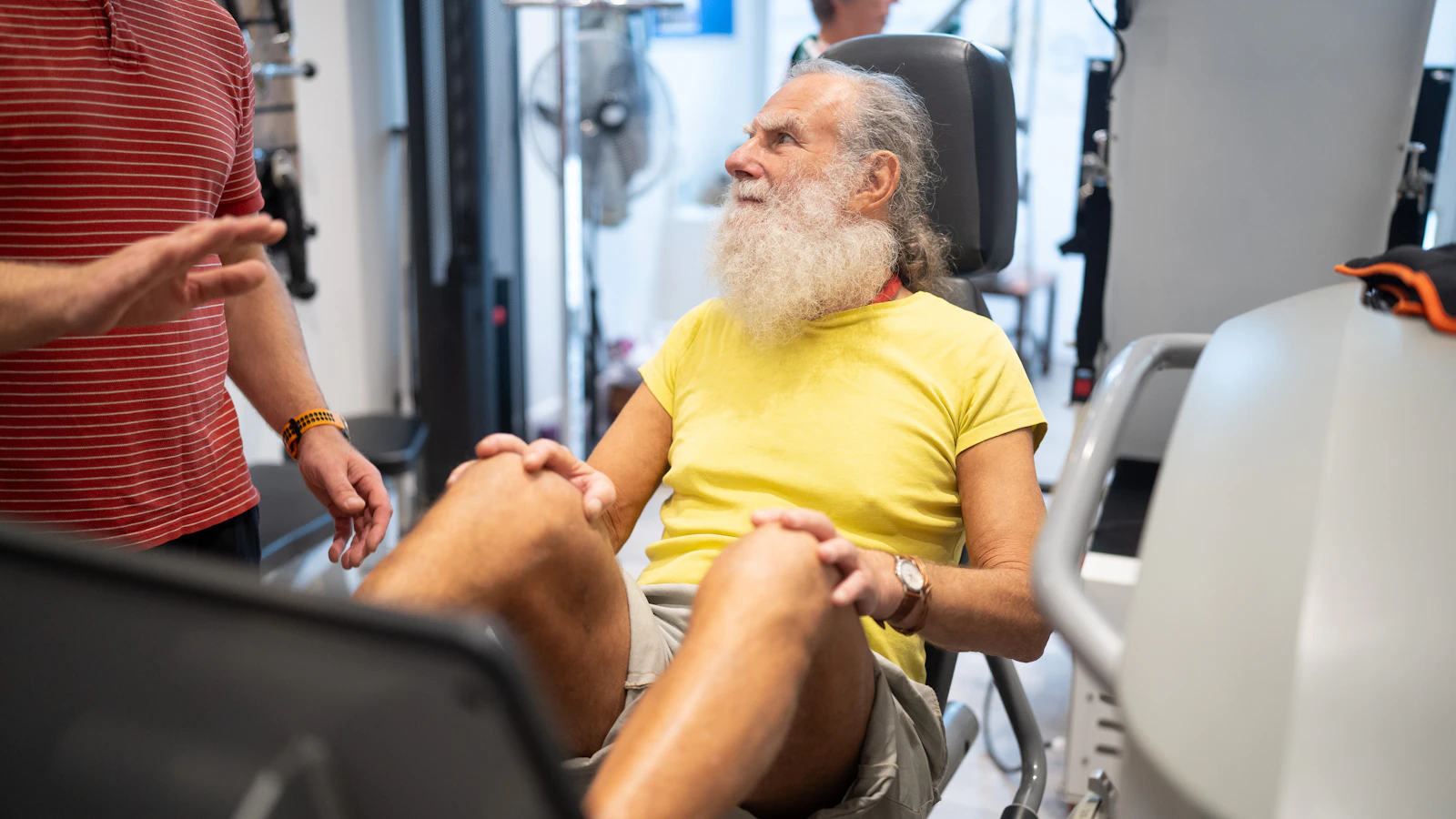
Sarcopenia is the gradual loss of muscle mass and muscle strength that comes with age. The literal meaning of sarcopenia comes from Greek: "too little flesh". From around fifty, without pushback you lose muscle mass each decade, and strength falls even faster than mass (Cruz-Jentoft et al., 2019).
What strikes me: men often notice sarcopenia only when it is already advanced, for example when stairs get harder or a jar will not open. Yet acting early pays off most. The good news is that muscle responds to stimulus, at any age.
Below you will read what sarcopenia is, how to recognise it, why men are susceptible, and what you can do about it.
What is the meaning of sarcopenia?
Sarcopenia means the loss of muscle mass and muscle strength that goes with ageing. The European working group that set the definition puts muscle strength first: too little strength is the key signal, and low muscle mass confirms the diagnosis (Cruz-Jentoft et al., 2019).
So it is more than "getting a bit less muscular". Sarcopenia is linked to a higher risk of falls, fractures and loss of independence. That makes it more than a cosmetic story.
Important: sarcopenia is a gradual process, not a disease you get overnight. That makes it easy to ignore, but also easy to influence.
How fast do you lose muscle mass with age?
From your thirties, muscle mass slowly declines, and after fifty that speeds up. Rough estimates sit around a few percent of muscle mass per decade, with an even steeper drop in strength. The exact pace differs per person and depends heavily on how much you move.
Strength falls faster than mass. That explains why you sometimes feel weaker at sixty than the mirror suggests. You can still look reasonably muscular while functional strength has already declined.
Inactivity speeds everything up. A few weeks of little movement, for example after an injury, can cost older men a surprising amount of muscle.
How do you recognise sarcopenia?
The early signals are functional: things that used to be easy now take effort. Think of getting up from a low chair, climbing stairs or carrying a heavy bag. The checklist below lists common signals.
| Signal | Where you notice it |
|---|---|
| Less grip strength | opening a jar or cap takes effort |
| Walking slower | you keep up with others less easily |
| Struggling to stand up | from a low chair or sofa |
| Stumbling or standing unsteadily | when rushing or on uneven ground |
| Visibly thinner arms or legs | especially with unintended weight loss |
Grip strength and walking speed are not important measures by chance: both strongly predict how your older years go (Leong et al., 2015; Studenski et al., 2011). If you recognise several signals, discuss it with your GP.
What are the causes in men?
Sarcopenia arises from a combination of factors: moving less, taking in less protein, inflammatory processes and hormonal changes. In men, the slow decline of testosterone plays a part, because the hormone helps build and keep muscle.
Still, testosterone is rarely the whole story. Inactivity and too little protein often do at least as much. A man who stops training loses muscle regardless of his hormone values.
A period of illness or a hospital stay can also break down muscle quickly. That is exactly when it is important to start moving again as soon as possible.
How do you counter muscle loss?
The two strongest dials are strength training and enough protein. Two to three times a week of resistance training builds muscle, even at a later age. Enough protein, spread across the day, gives your body the building blocks.
The Dutch Nutrition Centre (Voedingscentrum) points out that older adults often benefit from extra attention for protein. Think of protein at every meal, not only at dinner. Sources like meat, fish, eggs, dairy and legumes help with that.
Walking and cardio are good for your heart, but build little muscle. For sarcopenia you specifically need the resistance stimulus. Do you get muscle complaints after training? Then it helps to know whether it is overload or a deficiency, which we explain in muscle complaints after exercise.
What role do blood values play?
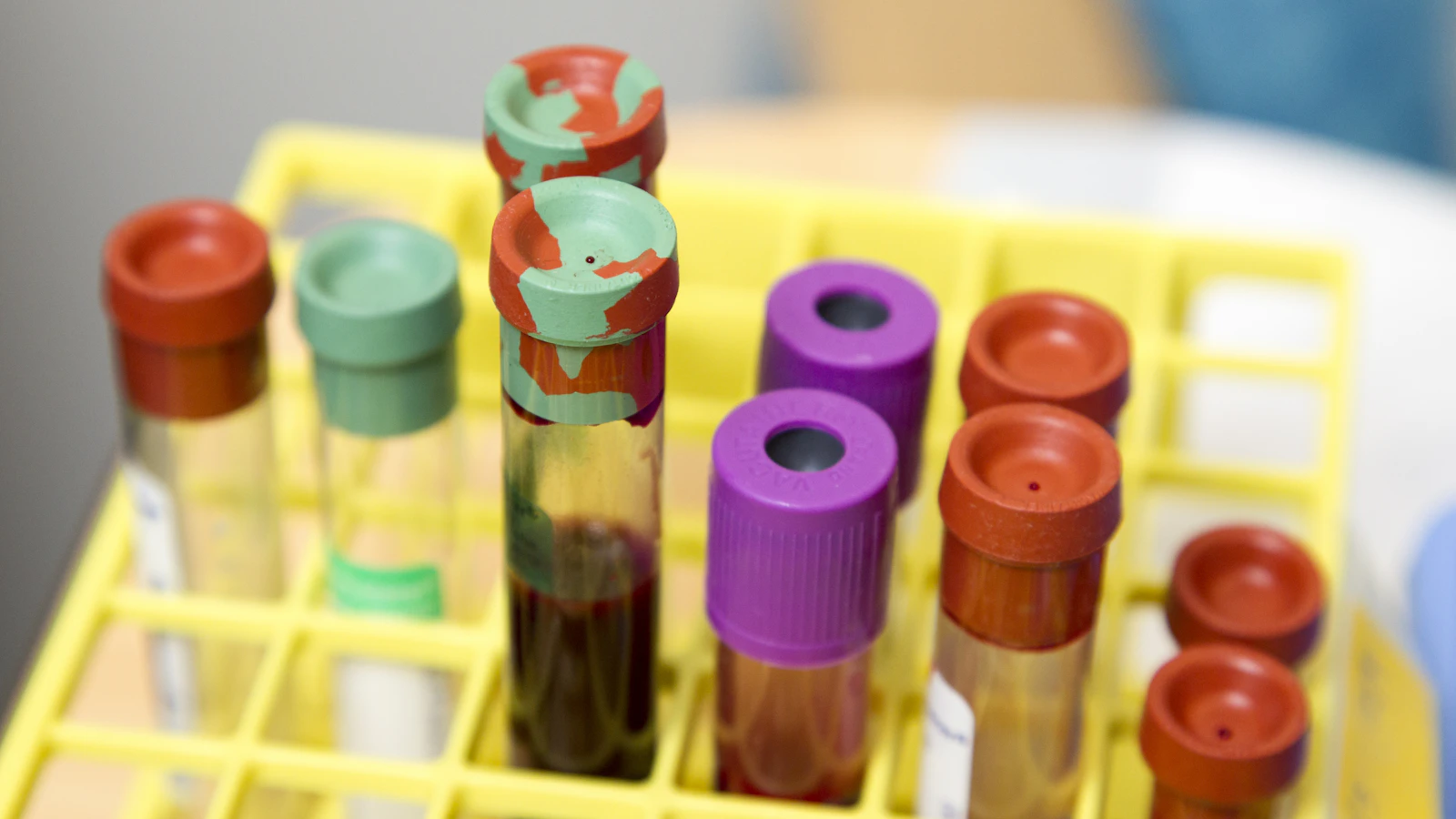
Blood values do not measure your muscle mass directly, but can bring contributing factors into view. Think of your testosterone, your vitamin D and your kidney function. A vitamin D deficiency, for example, is linked to less muscle strength.
If you want to measure those values together with your hormone profile, the Men Over 40 Panel can be a logical starting point. Every result is assessed by a BIG-registered doctor.
Sarcopenia fits in the broader picture of healthy ageing. The bigger overview is in our guide to healthy ageing for men, and how fit your body really is in biological age. See a result as a starting point, not a final verdict.
Sources
- Cruz-Jentoft AJ, Bahat G, Bauer J, et al. Sarcopenia: revised European consensus on definition and diagnosis (EWGSOP2). Age Ageing. 2019;48(1):16-31. PMID 30312372.
- Leong DP, Teo KK, Rangarajan S, et al. Prognostic value of grip strength: findings from the Prospective Urban Rural Epidemiology (PURE) study. Lancet. 2015;386(9990):266-273. PMID 25982160.
- Studenski S, Perera S, Patel K, et al. Gait speed and survival in older adults. JAMA. 2011;305(1):50-58. PMID 21205966.
- Voedingscentrum. Protein and older adults. Available via voedingscentrum.nl.
Every blood test result at Caliber Health includes a professional assessment by a BIG-registered doctor. For treatment decisions, discuss your results with your GP.
الكاتب