Your kidneys are among the quietest organs you have. They filter your blood day and night, manage your fluid, your blood pressure and your salts, and they almost never complain. An estimated 1 in 10 adults has a reduced kidney function, and a large part does not know it.
To be honest: kidneys are not a topic men lie awake over. Yet they are exactly the values that often ride along on a normal blood test, and that can say something about your blood pressure, your sugar and even your training habits. Reason enough to know what they mean.
What do your kidneys actually do?
You have two kidneys, each about the size of a fist, that together filter your blood. They remove waste and excess fluid, which you then pass out. But they do more than filter: they help regulate your blood pressure, keep your salts in balance and play a role in making red blood cells.
What is remarkable is how much reserve your kidneys have. You can lose a good part of your kidney function before you notice anything. That is handy, but also deceptive, because it means a problem can stay invisible for a long time.
That is why measuring is often the only way to know how your kidneys are doing. You rarely feel it, you see it in your blood.
Which kidney symptoms do men get?
The awkward truth is that a reduced kidney function gives barely any symptoms in the early stage. Many men feel nothing at all, and that is exactly why it often gets noticed late. If anything does come, it is usually vague.
Think of fatigue, less appetite, swollen ankles, or passing water more or actually less often. Only with markedly reduced kidney function do the signals become clearer. Because those symptoms are so non-specific, you easily blame them on stress or ageing.
So the point is not that you can recognise kidney symptoms well, because usually you cannot. The point is that a simple blood test can show something you do not feel yourself.
Which blood values say something about your kidneys?
A doctor assesses your kidneys via a set of values that together give a picture. The most important are creatinine and the eGFR, a calculated estimate of how well your kidneys filter. None of those values is a diagnosis on its own, but together they tell a story.
The table below shows what the main kidney values measure. The exact reference ranges differ per laboratory, so always read the values on your own result form.
| Value | What it measures | Why it matters |
|---|---|---|
| Creatinine | Waste from your muscles that your kidneys filter | Rises when your kidneys filter less well; basis for the eGFR |
| eGFR | Calculated estimate of your filtration rate | The core value for estimating kidney function |
| Urea (BUN) | Waste from protein breakdown | Can say something about kidney function, fluid and diet |
| Albumin in urine | Protein that does not leak through in healthy kidneys | Early signal of damage, often before the eGFR drops |
If you want the detail per value, read our separate piece on creatinine and eGFR. You will also find these values as individual markers: creatinine, eGFR and urea.
Creatinine and eGFR: the core of the story
Creatinine is a waste product formed in the normal working of your muscles. Your kidneys filter it from your blood, so if they work less well, the creatinine rises. From that value, together with your age and sex, the lab calculates your eGFR.
The eGFR is the value a doctor mainly looks at. It gives, in a single number, an estimate of how well your kidneys filter. The higher the better, and a drop over time is often more telling than a single number.
Important: the eGFR is an estimate, not an exact measurement. That is why it can mislead in some people, and in muscular men in particular that is sensitive.
Kidneys and muscle: why creatinine sits differently in muscular men
This is the part that surprises many sporty men. Because creatinine comes from your muscles, men with a lot of muscle mass naturally often have a higher creatinine than average. That can push the eGFR down, while your kidneys work fine.
In other words: a slightly raised creatinine in a muscular man does not always mean a kidney problem. It can simply be your muscle mass. A doctor takes that into account and looks at the whole picture, not at one number.
If you train hard and use creatine as a supplement, there is something else at play. We cover that separately in our piece on protein, creatine and your kidneys.
Kidneys and your blood pressure
Your kidneys and your blood pressure are closely interwoven. Your kidneys help regulate your blood pressure, and the other way around a high blood pressure can over time damage your kidneys. It is an interplay that works both ways.
For men that is relevant, because high blood pressure is common and, like kidney damage, often gives no symptoms. The Nierstichting points out that high blood pressure and diabetes are the two main causes of kidney damage.
That is why it is useful not to see your kidneys separately from your blood pressure and your sugar. They belong to the same picture.
Kidneys, uric acid and gout
Your kidneys also excrete uric acid, the substance that plays a role in gout. If your kidneys work less well, the uric acid can rise. The other way around, a markedly raised uric acid can over time strain your kidneys too, among other things via kidney stones.
That interplay means a doctor with gout sometimes also looks at your kidneys, and with kidney problems sometimes at your uric acid. How that connects is in our pillar on gout and uric acid in men.
Kidneys, your heart and your metabolic health
Your kidneys rarely stand alone. A reduced kidney function often goes together with high blood pressure, diabetes and cardiovascular disease. They share the same risk factors and reinforce each other.
That is why your kidney function is also a window on your broader health. Which blood values say something about your cardiovascular risk is in our piece on cardiovascular disease in men.
The gain is that the steps that are good for your heart often benefit your kidneys too. One direction, several effects.
Kidney stones: often a male thing
Kidney stones are more common in men than in women, and they can give significant pain. A stone forms when certain substances in your urine deposit and clump together, for instance calcium or uric acid. Small, they can stay unnoticed; larger, they can give a fierce, cramping pain in your side or back.
Drinking too little is a known risk factor, as are certain foods and a high uric acid. Because uric acid stones link to gout, this touches the same story as your uric acid and gout.
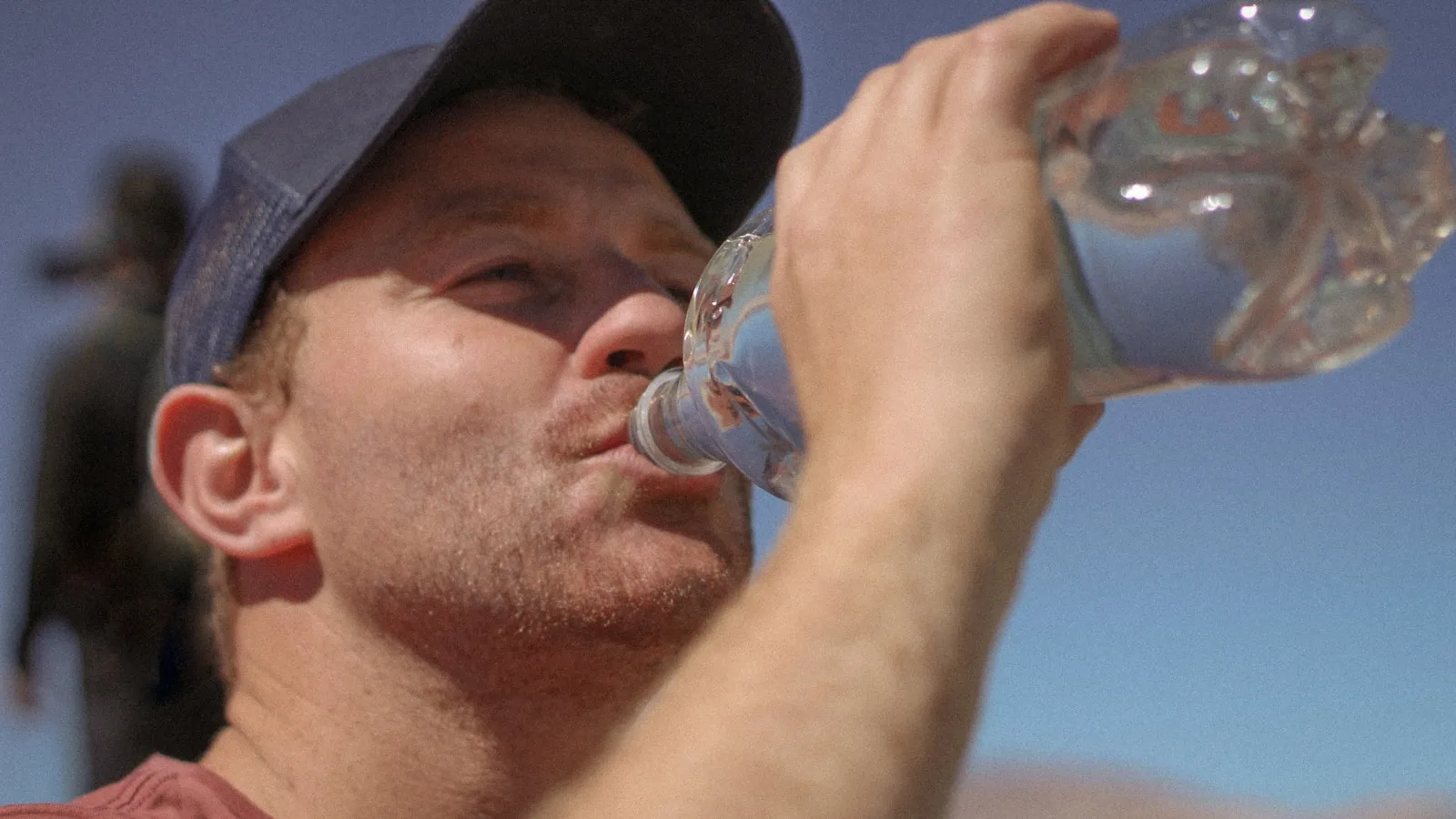
For men, drinking enough is therefore no luxury. It is one of the simplest ways to reduce the chance of stones.
Kidneys and dehydration during exercise
Your kidneys are sensitive to your fluid balance. With heavy sweating, a heatwave or a hard endurance effort, you can temporarily dehydrate, and then your kidneys have to work harder with less fluid. Usually that recovers on its own once you drink again.
If dehydration becomes too severe or too long, it can strain your kidneys. For athletes the lesson is simple: drink enough around exertion, certainly in the heat. Do not needlessly combine that with a lot of anti-inflammatory painkillers, because that combination is extra straining.
This mainly plays at extreme exertion. For the average training you need not worry, as long as you simply drink enough.
What can you do yourself for your kidneys?
Honest answer: there is no kidney supplement or detox programme that cleans your kidneys, and be wary of products that promise that. Your kidneys do that filtering themselves, every day, without help from expensive agents.
What does help is the basics: a healthy blood pressure, a healthy weight, not smoking and going easy on salt. Drinking enough is part of it, though you do not need to flood yourself. The Nierstichting stresses that keeping blood pressure and sugar under control are the most important ways to protect your kidneys.
Also be careful with a lot of painkillers of the anti-inflammatory type, because prolonged heavy use can strain your kidneys. None of these replace an assessment by a doctor, but they do give your kidneys the best starting position.
When to get your kidney values checked?
You usually do not feel a kidney problem, so going on symptoms works badly. Still, there are moments when a check makes sense. If you have high blood pressure, diabetes, or kidney problems run in your family, your kidney values can give useful information.
A GP can determine your kidney function, and if you want to map it yourself a blood test can be a first step. Always discuss an abnormal result with a doctor, because a single measurement is a snapshot and not a diagnosis. The trend over time often says more than a single number.
What a blood test can tell you
A targeted kidney test measures your creatinine and calculates your eGFR, sometimes with urea added. That tells you whether your kidneys filter well, or whether it is worth looking further. The Kidney Function panel maps your kidney values, and for a general start look at the Basic Health Checkup.
Frequently asked questions about your kidneys
Can you feel a kidney problem?
Usually not, certainly not in an early stage. Your kidneys have a lot of reserve, so you can lose a good part of your function without symptoms. Only with advanced problems do signals such as fatigue or swollen ankles appear. That is why only testing gives real certainty.
Does a high creatinine mean my kidneys work badly?
Not automatically. A lot of muscle mass, a protein-rich meal or creatine use can raise your creatinine without anything being wrong. That is why a doctor looks at the eGFR, your context and the trend, and not at one single number.
How often should you have your kidneys checked?
If you have no symptoms and no risk factors, routine testing is usually not needed. If you do have high blood pressure, diabetes or a family history, a doctor decides whether and how often monitoring makes sense. The trend often says more than a single measurement.
Do I drink enough for my kidneys?
For most people thirst is a fine guide, topped up with extra drinking in heat or during exertion. You do not need to flood yourself with water, because drinking a great deal does not protect your kidneys extra. Clear or light-yellow urine is usually a sign you are getting enough.
Can exercise affect my kidney values?
Yes, temporarily. A heavy training or a lot of muscle mass can raise your creatinine without your kidneys working less well. Dehydration with intense exertion plays in too. For a clean picture, pick a calm moment, and mention to your doctor that you train intensely.
Sources
- Nierstichting. How your kidneys work.
- Thuisarts.nl. I have a reduced kidney function.
- NHG (Dutch College of General Practitioners). NHG guideline Chronic kidney damage.
Disclaimer
Caliberhealth works with BIG-registered doctors who review your blood results. This article provides general information and is not a substitute for medical advice from a GP or specialist. A blood test is a tool, not a diagnosis in itself. For serious or persistent symptoms, contact your GP, or call 112 in an emergency.
الكاتب