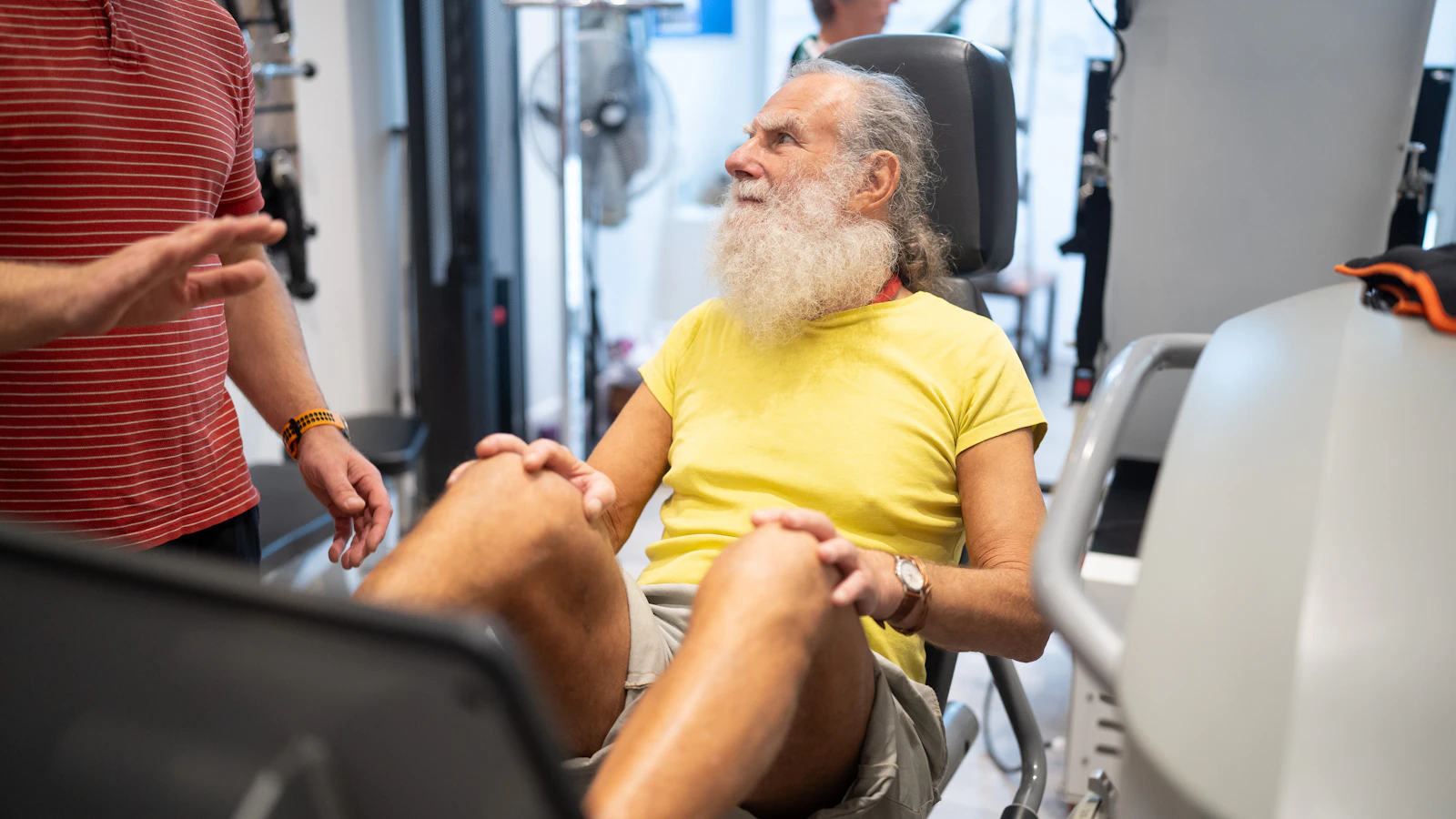
Osteoporosis is often seen as a women's problem, but men get it too. And when a man breaks a bone because of osteoporosis, the consequences are often even more serious: in a large study, the excess mortality after a hip fracture was higher in men than in women (Bliuc et al., 2009). Measuring bone density can therefore be worthwhile for men too.
What strikes me: men rarely picture themselves with weak bones. Osteoporosis is known as something for women after menopause. That is partly fair, but it means men often discover their bones have weakened only after a fracture.
Below you will read how to have your bone density measured, what your result means, which risk factors apply to men and what you can do yourself.
Do men get osteoporosis too?
Yes. Osteoporosis is more common in women, but a considerable share of men encounter it at a later age. Because it is recognised less, it is often noticed later in men (Ebeling, 2008).
The process is the same in men: bone breakdown runs faster than build-up, making the bone more porous and brittle. This happens gradually and without symptoms, until something breaks.
Exactly because it runs silently, it is hard to judge for yourself how your bones are doing. That requires a measurement.
How does measuring bone density work?
Bone density is measured with a DEXA scan, a short, painless X-ray measurement, usually of your hip and lower back. The result compares your bone density with that of a healthy young adult, expressed as a T-score. This scan goes through your GP or the hospital, not through a blood test.
So a blood test does not measure your bone density, but it can bring into view factors that affect your bones, such as your vitamin D, calcium and testosterone. That way, scan and blood values together give a more complete picture.
The DEXA scan itself usually takes only a few minutes and uses a low radiation dose.
What does your T-score mean?
The T-score indicates how much your bone density deviates from that of a healthy young adult. The lower (more negative) the number, the lower your bone density. This is how a result is usually classified.
| T-score | What it roughly means |
|---|---|
| -1.0 or higher | normal bone density |
| between -1.0 and -2.5 | reduced bone density (osteopenia) |
| -2.5 or lower | osteoporosis |
See this classification as a guideline, not a verdict about you personally. What a result means for your situation is decided by your doctor, who also weighs your age and other risk factors.
What are the risk factors in men?
In men, the causes are partly different from women. Besides age and heredity, it is often about lifestyle and conditions. The table below lists common risk factors.
| Risk factor | Why it matters |
|---|---|
| Low testosterone | the hormone helps keep bone strong |
| Smoking and heavy alcohol | speed up bone breakdown |
| Long-term prednisone (corticosteroids) | a known cause of bone loss |
| Little movement and little sun | less bone stimulus and vitamin D |
| Osteoporosis in the family | hereditary predisposition counts |
If you recognise several factors, it can be worthwhile to discuss this with your GP. They can judge whether measuring bone density fits your situation.
What role does testosterone play?
Testosterone helps keep your bones strong, so a long-term low testosterone can contribute to bone loss. In men the hormone declines gradually with age, on average about 0.1 to 0.2 nmol/l per year (Harman et al., 2001).
That does not mean every man with somewhat lower testosterone gets weak bones. But with a clearly low testosterone and other risk factors, it can play a part.
If you want to measure your testosterone together with your vitamin D, the Men Over 40 Panel can be a logical starting point. Every result is assessed by a BIG-registered doctor.
What can you do to keep your bones strong?
The basics are known and effective: enough weight-bearing movement, not smoking, being moderate with alcohol and ensuring enough calcium and vitamin D. Strength training and bone-loading movement like walking and jumping stimulate your bones to stay strong.
The Dutch Health Council (Gezondheidsraad) advises men from seventy to take extra vitamin D, because the skin then makes less of it. A vitamin D deficiency is linked to weaker bones and muscles. Read more in vitamin D deficiency in men.
Bones and muscles are connected: strong muscles protect your bones and lower your fall risk. How to counter muscle loss is in sarcopenia. The broader picture is in our guide to healthy ageing, and what you can check preventively in preventive blood testing. See a result as a starting point, not a final verdict.
Sources
- Ebeling PR. Clinical practice. Osteoporosis in men. N Engl J Med. 2008;358(14):1474-1482. PMID 18385499.
- Bliuc D, Nguyen ND, Milch VE, et al. Mortality risk associated with low-trauma osteoporotic fracture and subsequent fracture in men and women. JAMA. 2009;301(5):513-521. PMID 19190316.
- Harman SM, Metter EJ, Tobin JD, et al. Longitudinal effects of aging on serum total and free testosterone levels in healthy men. Baltimore Longitudinal Study of Aging. J Clin Endocrinol Metab. 2001;86(2):724-731. PMID 11158037.
- Gezondheidsraad. Dietary reference values for vitamin D. Available via gezondheidsraad.nl.
Every blood test result at Caliber Health includes a professional assessment by a BIG-registered doctor. For treatment decisions, discuss your results with your GP.
الكاتب