Lipids
LDL, HDL, and Triglycerides: your cardiovascular risk markers.
Add to Cart
No referral needed
Added to your cart
Click the button to view your cart
Biomarkers Included
3 biomarkersThis lipid panel measures HDL, LDL cholesterol, and triglycerides. These markers are commonly used to assess cardiovascular risk factors and give you a data-driven view of your lipid profile.
Why this test?
Cholesterol and triglyceride levels play a role in cardiovascular health, yet imbalances often develop without symptoms. This panel breaks down your cholesterol into its components (HDL, LDL) and measures triglycerides, giving you a detailed view of your lipid metabolism.
Who is this test for?
This test may be relevant for:
- Men who want to understand their cardiovascular risk markers
- Those with a family history of cardiovascular conditions
- Men who have made dietary or lifestyle changes and want to track their lipid levels
- Anyone interested in a baseline lipid profile
What is tested?
- HDL Cholesterol (mmol/l): often referred to as "good" cholesterol; higher levels are generally considered favorable
- LDL Cholesterol (mmol/l): often referred to as "bad" cholesterol; elevated levels may be associated with increased cardiovascular risk
- Triglycerides (mmol/l): a type of fat in the blood; elevated levels can be influenced by diet, alcohol, and lifestyle factors
What can this test tell you?
Looking at your lipid markers together provides more context than any single cholesterol number. The ratio between HDL and LDL, combined with your triglyceride levels, can help paint a broader picture of lipid metabolism. For example, high LDL alongside low HDL may be associated with elevated cardiovascular risk, while high triglycerides could be linked to dietary factors or metabolic patterns. These markers together offer a more meaningful view of your cardiovascular health landscape.
How is the sample collected?
A blood sample is drawn at a certified sample point (afnamepunt). There are over 750 locations throughout the Netherlands. The procedure takes approximately 10 to 15 minutes.
When is this test useful?
This test may be useful if you want to understand your cardiovascular risk factors, have made changes to your diet or exercise routine, have a family history of heart-related conditions, or simply want to know where your lipid levels stand. It can also be relevant if you notice symptoms such as chest discomfort during physical activity.
What do the results mean?
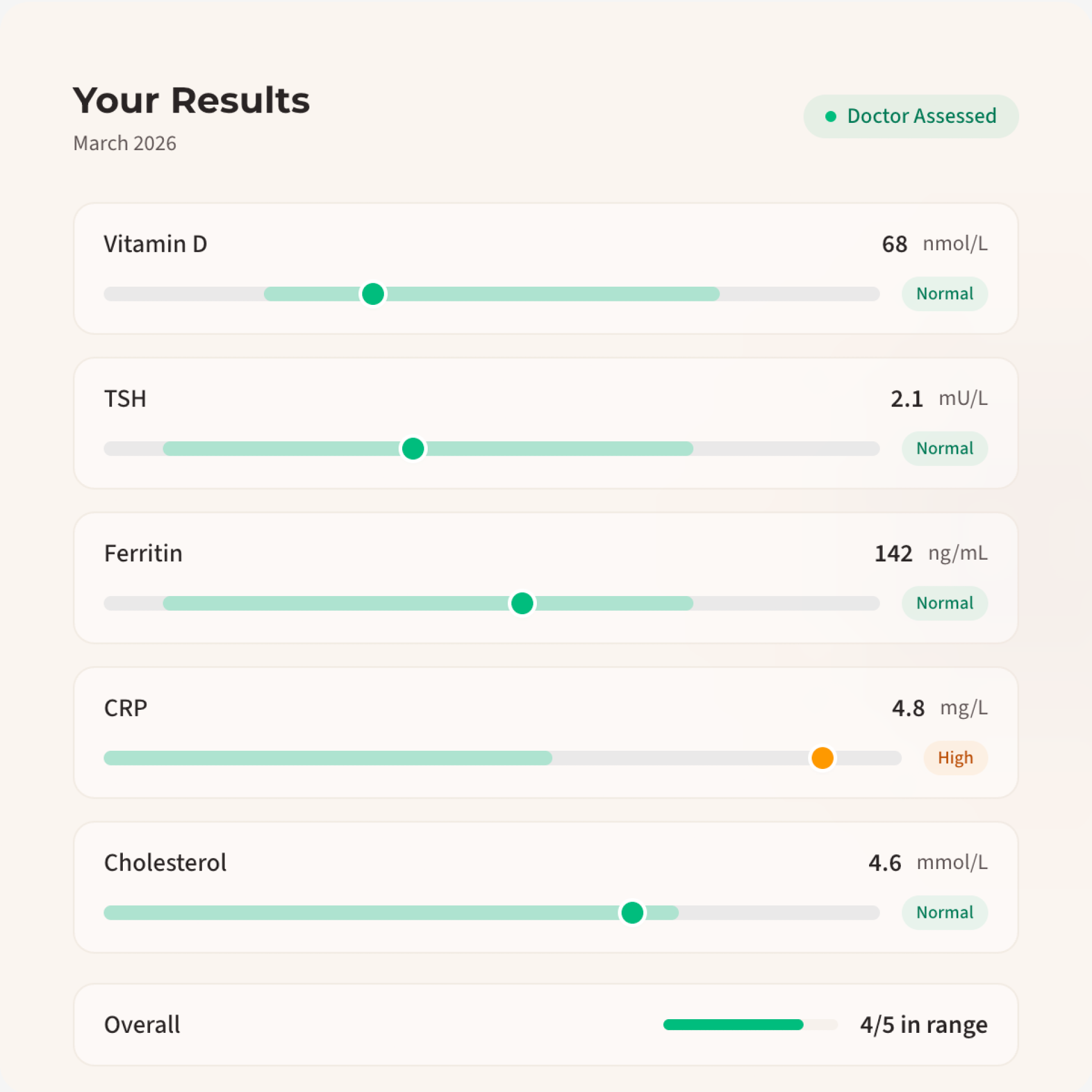
Your results will show whether each lipid marker falls within the reference range. Elevated LDL or triglycerides, or low HDL, may suggest areas to explore further. However, lipid levels are influenced by many factors including genetics, diet, exercise, and stress. A healthcare provider can help you interpret these results in the broader context of your health and determine whether any follow-up may be appropriate.
Preparation
Fasting is required for this test (8 to 12 hours). Water is allowed during the fasting period.
What happens after the results?
Your results are typically available within a few business days. You will receive a clear report with each marker and its reference range. Consider discussing your lipid profile with a healthcare provider who can offer personalized interpretation and, if needed, guidance on next steps.
Frequently Asked Questions
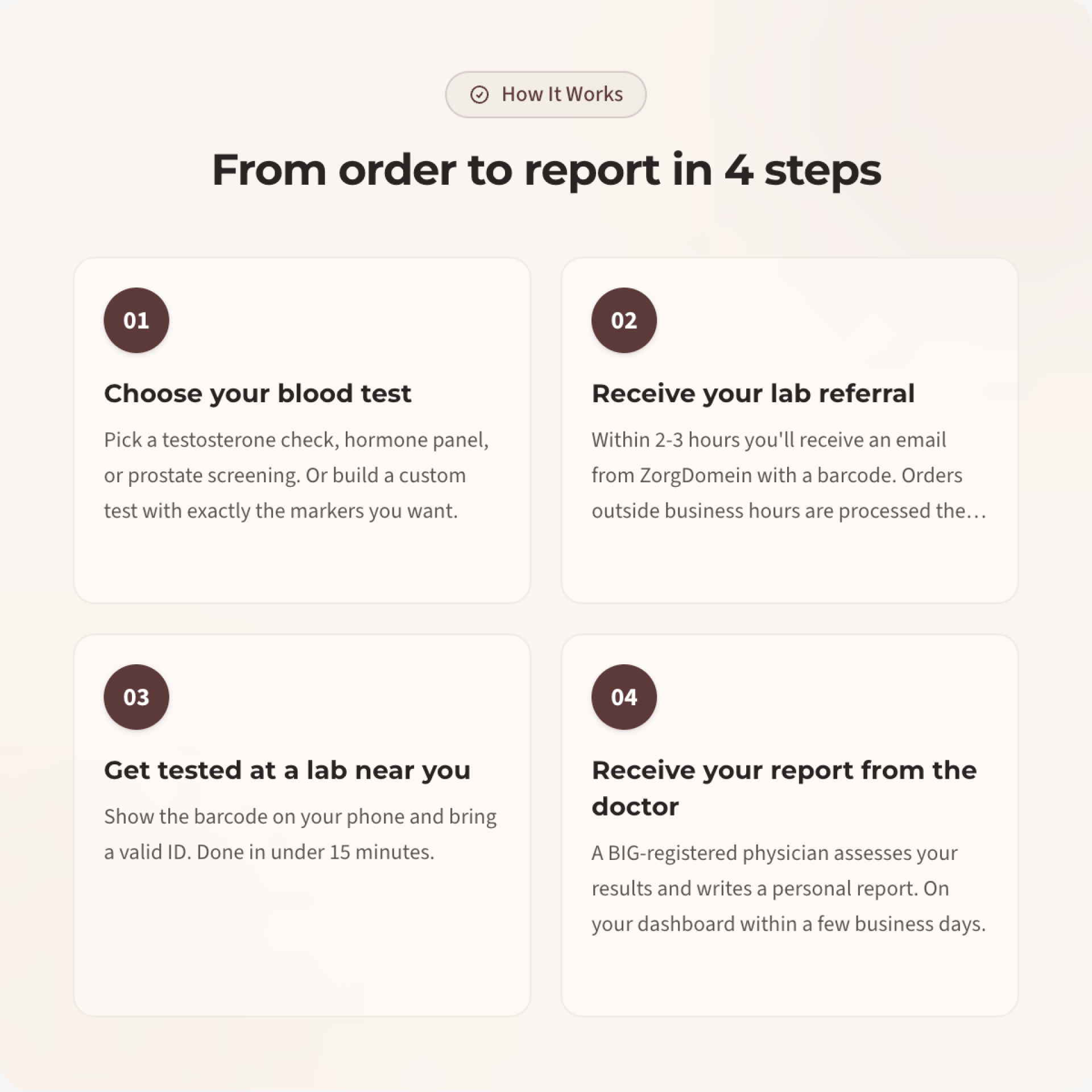
From order to report in 4 steps
No referral needed. No waiting list. Just order and go.
Choose your blood test
Pick a testosterone check, hormone panel, or prostate screening. Or build a custom test with exactly the markers you want.
Receive your lab referral
Within 2-3 hours you'll receive an email from ZorgDomein with a barcode. Orders outside business hours are processed the next business day.
Get tested at a lab near you
Show the barcode on your phone and bring a valid ID. Done in under 15 minutes.
Receive your report from the doctor
A BIG-registered physician assesses your results and writes a personal report. On your dashboard within a few business days.
Choose your blood test
Pick a testosterone check, hormone panel, or prostate screening. Or build a custom test with exactly the markers you want.
Receive your lab referral
Within 2-3 hours you'll receive an email from ZorgDomein with a barcode. Orders outside business hours are processed the next business day.
Get tested at a lab near you
Show the barcode on your phone and bring a valid ID. Done in under 15 minutes.
Receive your report from the doctor
A BIG-registered physician assesses your results and writes a personal report. On your dashboard within a few business days.
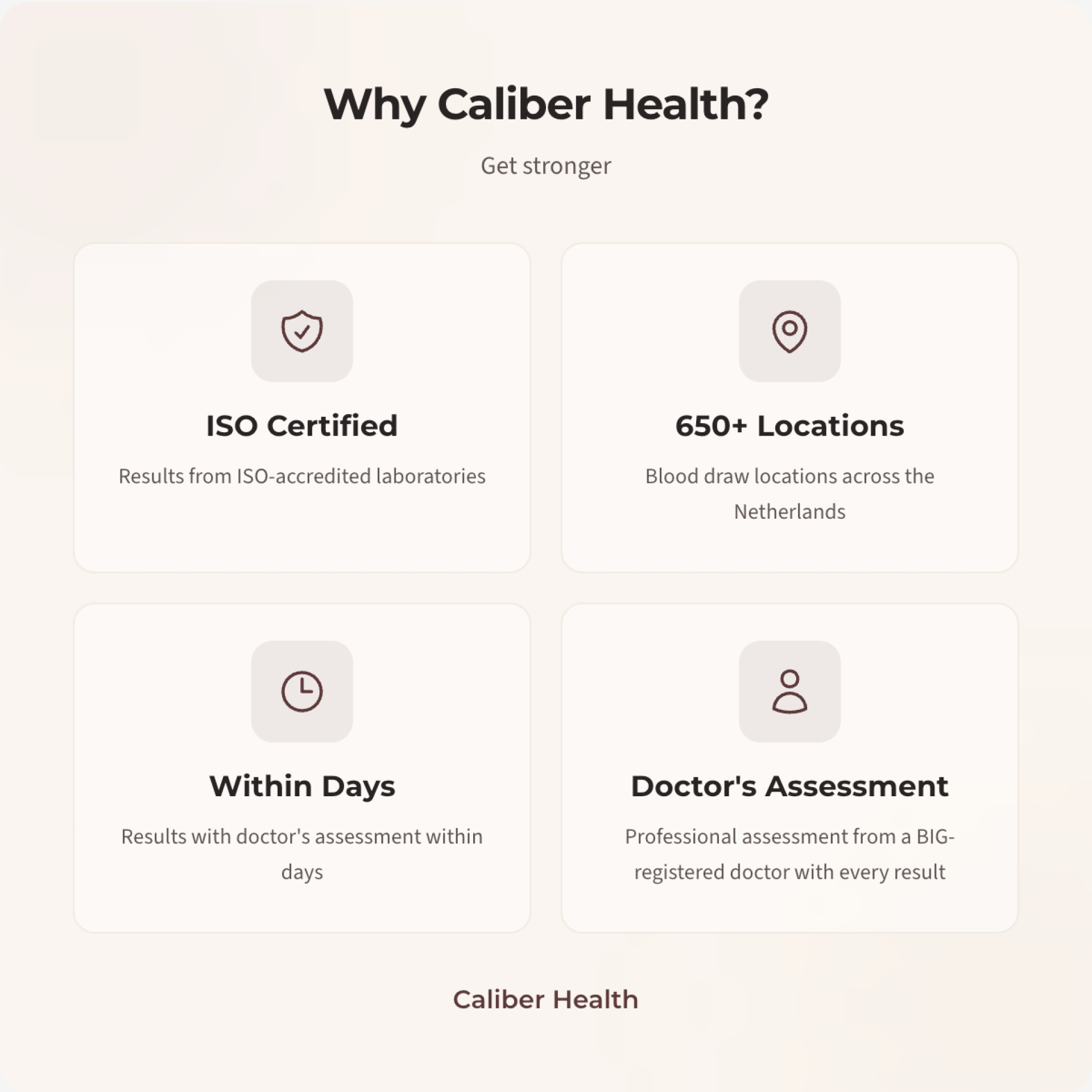
Always a location near you
With more than 650+ certified phlebotomy points across the Netherlands.
What We Test
This panel includes 3 biomarkers, each tested at a certified laboratory using medical-grade equipment.
Triglycerides are the most common type of fat in the body, used for energy storage. Elevated levels may be associated with increased risk of cardiovascular disease, especially when combined with other lipid abnormalities.
Learn moreLDL (Low-Density Lipoprotein) cholesterol is often called "bad" cholesterol because elevated levels can lead to plaque build-up in artery walls, increasing the risk of heart attack and stroke.
Learn moreHDL (High-Density Lipoprotein) cholesterol is often called "good" cholesterol because it helps transport excess cholesterol from the arteries back to the liver for removal. Higher HDL levels are generally associated with lower cardiovascular risk.
Learn moreTriglycerides
CardiovascularTriglycerides are the most common type of fat in the body, used for energy storage. Elevated levels may be associated with increased risk of cardiovascular disease, especially when combined with other lipid abnormalities.
Elevated triglycerides may contribute to atherosclerosis and are a component of metabolic syndrome. They are often elevated alongside insulin resistance. Consult your healthcare provider.
LDL Cholesterol
CardiovascularLDL (Low-Density Lipoprotein) cholesterol is often called "bad" cholesterol because elevated levels can lead to plaque build-up in artery walls, increasing the risk of heart attack and stroke.
LDL cholesterol is a primary driver of atherosclerosis. Lowering elevated LDL is one of the most effective strategies for reducing cardiovascular disease risk. Consult your healthcare provider for personalised targets.
HDL Cholesterol
CardiovascularHDL (High-Density Lipoprotein) cholesterol is often called "good" cholesterol because it helps transport excess cholesterol from the arteries back to the liver for removal. Higher HDL levels are generally associated with lower cardiovascular risk.
HDL cholesterol is a key component of cardiovascular risk assessment. Low HDL may be associated with increased heart disease risk, while healthy levels support arterial protection. Consult your healthcare provider for personalised guidance.
Related Tests
Explore more tests that might interest you.
Cardiovascular Health
Advanced heart health panel with hs-CRP and homocysteine.
Metabolic Health Check
Blood sugar, insulin resistance, lipids, and liver markers.
Complete Metabolic Panel
Comprehensive metabolic panel: electrolytes, kidney, liver, glucose, HbA1c, and protein.
This test not quite right?
Build your own blood test from 138+ individual biomarkers — choose exactly what you need.
Have a question?
Our team is happy to help. Ask your question and we'll respond as soon as possible.