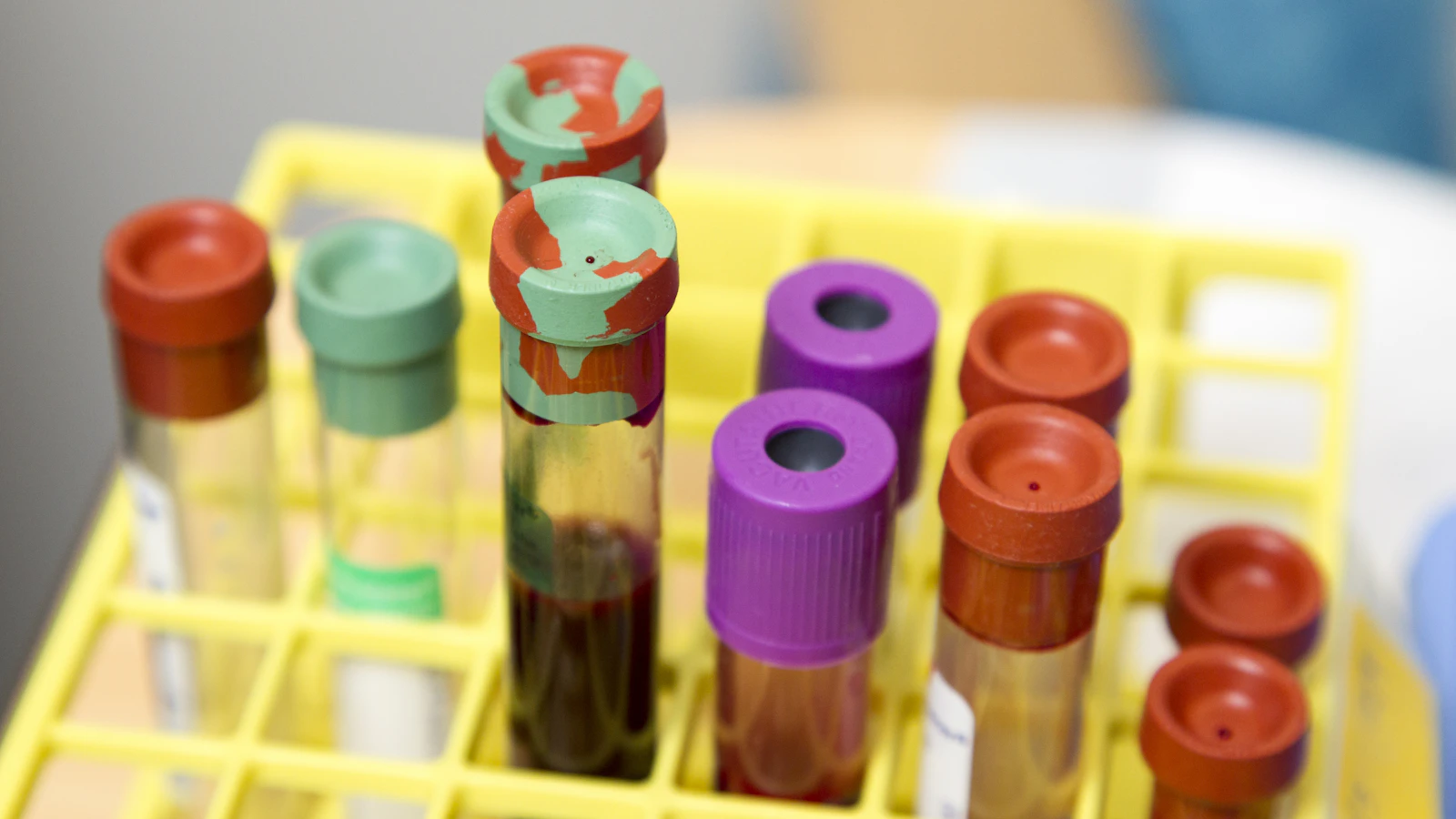
A preventive blood test is a blood test without a direct complaint, meant to detect something early. Whether it is worthwhile depends on your situation. In a large review, general health checks did not measurably reduce mortality (Krogsboll et al., 2019). Measuring for the sake of measuring makes little sense.
Still, that is not the whole story. Some values shift silently with age, without you feeling anything. I think the honest conclusion is: a preventive blood test is no miracle, but it can give a useful baseline if you know what you are measuring and why.
Below you will read what a preventive blood test does and does not do for men, which values can be interesting and when measuring is not needed.
What is a preventive blood test?
A preventive blood test means you have blood drawn while you have no complaints, to set a baseline or detect early signals. It differs from a test your GP does for a specific complaint.
Often it involves a set of values that together give a broad picture: for example cholesterol, blood sugar, kidney function and sometimes hormones. Such a set is also called a health check.
Important: a preventive test gives data, not a diagnosis. What your values mean, you decide together with a doctor.
Is a preventive blood test worthwhile?
Sometimes yes, sometimes no. For the whole population, general health checks deliver little health gain, and can even cause needless worry or follow-up tests (Krogsboll et al., 2019). That is an honest counterweight to the idea that "more measuring is always better".
At the same time, some things run for a long time without symptoms. A high cholesterol or a creeping blood sugar usually cannot be felt. For those who specifically want to know where those values stand, a measurement can give a starting point.
The art is in the balance: not measuring everything blindly, but consciously looking at values that matter to you. Some men choose to measure occasionally to have a baseline.
Which values shift silently with age?
A number of values move gradually with ageing, without you noticing directly. The table below shows which they often are and what they roughly say something about.
| Value | What it roughly says something about |
|---|---|
| Cholesterol and triglycerides | cardiovascular health |
| Fasting glucose and HbA1c | blood sugar and diabetes risk |
| Testosterone and SHBG | hormone balance and energy |
| Kidney function (creatinine, eGFR) | how your kidneys work |
| Vitamin D | bone and muscle support |
The Dutch health institute RIVM points out that risk factors for cardiovascular disease often run silently. Testosterone also declines gradually in men with the years (Harman et al., 2001). That is exactly why a baseline measurement can be handy to compare against later.
Can you get blood drawn without a referral?
Yes, you can. Besides your GP, various providers offer blood tests you can choose yourself, without a referral. That gives control, but does require you to understand what you are measuring.
At Caliber Health you can measure a set of values in one go, for example with the Men Over 40 Panel or a broader extended health check. Every result is assessed by a BIG-registered doctor, so you see your numbers in context.
Want to first know which panels exist and what they measure? We explain that in our complete guide to blood tests for men.
When is a preventive blood test not needed?
If you are young, have no complaints and no particular risk factors, broad measuring usually delivers little. A deviating value that means nothing can then cause needless worry or extra tests.
Also: a test result without context is hard to interpret. One value just outside the reference is often harmless, but can be a shock. That is why interpretation by a doctor matters.
In short, measuring is not a goal in itself. It is useful when you have a specific question or want a baseline, and less useful when you want to know everything "just in case".
How do you read your result?
See your result as a snapshot and a starting point, not a final verdict. Reference ranges are a bandwidth for most people, not a strict border between healthy and ill.
A value only gains meaning in combination with your age, your complaints and your other values. That is why every Caliber result comes with an assessment by a doctor, and your GP remains the point of contact for treatment decisions.
Want the bigger picture? Read our guide to healthy ageing for men, how fit your body really is in biological age, and what your bones need in osteoporosis in men. Discuss what fits your situation with your GP.
Sources
- Krogsboll LT, Jorgensen KJ, Gotzsche PC. General health checks in adults for reducing morbidity and mortality from disease. Cochrane Database Syst Rev. 2019;1:CD009009. PMID 30699470.
- Li Y, Pan A, Wang DD, et al. Impact of Healthy Lifestyle Factors on Life Expectancies in the US Population. Circulation. 2018;138(4):345-355. PMID 29712712.
- Harman SM, Metter EJ, Tobin JD, et al. Longitudinal effects of aging on serum total and free testosterone levels in healthy men. Baltimore Longitudinal Study of Aging. J Clin Endocrinol Metab. 2001;86(2):724-731. PMID 11158037.
- RIVM. Risk factors for cardiovascular disease. Available via rivm.nl.
Every blood test result at Caliber Health includes a professional assessment by a BIG-registered doctor. For treatment decisions, discuss your results with your GP.
Author