
Living longer does not start with a pill or an expensive treatment, but with a few habits that really matter. Men who combined five healthy habits at age fifty lived on average 12.2 years longer than men who had none (Li et al., 2018). That is a bigger effect than any supplement promises.
A whole industry has grown around "longevity", with expensive tests, supplements and clinics. I am sceptical of it. Most of the evidence points to dull, free basics: moving, eating well, not smoking, being moderate with alcohol and sleeping enough. Not sexy, but effective.
Below you will read what lifestyle really does for your lifespan, which habits pay off most, and what you can measure to steer by.
What is longevity exactly?
Longevity literally means a long lifespan. In practice it is usually not only about getting as old as possible, but mainly about staying fit and independent for as long as possible. Researchers call that last part healthy life expectancy.
So the goal is not only more years in your life, but more life in your years. Twenty extra years with heavy limitations is something other than twenty extra fit years.
Those two goals largely run together: the same habits that keep you fit often also extend your life. That fortunately keeps it simple.
Can you really live longer with lifestyle?
Yes, the gain is big, although nothing is a guarantee. Besides the 12.2 extra years from the lifestyle study, other work shows that movement strongly relates to a lower risk of early death (Arem et al., 2015). The biggest jump already sits in the first blocks of activity per week.
Important: this is about odds, not certainties. Lifestyle lowers your risk, but no one can promise you a number of extra years. Genes and bad luck also play a part.
Still, the direction is clear. You have more influence over your lifespan than most men think, and you do not have to become an athlete for it.
Which habits pay off most?
The same five habits keep surfacing in large studies. None is a miracle, but together they determine a large part of your later health. The table below summarises what the evidence shows.
| Habit | What the evidence shows |
|---|---|
| Not smoking | one of the strongest factors for a longer life |
| Moving enough | biggest gain already in the first hours per week |
| Healthy weight | lower risk of cardiovascular disease and diabetes |
| Moderate with alcohol | less is better, also for your heart and liver |
| Healthy eating pattern | linked to lower mortality and less heart disease |
What stands out: the stacking counts. One healthy habit helps, but the biggest gain comes when you combine several (Li et al., 2018). So start with one and build out.
Does healthy food really help?
Yes. In a large Spanish study, a Mediterranean eating pattern with extra olive oil or nuts lowered the number of cardiovascular events in people at increased risk (Estruch et al., 2018). Food is more than weight alone.
The Dutch Nutrition Centre (Voedingscentrum) advises a pattern with plenty of vegetables, fruit, wholegrains, legumes, nuts and fish, and little processed meat and sugar. That looks a lot like what was tested in that study.
You do not have to eat perfectly. A few fixed habits, such as vegetables daily and oily fish a few times a week, do more in the long run than a strict diet you cannot sustain.
Why is muscle strength a marker of a long life?
Strong muscles are not only handy, they also predict your health. In the large PURE study, lower grip strength was a stronger predictor of early death than your systolic blood pressure (Leong et al., 2015). So strength is a good gauge.
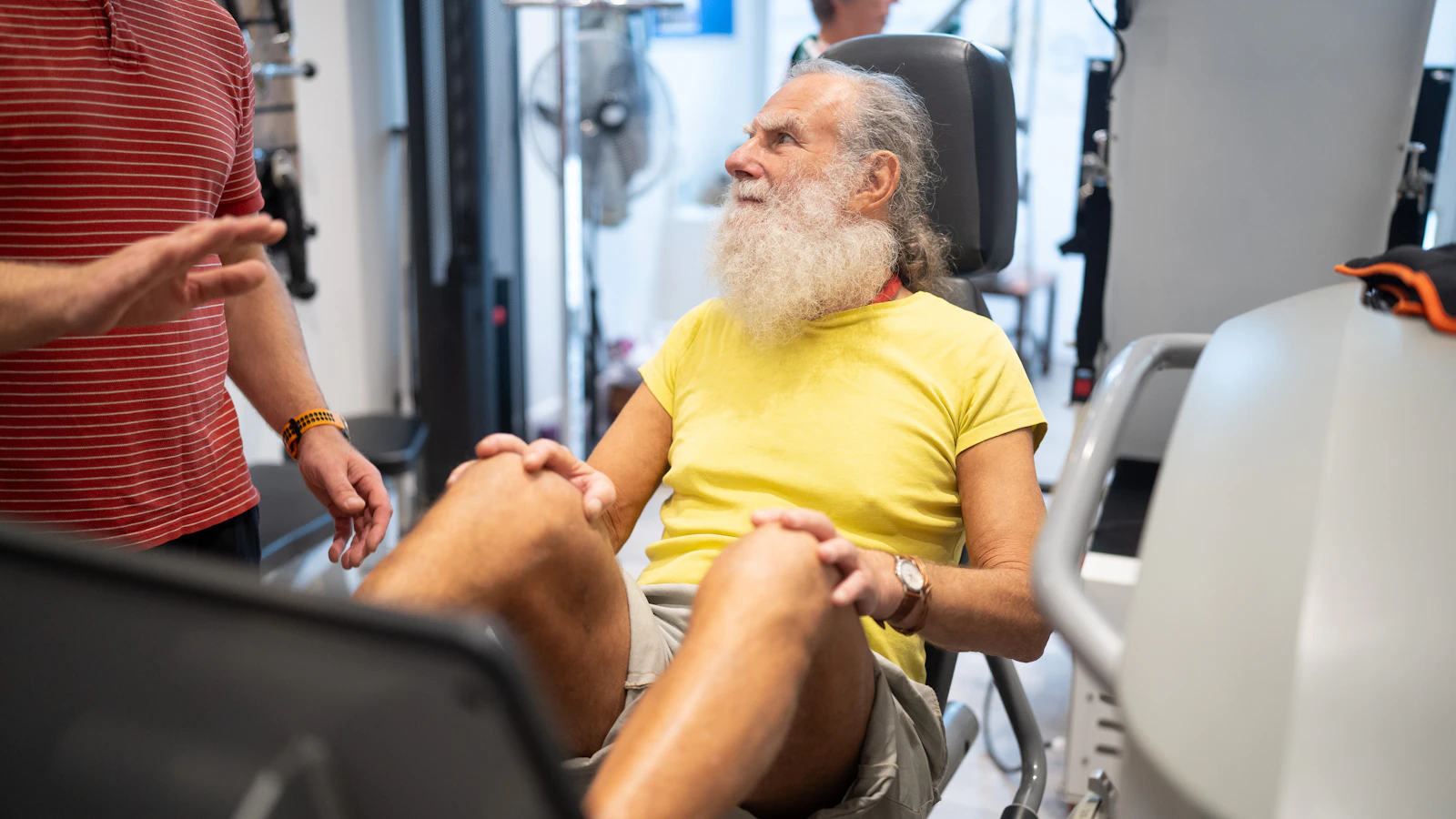
For men this is extra relevant, because muscle loss speeds up after fifty. Strength training not only keeps your muscles up, but also supports your bones and your balance. How to counter muscle loss is in sarcopenia.
In short: if you were to add one thing to your week, two to three times some strength is a strong candidate.
What can you measure to steer by?
Measuring does not extend your life, but it can give you a starting point to steer by. Values like cholesterol, blood sugar and your hormone profile move with your lifestyle and give a picture of your risk.
If you want to measure several values at once, an extended health check can be a logical starting point. Every result is assessed by a BIG-registered doctor, so you see your numbers in context.
The bigger picture of healthy ageing is in our guide to healthy ageing for men, and how fit your body really is in biological age. More about your hormones is in hormonal health in men. See a result as a starting point, not a final verdict, and discuss what fits your situation with your GP.
Sources
- Li Y, Pan A, Wang DD, et al. Impact of Healthy Lifestyle Factors on Life Expectancies in the US Population. Circulation. 2018;138(4):345-355. PMID 29712712.
- Arem H, Moore SC, Patel A, et al. Leisure time physical activity and mortality: a detailed pooled analysis of the dose-response relationship. JAMA Intern Med. 2015;175(6):959-967. PMID 25844730.
- Estruch R, Ros E, Salas-Salvado J, et al. Primary Prevention of Cardiovascular Disease with a Mediterranean Diet Supplemented with Extra-Virgin Olive Oil or Nuts. N Engl J Med. 2018;378(25):e34. PMID 29897866.
- Leong DP, Teo KK, Rangarajan S, et al. Prognostic value of grip strength: findings from the Prospective Urban Rural Epidemiology (PURE) study. Lancet. 2015;386(9990):266-273. PMID 25982160.
- Voedingscentrum. Gezond ouder worden en voeding. Beschikbaar via voedingscentrum.nl.
Elk bloedtestresultaat bij Caliber Health bevat een professionele beoordeling door een BIG-geregistreerde arts. Bespreek voor behandelbeslissingen je resultaten met je huisarts.
Autor
Caliberhealth
Dr. Naimi, lekarz wpisany do holenderskiego rejestru BIG, nadzoruje standardy medyczne naszych treści i ocen. Przeczytaj naszą politykę medyczną
Powiązane badania
Powiązane artykuły
Sarcopenia: the meaning and how to counter muscle loss with age

Biological age test: how old is your body really?