Lowering your blood sugar almost always starts with lifestyle, not a pill. Moving more, losing weight around your middle and cutting fast sugars are the knobs that do the most. In the well-known Diabetes Prevention Program study, a lifestyle approach lowered the risk of type 2 diabetes by 58 percent (Knowler, NEJM 2002).
Let's be honest: the basics aren't exciting and aren't new. But the payoff is big, and men in particular often leave chances on the table here because they wait until a doctor brings it up. You can turn the knobs earlier than you think.
Which lifestyle knobs really make a difference?
Not all advice weighs the same. A few knobs demonstrably do the most, others are a nice bonus. This table lays out the main ones, with an honest estimate of the effect.

| Lifestyle knob | What it usually does |
|---|---|
| Losing weight around your middle | Often the biggest effect on your sugar |
| Moving after eating | Dampens the spike after a meal |
| Fewer fast sugars and soft drinks | Fewer sharp spikes across the day |
| More fibre and protein | A flatter sugar response |
| Better sleep | Supports your insulin sensitivity |
These knobs reinforce each other. You don't have to do everything perfectly, since even modest steps count. The Voedingscentrum stresses that fewer sugary drinks and a healthy weight especially help move your blood sugar in a better direction.
Why walking after eating works so well
Moving right after a meal is one of the most underrated knobs. Your muscles then take up sugar without much insulin involved, which keeps the post-meal spike lower. You don't need to train hard for it.
In a small but neat study, three short 15-minute walks right after meals dampened blood sugar better than one long walk at another time (DiPietro, Diabetes Care 2013). For a busy man, that's good news: a walk around the block after dinner counts.
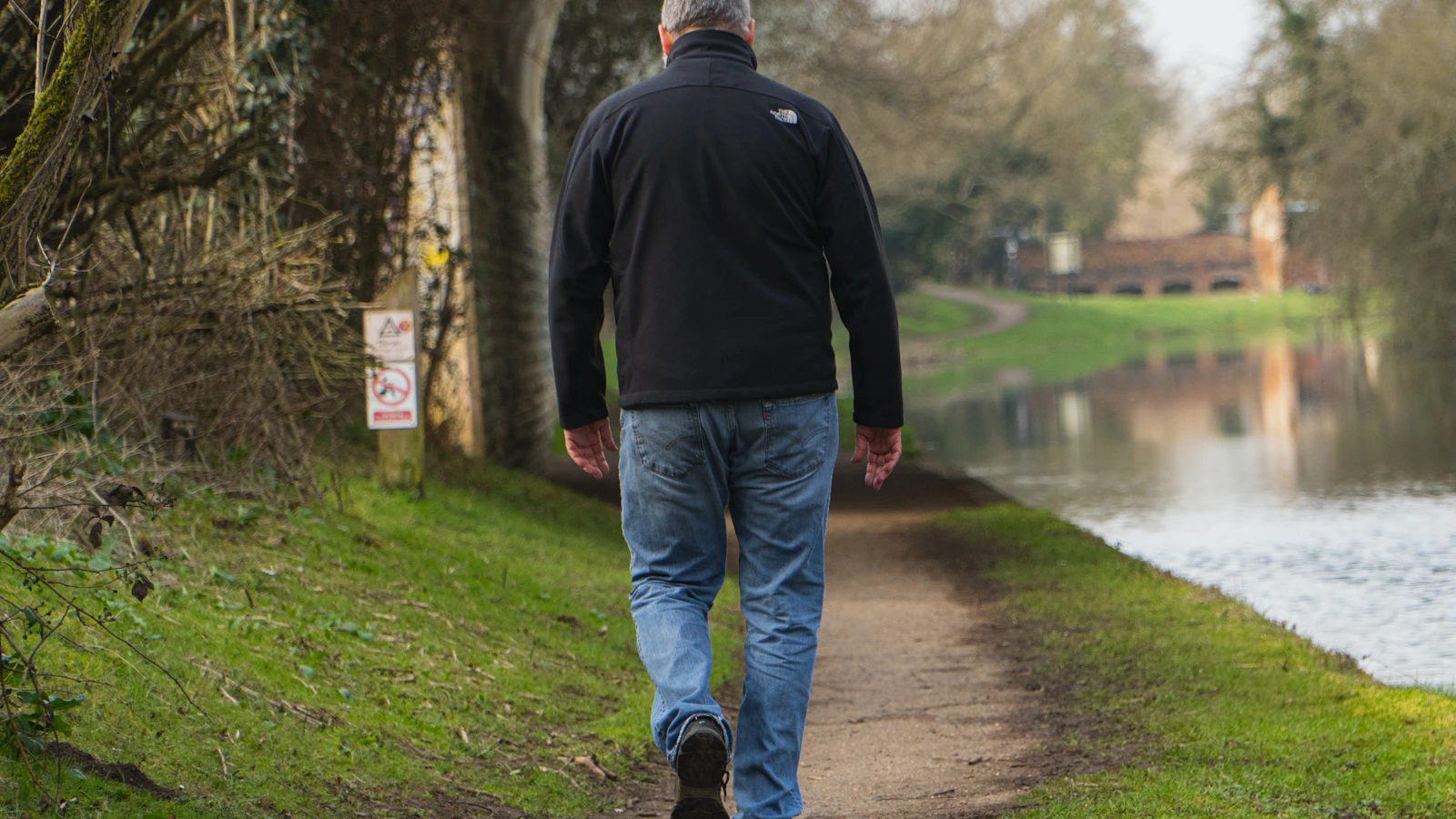
Don't see it as exercise but as a habit. Walk ten to fifteen minutes after your heaviest meal of the day. That small ritual often does more than one intense workout a week.
What does losing weight do for your blood sugar?
Of all the knobs, losing weight around your middle often has the biggest effect in men. Less belly fat means less insulin resistance, and with it a lower blood sugar. Even a few kilos off can noticeably improve your values.
That's because belly fat and your sugar balance are closely linked, as is your testosterone. That triangle is explained in our piece on belly fat and your hormones, and the wider picture in our pillar on blood sugar in men.
You don't have to hit a magazine target weight. It's about the direction, and about keeping it up. A slow, lasting decline does more than a crash diet you drop after three weeks.
How quickly do you see effect?
That depends on the value you look at. Your fasting glucose can already move within days to weeks if you move more and eat fewer fast sugars. Your HbA1c, the average over months, needs time and shifts more slowly.
So be patient with yourself. A disappointing HbA1c after two weeks says little, because that value lags behind what you're doing now. Look at the trend over a few months rather than at one measurement.
And don't forget that lifestyle does more than just your sugar. The same steps often help your weight, your blood pressure and your energy. So you feel the payoff not only on paper.
Which values do you track along the way?
What you measure, you can steer. Your fasting glucose quickly shows whether you're on the right track, while your HbA1c only shifts after a few months because it's an average. Together they give the short and the long story.
To track your progress, the Diabetes panel brings your glucose and HbA1c together. For the wider metabolic picture, including your fats, the Metabolic Health Check looks along. How to read a single glucose is covered in fasting glucose in men.
Important: these are general insights, not personal treatment advice. If you take diabetes medication, change nothing without talking to your doctor. Discuss your values with your GP, who can help you decide whether further steps are needed.
References
- Voedingscentrum. Sugar and sugary drinks. 2024. voedingscentrum.nl
- RIVM. Movement and health. 2024. rivm.nl
- DiPietro L, et al. Three 15-min bouts of moderate postmeal walking improves glycemic control. Diabetes Care. 2013. PMID 23761134.
- Knowler WC, et al. Reduction in the incidence of type 2 diabetes with lifestyle intervention or metformin. N Engl J Med. 2002. PMID 11832527.
Every blood test result at Caliber includes a professional assessment by a BIG-registered doctor. For treatment decisions, discuss your results with your GP.
الكاتب
Caliberhealth
فحوصات ذات صلة
مقالات ذات صلة

Diabetes and erectile problems: the link between blood sugar and your erection

HbA1c value: what your long-term blood sugar says about your health